From a Loss of 1.1 Million to a Profit of 10 Million in 10 Months: A Review of Hyperliquid Arbitrage by Two Individuals

 Prefer us on Google


Author: CBB (@Cbb0fe)
Compiled by: Deep Tide TechFlow
Deep Tide Introduction: This is CBB's complete review of his arbitrage business over the past 10 months. After the launch of HIP-3 on Hyperliquid in October 2025, he and his brother started from scratch exploring Interactive Brokers (IBKR) and built a bot to exploit the price differences between HIP-3 and TradFi:
In November, they achieved a trading volume of about $850 million, earning over $500,000; in January 2026, with a surge in metal prices, their monthly trading volume reached $1.7 billion, earning over $600,000 just from funding fees. However, due to the IBKR interface data not refreshing, the bot continuously opened short positions to correct a non-existent discrepancy, leading to a net short position of $120 million in gold futures. After landing in Dubai, he manually closed the positions, ultimately incurring a loss of $1.1 million.
The day after fixing the risk control, a pullback in silver brought about a price difference of about 3% between Hyperliquid and IBKR, allowing them to earn back $600,000. By September 2026, institutions began to enter the market, and Ethena announced its entry into stock basis trading, indicating that this opportunity might soon come to an end.
October 2025.
For the past eight months, we have been running the top-ranked arbitrage bot on HyperEVM.
But this arduous task is nearing its end.
After months of battling with Wintermute, a new participant has entered the game, significantly compressing our profits.
No worries. My brother and I are used to it.
We never try to compete long-term against institutions and their hordes of workers. We can't do it. There are only two of us.
Our advantage has always been deploying a strategy at the fastest speed and squeezing it dry before the big players come in.
They can't launch a strategy in 48 hours. They have regulatory constraints, internal processes, approvals, and so on.
We have none of that. We just need to be as fast as possible.
So, it's time to find a new arduous task.
We were thinking: What's next?
On October 10, it happened. Cryptocurrency seemed completely over. Everyone was doomed. There was nothing exciting left to squeeze.
We started looking around.
On October 13, HIP-3 launched on Hyperliquid. Three days later, Unit/TradeXYZ officially launched their first stock perpetual contract market: XYZ100.
Since Hyperliquid still has over 40% of the supply to allocate to the community, we thought it might be a good idea to generate some trading volume on HIP-3.
This was actually the same logic that led us to the HyperEVM arbitrage opportunity eight months ago: we just wanted to do spot volume for Unit and Hype on Hyperliquid.
We didn't know if it would work, but we wanted to try: to build and operate an arbitrage bot for stock perpetual contracts between HIP-3 and TradFi.
Initial Exploration of TradFi {#article-toc-33704-2}
One thing to remember: we have never traded a single stock in our lives. We also don't really understand futures. We know almost nothing about TradFi.
We only know that IBKR is a very competitive platform for what we want to do, so we decided to explore it.
In the first few days, I was basically trying to figure out how to use the IBKR platform.
I took screenshots of almost everything and sent them to Claude:
"What is this?"
"What does this mean?"
"What should I do here?"
"How do we hedge XYZ100?"
That's basically how we started learning TradFi.
Meanwhile, my brother began researching the IBKR API to figure out what could and couldn't be done.
Coming from the crypto space, he was used to quickly connecting to exchange APIs and getting things running. IBKR is a different world.
Market data subscriptions, contract specifications, order types, permissions, API limits, TWS, IB Gateway......
There was a lot for us to figure out, and at first, we weren't even sure if this could work.
But after a week of tinkering with IBKR, we started to get a sense of it.
Building the Arbitrage Bot {#article-toc-33704-3}
The strategy is quite simple.
We take IBKR's quotes as the real price and continuously check for arbitrage opportunities on HIP-3.
If a market on HIP-3 is trading at a discount relative to IBKR, we go long on HIP-3. Only after a transaction is completed on Hyperliquid do we open a corresponding short position on IBKR.
If a market on HIP-3 is trading at a premium relative to IBKR, we do the opposite: we go short on HIP-3 and, after the transaction, go long on IBKR.
In theory, it's quite simple.
In practice, we need to set a lot of parameters for each HIP-3 market.
Taking the IBKR leg as an example, for NVDA:
["NVDA", 55, 400, { maxDelta: 800, slippage: 0.1 }]
55 is our minimum hedge size. IBKR has a minimum fee of $1, so we want to avoid making a lot of tiny trades. We let the delta accumulate, and once it reaches 55 shares of NVDA, we hedge on IBKR.
400 is the maximum size of our single IBKR order hedge to avoid too much slippage.
maxDelta: 800 is our safety valve. If for some reason our trades on IBKR keep failing and the discrepancy between the two legs reaches 800 shares of NVDA, the bot will stop trading that market.
slippage: 0.1 is the maximum slippage we allow when hedging on IBKR.
Then for the HIP-3 leg:
NVDA: pair("NVDA", "xyz:NVDA", {makerSize: 400, makerOffsetBuy: 0.12, makerOffsetSell: 0.12, cancelDelta: 0.02, takerRatioBuy: 0.05, takerRatioSell: 0.1, takerMin: 1, takerMax: 2000, limit: 110000, makerEnabled: true, preMarketOffset: 0.04 })
It looks complex, but the logic is actually quite simple.
makerSize determines how much volume we want to place, makerOffsetBuy / makerOffsetSell determines the price difference we want relative to the fair price. cancelDelta tells the bot at what price movement it should cancel and re-post the order.
For taker trades, takerRatioBuy / takerRatioSell determines how much price difference we need before consuming liquidity, while takerMin / takerMax controls the size we are willing to execute.
limit is the maximum total position we allow in this market, and makerEnabled simply allows us to toggle the order posting.
Finally, preMarketOffset adds some extra price difference during pre-market hours because liquidity on the TradFi side is much worse at this time of day.
First Trade {#article-toc-33704-4}
By the end of October, we were finally ready to give it a try.
The first few days were a bit chaotic. We stumbled on the IBKR API, sometimes losing connection, and my brother had to come up with ways to keep everything connected and running.
But we quickly realized there were plenty of opportunities. It felt like we were basically picking up money.
In November, we executed about $850 million in trading volume on HIP-3, earning over $500,000 in profit.
That was pretty good.
December was a bit calmer. We did about $550 million in trading volume, and the profits were still substantial, but we really started to ponder whether we should focus our energy elsewhere. It was good money, but not a gold mine.
We decided to keep going, as always. As long as there was something to squeeze, we usually found it hard to stop.
Metal Frenzy {#article-toc-33704-5}
January was when HIP-3 really started to take off.
Gold and silver began to soar, and the demand on Hyperliquid was simply insane. Making money became almost too easy, and we had just been preparing for this kind of market for the past two months.
One problem we encountered was liquidity. Basically, everyone wanted to go long on commodities on Hyperliquid, which meant we constantly needed to inject more funds on the IBKR side to hedge.
We kept adding money to IBKR, but moving such a large amount of money brought banking troubles.
EtherFi was absolutely a godsend in this regard, allowing us to withdraw significant amounts of money at a fast pace.
In January, we did $1.7 billion in trading volume on Hyperliquid, earning over $600,000 just from funding fees.
But as I mentioned earlier, there are only two of us. We have no internal processes. We move quickly. And we basically test everything directly in a production environment.
Sometimes, this comes at a cost.
On January 27, I had just landed in Dubai, ready to grab a coffee with my brother to discuss the bot.
Suddenly, I received a strong liquidation warning from IBKR on my phone.
I couldn't understand how this was possible. It was still early, and nothing major had happened in the market.
I logged into IBKR.
We were net short $120 million in gold futures.
Gold was in the midst of a fierce rally.
We immediately shut down the bot.
At that moment, I was trembling. I was genuinely afraid of being liquidated. I wasn't very familiar with IBKR because all the trading there was done by the bot.
In the next 15 to 30 minutes, I manually closed the $120 million gold short position.
Later that afternoon, when the market opened, we finally calculated the loss:
-$1.1 million.
That hurt.
But we had no time to cry. We needed to figure out what happened and fix it as soon as possible.
The reason was actually quite silly.
The IBKR interface data had not refreshed properly. The bot thought there was a discrepancy between our positions on Hyperliquid and IBKR, so it kept executing gold short positions on IBKR to correct a discrepancy that didn't exist.
Once. Again. And again.
Until it was down $120 million in gold, we started receiving margin call warnings.
We clearly needed more control.
We needed to ensure that the data we received from IBKR was indeed fresh. We needed to add extra checks before allowing the bot to continue increasing its positions. More generally, this bot was not designed for the current volume and scale of opportunities from the beginning.
We spent an entire day fixing everything.
The next day, we launched a new version of the bot.
But we lost confidence.
Maybe we didn’t know what we were doing at all. Maybe the risk-reward ratio was never worth it. We just lost $1.1 million over something incredibly foolish, and now we felt the bot would run into problems again.
For the first time since going live, we seriously considered whether to stop.
But you should know us by now... we are incredibly greedy.
We won’t give up over a seven-figure loss. We need to push harder.
And I feel this is something we are quite good at. Almost every bot we’ve worked on together has experienced astonishing losses. And somehow, we’ve managed to claw our way back each time.
We won’t spend hours crying. We try to understand what went wrong, fix it, and then keep moving forward.
Before we made this money back, this loss basically became a taboo topic between us.
The next day, after hitting an all-time high, silver sharply retraced, and at one point there was about a 3% spread between Hyperliquid and IBKR.
We made about $600,000 in profit from it.
We fought our way back.
Liquidity Management and Speed Optimization
By this time, we were making decent money.
And we knew how to play this game. If there was so much money to be made, more people and their armies of workers would rush in.
So we needed to get stronger quickly.
The first issue was funding.
This is very different from pure crypto arbitrage, where reallocating funds between different venues can take less than five minutes. Here, we really had to wire money into IBKR and then transfer it out.
So we designed a dynamic system based on the available liquidity at IBKR.
When liquidity at IBKR was low, we were willing to lose a bit of money to close existing positions and free up capital. At the same time, we required a larger spread to open new positions.
When liquidity at IBKR was ample, we did the opposite. We were willing to open new positions with a smaller spread and deploy capital more aggressively.
The second thing that needed improvement was speed.
So far, we had been treating IBKR’s quotes as the real price source. It could run, but this data source was relatively slow.
As more participants entered this game, we knew it would eventually become a speed game, and relying solely on IBKR’s data wouldn’t be enough.
We began looking for alternatives and found Databento.
With Databento and a Nasdaq authorization, we could access much faster direct market data.
We submitted our application in January and finally got approved at the end of the month.
From Metals to Oil
In February, metals were still heating up, and we did about $1.5 billion in volume.
And it seemed that wasn’t enough; at the end of February, Trump decided to bomb Iran, causing the market to become extremely volatile, with oil prices soaring above $100.
By this time, we were making about $60,000 to $120,000 a day from arbitrage spreads and funding fees. Except on Saturdays and Sundays, when the TradFi markets were closed, we were bored to death.
When we “only” made $40,000 in the past 24 hours, we really felt something was wrong. We started checking the bot, adjusting parameters, trying to figure out what happened and what could be improved.
Claude helped us a lot with this. We could feed it all our HL and IBKR transaction records, letting it analyze where we were losing the most money, where the problems were, and how we could improve.
This was actually our first time using AI for trading analysis, and it made a significant difference.
Even when everything was going smoothly, we maintained this obsession. This was basically the only way we knew to stay ahead.
My brother and I talked about the bot all day. He pushed code updates almost every day, while I adjusted parameters based on market conditions.
Semiconductor Frenzy
By the end of April, as the Iran conflict began to cool down, we thought this crazy profitability was finally coming to an end.
For the past few months, we had been making about $500,000 a week, and we really couldn’t see what could continue to drive these opportunities.
Just then, semiconductors and all bottleneck trades began to explode.
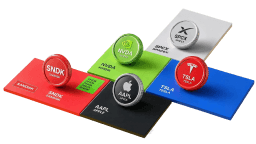
Codes like SNDK and MU started trading like pure memecoins.
It was insane.
When we started building this bot in October, basically nothing was happening in the market. Since then, we’ve gone through metals, then oil, and now semiconductors, all trading like dog coins on BSC.
What exactly happened?
There’s clearly a lot of luck involved. We happened to be at the right time, in the right place, with products ready for this kind of market.
But I also think it was somewhat visionary to bet on HIP-3 and perpetual contracts for stocks, more specifically TradeXYZ, this early.
In May, June, and July, our monthly volume remained between $1.5 billion and $2.5 billion, making about $400,000 to $500,000 a week.
Conclusion
It’s now early September.
Since we started, quite a few institutions have joined this game. Ethena has also announced plans to enter stock basis trading in the coming weeks.
For us, this opportunity might be coming to an end, but this journey has been incredibly thrilling.
In 10 months, during a period that felt basically like a crypto winter, we achieved:
- $32 billion in total volume for HIP-3 and IBKR
- 1.5% of TradeXYZ’s total volume
- $10 million in profit
Of course, this was possible because we had a lot of liquidity to deploy. But the actual return on invested capital still had an annualized rate of about 35% to 45%, depending on the time period.
More importantly, this was a fantastic opportunity for us to truly engage with the TradFi world and understand how it operates for the first time.
Ten months ago, we had never traded a single stock and hardly knew what futures were. Now we’ve traded $32 billion.
All that’s left is to pray for Hyperliquid’s third quarter.
Thank you for reading to the end.
We’ll be back with another story.
CBB 🫡
-- Price
This content is provided for general informational purposes only and doesn't constitute financial, investment, legal, or tax advice. Any events, rewards, online promotions, or related information mentioned herein should not be considered a recommendation, solicitation, or invitation to purchase, sell, trade, or otherwise deal in any crypto assets. Crypto assets are highly volatile and may result in loss. The availability of WEEX services, products, and related events may vary by region. You are responsible for ensuring that your participation is in accordance with applicable local laws and regulations.
You may also like

ARK Researcher Claims Ethereum Established Successful L2 System Without Charging Fees

HYPE First Adopted in US Cryptocurrency Index ETF, Following SOL

Kraken IPO delayed until Q2 2027: report

DEX Trading Exceeds $115 Billion in August

USD 1.527 million in tokens will be unlocked in 30 days

Whale Address VBVIT Shorts BTC, ETH, and US Stocks, Becomes the Largest Bearer for 14 Assets
August Cryptocurrency Security Incident Report: Total Loss of $215 Million, Price Manipulation and Governance Vulnerabilities as Major Attack Methods
September 2026 Crypto Market Outlook: Bitcoin, CPI, Fed Rate Hike Odds and WEEX Mini App Rewards
$90 Trillion Crypto Perpetual Market: Former Regulators Want to Bring It Back to the U.S.

Options Surpass Futures for the First Time: What Changes Are Brewing in Crypto Derivatives?

Farewell to 'Air Tokens': The Crypto Industry Initiates a Reform Wave in Token Economics
Crypto: Token Buybacks Reach $640 Million in 2026
Hyperliquid Strategies Raises Equity Financing Limit to $2.5 Billion
Pons Fees Reach $4.73 Million, Surpassing Major Platform Fees

Important News from Last Night and This Morning (September 1 - September 2)

Trillion-Dollar Giant Anthropic Plans to Go Public in October, Being Priced Ahead of Pre-IPO Market?

DEX vs CEX: Decentralized Exchanges Hit a Record
Silhouette Launches RFQ System to Support On-Chain Trading of xStocks
USDe: Ethena Turns to Wall Street to Boost Returns
Robinhood Surge: Why UNI is Rising
How short liquidations cleared $500B in crypto positions before institutional buyers took over
2026 Crypto TradFi Landscape Report: How Competition Evolves Under Explosive Growth? | RootData Research
Analyzing 43,000 Hyperliquid Accounts: Unveiling the Profit Systems of 12 Top Traders
Latest Holdings of AllianceDAO and FOMO Founders: 70% in US Stocks, Only BTC and Zcash in Crypto
Token Unlocks Begin, Hyperliquid, Sui, and Ethena Stand Out
INDODAX Volume Rises to Rp8.7 Trillion in August 2026

CME launches crypto indexes tracking XRP, SOL, HYPE and other altcoins
Hyperliquid in Talks with Kraken's Parent Company Payward for U.S. Expansion
Every Major Correspondent Bank Will Support Stablecoin Tracks in Ten Years
Renewed Clashes After a Month of Silence: Why the US-Iran Conflict Resumed and How the Market Reacted?
ARK Researcher Claims Ethereum Established Successful L2 System Without Charging Fees
HYPE First Adopted in US Cryptocurrency Index ETF, Following SOL
Kraken IPO delayed until Q2 2027: report
DEX Trading Exceeds $115 Billion in August
USD 1.527 million in tokens will be unlocked in 30 days
Whale Address VBVIT Shorts BTC, ETH, and US Stocks, Becomes the Largest Bearer for 14 Assets