
What are some of the remaining ambitious projects in the crypto market?


Original Article Title: Crypto's Waning Ambition
Original Article Author: Ignas | DeFi, Co-founder of @PinkBrains_io DeFi Creator Studio
Original Article Translation: Ashley, BlockBeats
Editor's Note: After experiencing multiple innovation cycles, the crypto industry is now entering a period of prosperity with sustained price increases. However, behind the seemingly bright surface lies a hidden concern—the innovation engine is gradually slowing down, and risk aversion is eroding ambition and adventurous spirit. From DeFi, NFTs to Decentralized Science (DeSci), past radical ideas are gradually being replaced by more prudent business models. This article profoundly analyzes this phenomenon and discusses the opportunities and risks that perhaps the last "bubble-like innovation" may bring. Faced with a maturing industry, can the crypto world regain the fearless ambition of its early days?
The following is the original content (slightly reorganized for better readability):
A Shiny Surface, But Fatigue Within
At first glance, the crypto industry seems to be thriving: after years of rejection, spot ETFs have finally launched, and Bitcoin and Ethereum ETFs have attracted record-breaking inflows of funds; Trump's election as president opened the door for the crypto industry to approach mainstream American society, and with increased lobbying efforts, Gensler and other opponents face greater pressure; today, the crypto industry has been recognized as an independent industry, with Bitcoin even being considered a reserve asset by some countries.
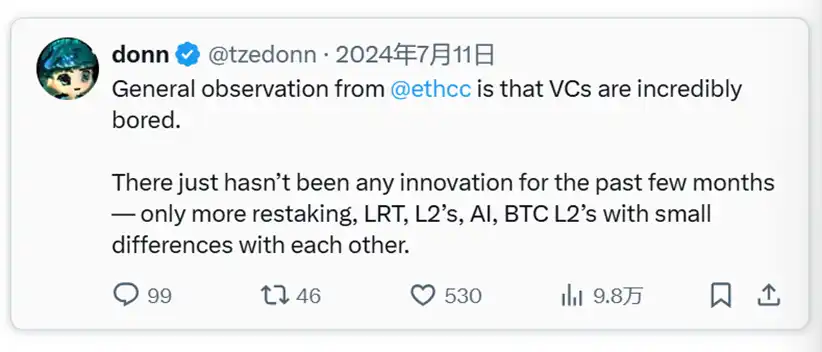
On the price front, I remain optimistic about the crypto market, with the main upward momentum coming from external macro factors. However, I believe that the innovation engine within the crypto industry is gradually slowing down.
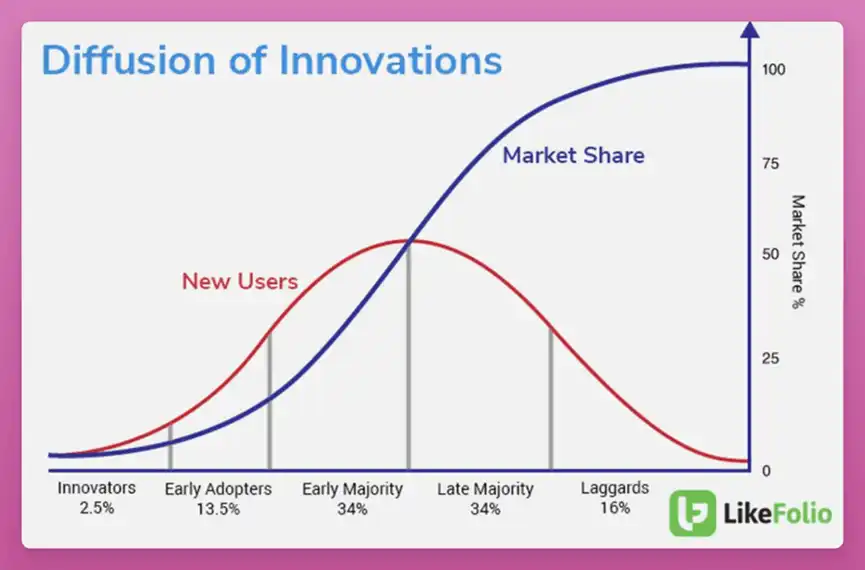
As the industry matures, innovation naturally slows down, but despite this, prices may continue to rise even in the face of innovation deceleration.
The Real Issue: The Retreat of Ambition
But I dare say that the slowdown of innovation is not the root cause of the problem but a symptom. The real issue is that our ambition is waning, and the industry's aversion to risk is increasing.
The crypto industry once rose due to its world-changing radical ideas but now seems content with pursuing regulatory approval and institutional adoption.
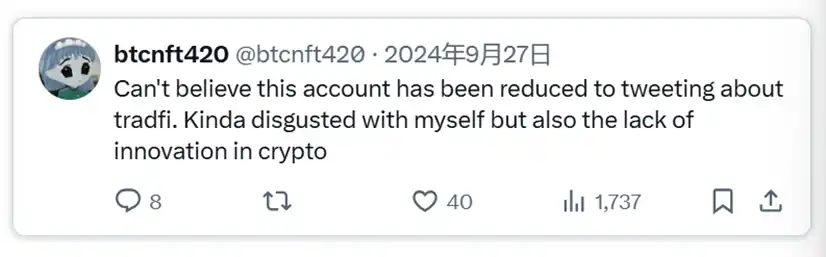
Don't just take my word for it, see how Vitalik wrote about "Bringing Ethereum Back to Its Cypherpunk Roots" in a 2023 blog post:
“Our purpose is not just to develop isolated tools and games, but to holistically drive towards a freer, more open society and economy, where different parts of technology, society, and the economy interweave with each other.”
Think about it carefully: What innovations have we seen in this cycle?
AI×Crypto is one.
But AI is an external innovation; without it, this cycle might have still been stuck in meme coin hype.
Personally, I'm not a fan of meme coins because their sole true purpose is quick enrichment rather than truly changing the world. The purpose of these projects is merely to make you rich enough to no longer care about external world issues.
Do you remember the common phrase we used in the previous cycle?
“[Project Name] is the most egalitarian thing we've seen, ambitious, and if successful, will truly change the social structure.”
However, in comparison, in the previous cycle, we witnessed various radical innovations:
DeFi
NFTs
DeFi Mining
Play-to-Earn games like Axie Infinity
Metaverse
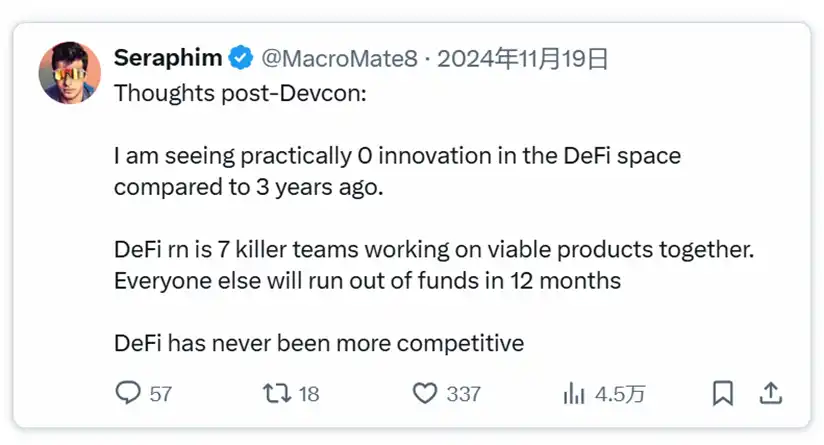
Between 2020 and 2021, there was a peak in tokenomic innovations, such as:
Rebasing Tokens (Ampleforth)
ve Model Tokenomics
(3,3) Model
Liquidity Mining
Using SNX as collateral for sUSD
Multiple algorithmic stablecoins
Current projects and VC supporters now tend to adopt time-tested simple tokenomic models, leaning towards sustainable operations, as they usually only have one shot at a TGE.
$EIGEN (Subjective Objectivity Token) is a rare exception in the tokenomics space.
The 2017 ICO craze can be seen as the peak of ambition, where various bold ideas attempted to decentralize everything. It was an imaginative bubble, with many ideas being too wild and unattainable, leading to the failure of most projects, with surviving projects having to dilute their visions.

However, these wild concepts have attracted a group of people eager for a completely different world, myself included.
I recently read B. Hobart and T. Huber's book "Boom: Bubbles and the End of Stagnation," where they explain that transformative progress comes from small groups with a unified vision, ample funding, and almost no need for accountability. They believe that despite the negative reputation of financial bubbles, many past breakthroughs have benefited from them, and future progress will also be driven by them.
Although we have not completely bid farewell to the era of 'lack of accountability,' with strengthening regulations, the industry's risk aversion sentiment is increasing, and this may be the last major bubble cycle that can bring about actual innovation. I hope that the AI and crypto-combined bubble will at least spawn one or two killer applications.
Ambitious Projects Still Alive
It's not that there are no ambitious crypto projects at present; here are some worth noting:
Ethena: Fusion of DeFi, CeFi, and TradFi
Chainlink: Bridging on-chain and real-world data for tamper-proof smart contracts
Pudgy Penguins: Expanding from Web3 IP branding to the Web2 space
WorldCoin: Enabling universal on-chain identity via eye scan, with potential AI-backed UBI
Liquity/RAI: The ultimate decentralized stablecoin
Arweave/Filecoin: Permanent storage and anti-censorship
Farcaster/Lens: Redefining social media
Polymarket: Truth source in the era of fake news
Bio Protocol (DeSci): Disrupting scientific research by altering the incentive system
Bitcoin: The revolutionary digital gold
You might think WorldCoin's eye scan is too radical or that Liquity v2 and its stablecoin named $BOLD cannot succeed. However, these are the risks that ambitious protocols are willing to take. They are the most egalitarian things we have seen, ambitious, and if successful, will truly change the social structure.
Ethereum is conspicuously absent from this list. Perhaps I am overly critical of ETH, but Vitalik's cypherpunk vision is hardly felt on Twitter. The upcoming fork will have some very minor updates, at least imperceptible to users. It will abandon sharding and L1 scalability, with the best we've come up with lately being a slight increase in the block gas limit.
Ethereum seems to have outsourced both execution and ambition to L2.
ETH's guiding star is still not visible. I hope to see Ethereum great again, with radical new ideas emerging. However, at the moment, Ethereum seems to have embraced the view that a modular blockchain is not scalable, while Solana has chosen a completely different path, sticking to a single-chain model, although network scalability may eventually prove Ethereum's approach to be correct.
Humanity Needs New Frontiers
The world, especially the West, seems to be stuck.
Wage growth is stagnant, the latest iPhone no longer brings excitement, even music sounds repetitive. We keep seeing the same movies being remade because launching a new movie carries a higher risk than remaking a classic. To some extent, we are even moving backwards. For instance, the travel time from London to New York is longer now due to the retirement of Concorde planes compared to the 1970s.
However, crypto remains one of the fastest-growing and most innovative industries in the world, perhaps only second to AI. But I always feel that our pace of innovation and ambition is declining.
Part of the reason is the inevitable result of industry maturity, but we also seem to be starting to accept many technological limitations.
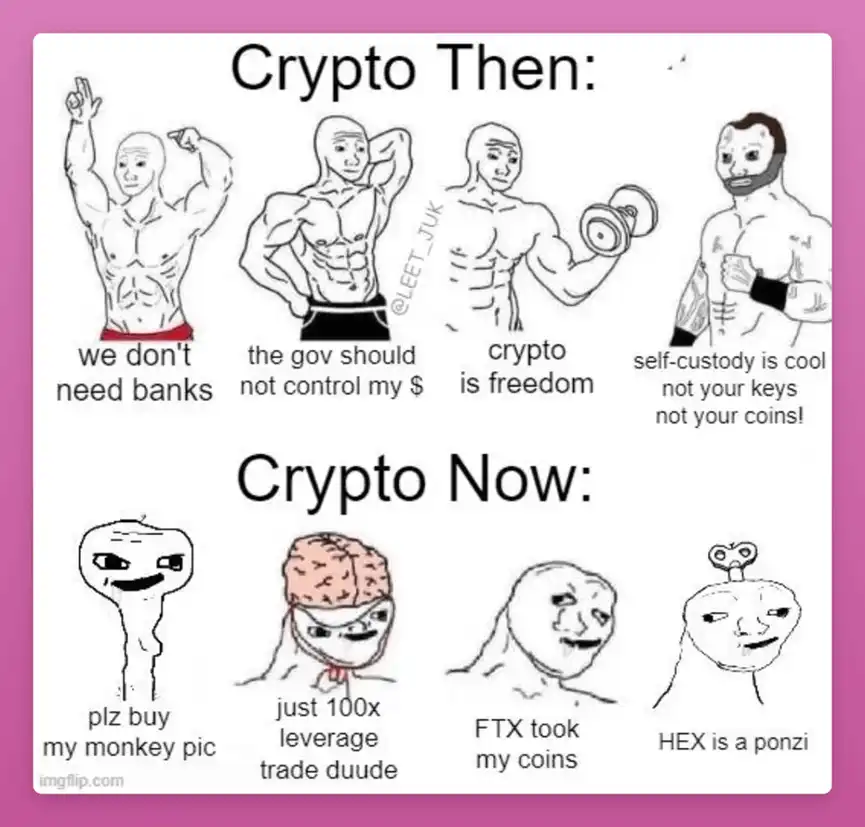
DeFi and DAOs that are no longer fully decentralized seem to have become an acceptable fact. Instead of truly decentralizing DeFi, we simply renamed it to on-chain finance, and the problem was considered solved. Ethereum's inability to scale at L1 is also fine, and the tokenomics innovation is lacking.
The difference in market capitalization between $LQTY and $ENA shows that we no longer truly need decentralized stablecoins; high yields are more important.
Perhaps, with each passing cycle, our diminishing ambition to push boundaries is followed by the gradual dullness of the crypto industry.
After all, if token prices are rising, why take risks :)
You may also like

Bitcoin Falls Below 200-Week Moving Average as On-Chain Data Shows Over Half of Supply in Loss
Bitcoin dropped below its 200-week moving average as on-chain data showed over 50% of circulating supply is now in loss, signaling rising market stress.

CFTC Reportedly Plans New Prediction Market Rules Focused on Manipulation Risk and Public Interest Review
The CFTC is reportedly preparing new prediction market rules focused on manipulation risk, public interest review, and retail trader protections.

Meet the new WEEX trial fund—your gateway to greater profits

WEEX Labs Lands at Dutch Blockchain Week: A Disruptive Crypto × AI Conversation Sets Sail in Amsterdam

SK Hynix Reportedly Plans U.S. ADR Listing as Early as August, With SEC Approval Possible in Late June
SK Hynix may pursue a U.S. ADR listing as early as August, with SEC approval reportedly possible in late June amid strong AI chip supply chain demand.

SpaceX vs Tesla vs xAI: Which Elon Musk Trade Has the Biggest Upside in 2026?
OpenAI Reveals It Has Confidentially Submitted an S-1 to the SEC, Keeping the Door Open for a Future IPO
On June 9, according to an OpenAI announcement, the company recently confidentially submitted a draft S-1 registration statement to the U.S. Securities and Exchange Commission (SEC), beginning the preliminary compliance process for a potential initial public offering. OpenAI said it chose to disclose this proactively because it expected the news might leak; however, the company has not yet set a specific listing timeline, and related arrangements may still take some time.

Latest research from 13 top universities including Cornell University: The current state, challenges, and misconceptions of the fusion of Crypto and AI
Deconstructing Anthropic: The Best AI Company, Possibly Also a Type of Organizational Invention
Apollo and Blackstone Reportedly Back $35 Billion Anthropic Chip Financing as Deal Details Remain Unclear
On June 9, according to currently available news alerts, Apollo and Blackstone Group participated in a $35 billion financing for an Anthropic “chip project.” Based on the original wording of the report, the funding has already been raised, but public information remains limited. The financing structure, use of proceeds, project entity, and whether Apollo and Blackstone participated through equity, debt, or project financing have not yet been disclosed.

Humanity Protocol Security Incident Escalates: More Than $31 Million Stolen From Related Addresses as Attacker Continues Selling H for ETH
On June 9, according to monitoring by Onchain Lens, more than $31 million has been stolen from addresses linked to Humanity Protocol, and the attack is still ongoing, with the hacker continuously swapping H tokens for ETH. Project founder Terence Kwok later confirmed the security incident on X, saying the issue involved a private key leak.

Bloomberg: As Bitcoin Weakens, Stablecoins and RWA Continue to Drive Expansion in Crypto Businesses
In June, Bloomberg reported that despite Bitcoin falling below $60,000 last week, wiping out about $235 billion in market value within seven days, and dropping close to 50% from last year’s peak, some core businesses in the crypto industry are still expanding, mainly in stablecoins, real-world asset tokenization (RWA), payments, and infrastructure. The report also noted that overall altcoin activity has contracted significantly: altcoin market capitalization has fallen from a peak of about $431 billion in November 2021 to around $170 billion, and among the tens of millions of tokens issued in recent years, fewer than 1,700 still maintain meaningful trading activity.

Galaxy Deep Research Report: How Hyperliquid's HIP-4 Upgrade Changes the Landscape of Prediction Markets?
Binance Research: RWA Market Expected to Expand Nearly 6x from Early 2025, with Public Equities and Onchain Payments Heating Up Together
In June, Binance Research said in its monthly market report that the real-world asset (RWA) market is expected to grow by about 589% from the beginning of 2025. Bond- and money market fund-related RWA expanded by about $6.5 billion, up 83% year over year, while publicly traded equity RWAs grew by about 422%. The report also noted that monthly crypto debit card transaction volume exceeded $747 million in May, up 48.6% year to date.

Japan to Assess a Framework for Yen Stablecoins and Crypto ETFs as Asia’s Compliant Payments Narrative Heats Up
Recently, according to the original report, Japan is considering the launch of yen stablecoins and cryptocurrency ETFs. Public information remains limited at this stage, and there is still no complete policy text, regulatory draft, or clear implementation timeline, so this is better characterized as a “policy discussion” rather than formal implementation. The original wording also noted that advancing stablecoin regulation in Asia is driving XRP usage and supporting growth in the XRPL ecosystem. However, based on currently available public information, there is not enough evidence to directly establish a clear causal relationship between this round of discussion in Japan and XRP or XRPL.

ZachXBT: Humanity private key leak and abnormal surge in H token should be viewed separately
On June 9, according to related disclosures, on-chain investigator ZachXBT posted an update on Humanity’s roughly $31 million security incident, saying that after further analyzing fund flows, he currently tends to believe the project team was not involved in an “inside job” or a self-staged attack. According to him, the official explanation about the private key leak was broadly accurate, but before the token unlock, the price of H had been artificially pushed higher, and the hacker later took advantage of that market environment; therefore, the private key leak and the earlier abnormal price pumping should be regarded as two separate and independent events. This reframing has shifted the market’s understanding of the nature of the incident. Earlier discussion around Humanity had focused on whether the team directly participated in the attack or used the security incident to cover up internal operations. ZachXBT’s latest remarks shift the focus from “whether it was self-theft” to “whether there were pre-unlock market structure issues.” He also questioned whether the team may have.

Morning Report | OpenAI has submitted an S-1 registration statement draft to the U.S. SEC; Morpho completes $175 million financing

Morning Report | BitMine increased its holdings by 126,971 ETH last week; trader Eugene announced his exit from the crypto market
Bitcoin Falls Below 200-Week Moving Average as On-Chain Data Shows Over Half of Supply in Loss
Bitcoin dropped below its 200-week moving average as on-chain data showed over 50% of circulating supply is now in loss, signaling rising market stress.
CFTC Reportedly Plans New Prediction Market Rules Focused on Manipulation Risk and Public Interest Review
The CFTC is reportedly preparing new prediction market rules focused on manipulation risk, public interest review, and retail trader protections.
Meet the new WEEX trial fund—your gateway to greater profits
WEEX Labs Lands at Dutch Blockchain Week: A Disruptive Crypto × AI Conversation Sets Sail in Amsterdam
SK Hynix Reportedly Plans U.S. ADR Listing as Early as August, With SEC Approval Possible in Late June
SK Hynix may pursue a U.S. ADR listing as early as August, with SEC approval reportedly possible in late June amid strong AI chip supply chain demand.
SpaceX vs Tesla vs xAI: Which Elon Musk Trade Has the Biggest Upside in 2026?


