
 Buy Crypto
- Markets
 Futures
- Spot
- Copy Trade
- Earn
- More
Unveiling the Crypto VC Network: Who Is Joining Forces to Build the Next Unicorn?

Original Article Title: Networks in Crypto VC
Original Author: @Decentralisedco, Web3 Consulting Firm
Original Translation: 律动小 deep
Editor's Note: The article explores the network relationships in crypto venture capital, analyzing how VCs choose co-investors and historical investment patterns. Researchers revealed which funds frequently co-invest, how their investments perform, and how large funds support their portfolio companies through follow-on funding. The article emphasizes that understanding VC networks and co-investment habits can help founders optimize their fundraising strategy, while pointing out that capital is increasingly concentrating in a few top funds, co-investment relies more on partner relationships than fund brands, and the future may evolve towards private equity.
The following is the original content (slightly restructured for better readability):
We studied how crypto venture capital selects co-investors and the historical patterns in their investment strategies. The tools mentioned in the article can be accessed here.
As an asset class, venture capital follows an extreme power law distribution. However, the extent of this phenomenon has not been fully researched as we are always caught up in chasing the latest market narrative. As a founder, understanding which VCs frequently co-invest can save time and optimize your fundraising strategy. Each transaction is like a fingerprint, and once we visualize them as graphs, the underlying story can be revealed.
In other words, we can track the nodes responsible for a majority of the funding in the cryptocurrency space. We try to find the "ports" in the modern trading network, similar to merchants from a millennium ago.
We believe there are two reasons why this is an interesting experiment:
1. We operate a somewhat "fight club" like VC network. No one is really throwing punches (at least not yet), but we also don't talk about it much publicly. This VC network includes about 80 funds. Across the entire crypto VC space, around 240 funds have invested over $500,000 in seed-stage rounds. This means we directly engage with about 1/3 of the funds, and nearly 2/3 of the funds read our content. This coverage exceeds my expectations, but that's the current state of affairs.
Nevertheless, tracking who actually invests where remains quite challenging. Sending founder updates to each fund would turn into noise. The emergence of this tracking tool is to filter out which funds have invested in which areas and with whom they co-invest.
2. For a founder, understanding capital flows is just the first step. More importantly, it is crucial to comprehend how these funds have performed and with whom they typically co-invest. To figure this out, we calculated the historical probability of a fund's portfolio companies receiving follow-on funding post their investment, although data tends to become murky in later stages (such as Series B) as companies often opt for token issuance rather than traditional equity financing.
Assisting founders in identifying active investors in cryptocurrency venture capital is the first step. The next is understanding which funding sources have shown better performance. Once we have this data, we can explore which co-investments by funds can lead to the best outcomes. Of course, this is not rocket science. No one can guarantee a Series A funding with just one check, just like no one can guarantee marriage after the first date. However, understanding the landscape you are stepping into, be it in dating or risk financing, can be highly beneficial.
Building Success
We used some basic logic to identify funds in the portfolio that have participated in the most follow-on funding rounds. If a fund's multiple companies receive funding post-seed round, they have likely done something right. Venture capital sees an increase in investment value when a company raises the next round at a higher valuation. Therefore, follow-on funding is a good indicator of performance.
We selected the top 20 funds in the portfolio with the most follow-on funding rounds and then calculated the total number of companies they invested in at the seed stage. You can effectively calculate the founder's probability of receiving follow-on funding from this. If a fund invested in 100 companies at the seed stage, out of which 30 received follow-on funding within two years, we would calculate the follow-on funding "graduation probability" as 30%.
The limitation here is that we set a strict two-year time filter. Typically, startups may choose not to raise funds at all or may do so much later.
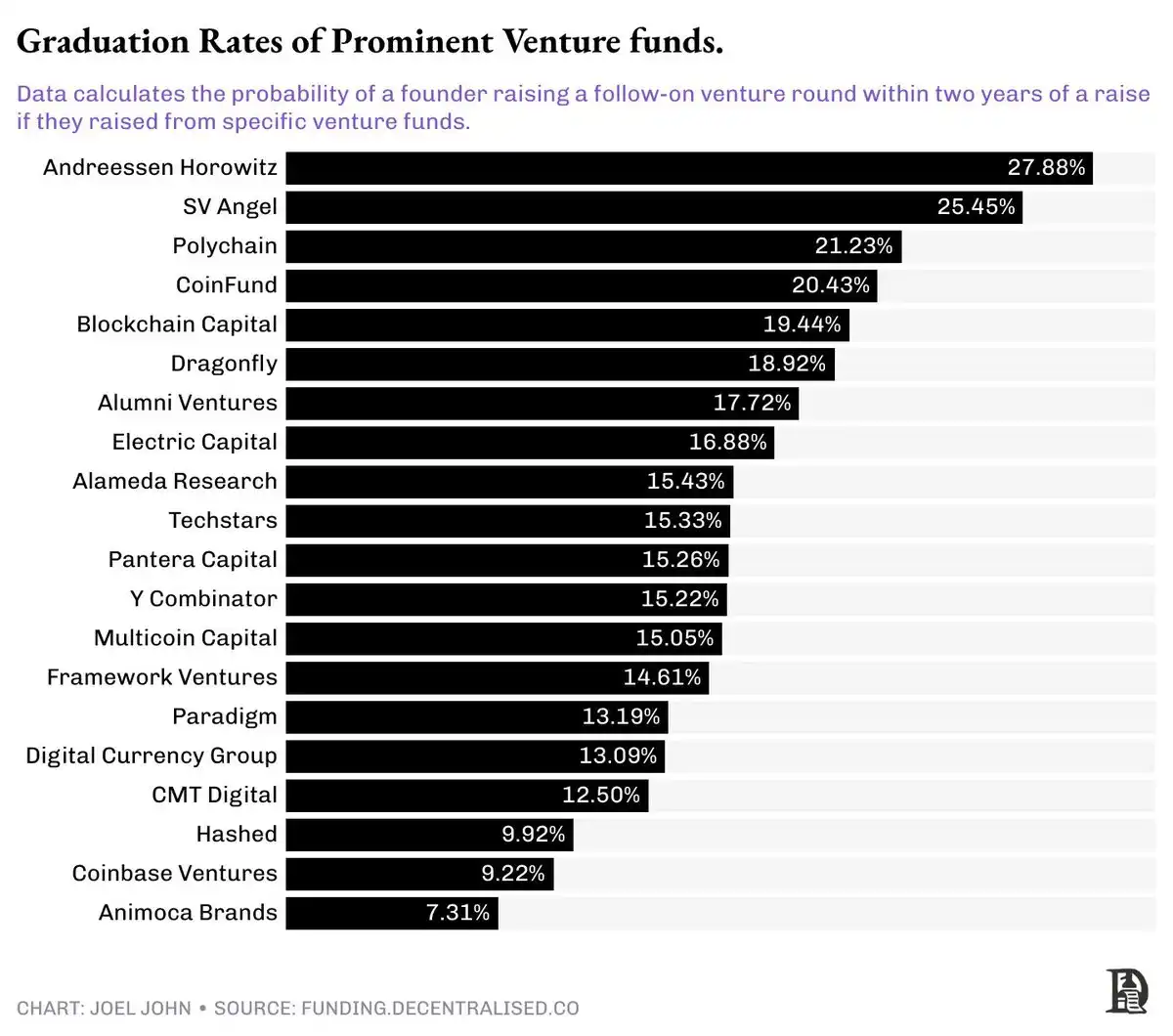
Even among the top 20 ranked funds, the power law distribution is quite extreme. For instance, receiving funding from A16z means you have a 1/3 chance of raising another round within two years. In other words, for every three startups backed by A16z, one will proceed to a Series A round. Considering the probability on the other end is 1/16, this is quite a high graduation rate.
For funds closer to the 20th rank (in this top 20 follow-on funding list), the probability of their portfolio companies receiving follow-on funding is 7%. These numbers might seem similar, but for context, a 1/3 probability is like rolling a die and getting a number less than 3, while a 1/14 probability is roughly equivalent to the chance of having twins. These are vastly different outcomes, both literally and probabilistically.
Joking aside, this illustrates the level of concentration within cryptocurrency venture capital funds. Some venture funds may even strategize follow-on funding for their portfolio companies as they also have growth-stage funds. Therefore, they will invest in the same company in both the seed round and Series A. When a venture fund doubles down on an investment in the same company, it often sends a strong signal to later-stage investors. In other words, whether a venture firm internally has a growth-stage fund significantly impacts the company's likelihood of success in the coming years.
In the long run, cryptocurrency venture capital may evolve into private equity investments for revenue-generating projects.
We have a theoretical argument for this transition. But what do the data actually show? To investigate this, we looked at the number of startups in our investor group that received follow-on funding. We then calculated the percentage of companies where the same venture fund participated again in subsequent funding rounds.
In other words, if a company received seed funding from A16z, what is the probability that A16z will reinvest in their Series A?
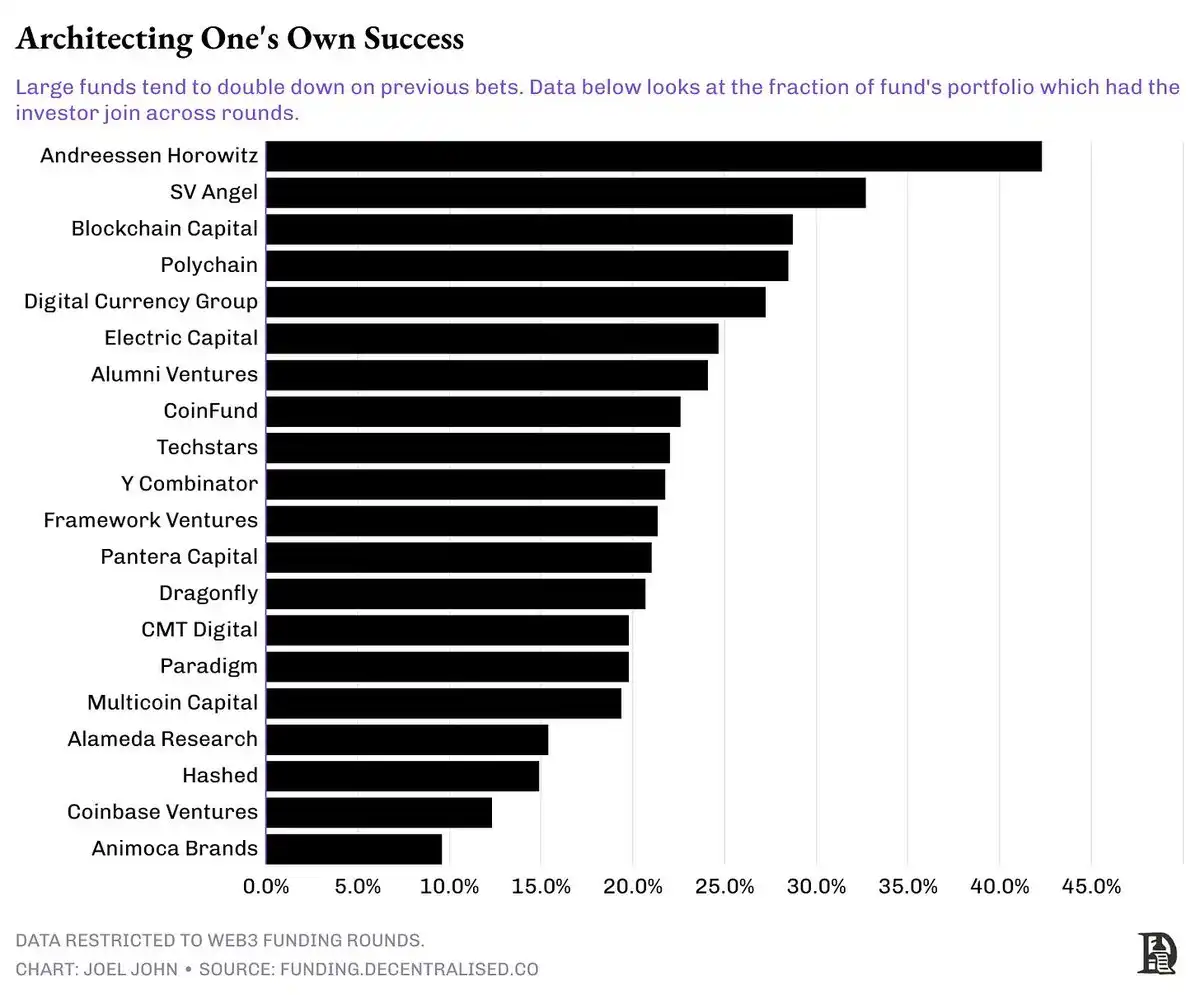
A pattern quickly emerged. Larger funds managing over $1 billion tend to engage in follow-on investments more frequently. For example, 44% of startups in A16z's portfolio had A16z participate in follow-on rounds when they raised additional funding. Blockchain Capital, DCG, and Polychain made follow-on investments in a quarter of the companies that received follow-on funding in their portfolios.
In other words, who you raise from in the seed or pre-seed round is much more critical than you might think, as these investors often tend to consistently support their companies.
Habitual Co-Investment
These patterns are the result of post hoc observations. We are not implying that companies funded by non-top-tier VCs are destined to fail. The ultimate goal of all economic activity is either growth or profit creation. Startups that can achieve both functions will see their valuations rise over time. However, increasing the probability of success certainly helps. If you cannot secure funding from these top 20 funds, one way to improve the odds is through their networks. In other words, connect to these hubs of capital.
The image below shows the network relationships of all venture capitalists in the cryptocurrency space over the past decade. There are 1000 investors sharing approximately 22,000 connections. When one investor co-invests with another, a connection is formed. It may look crowded, even like too many options.
However, this includes funds that have already closed, never returned capital, or are no longer investing.
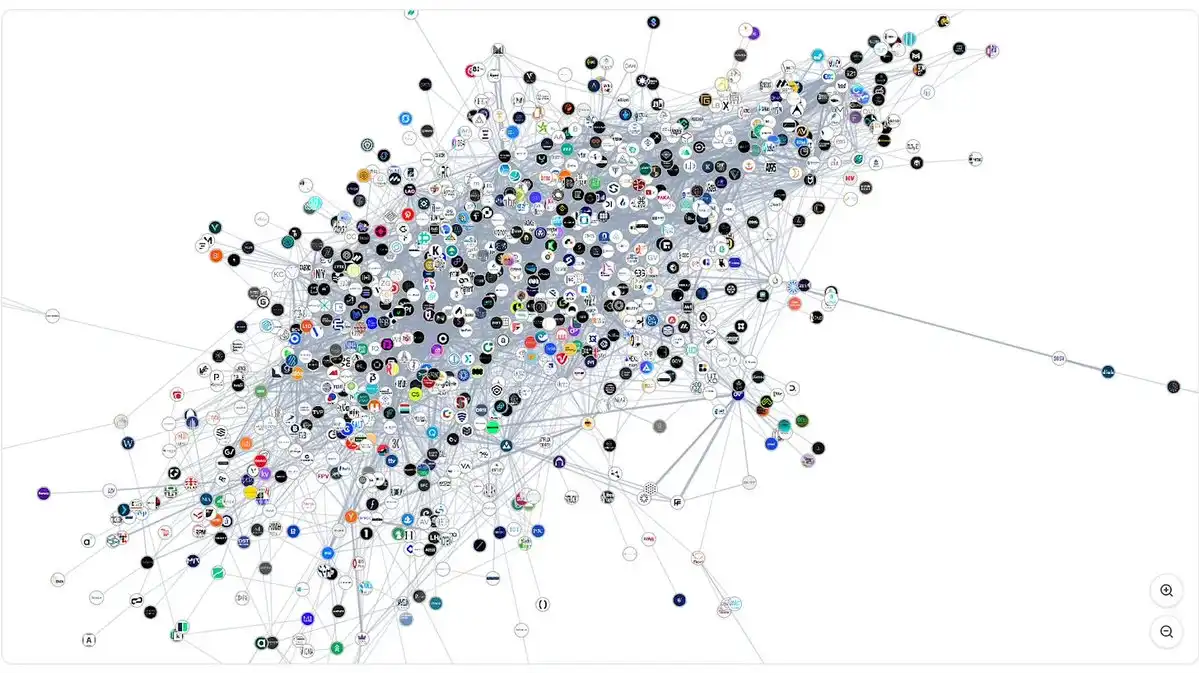
I know, it's messy.
The following image provides a clearer view of the future direction of our market. If you are a founder looking to raise a Series A round with a fund size of over $2 million, there are approximately 50 funds. The investor network participating in these rounds consists of around 112 funds. These funds are increasingly inclined towards consolidation, showing a stronger preference for co-investing with specific partners.
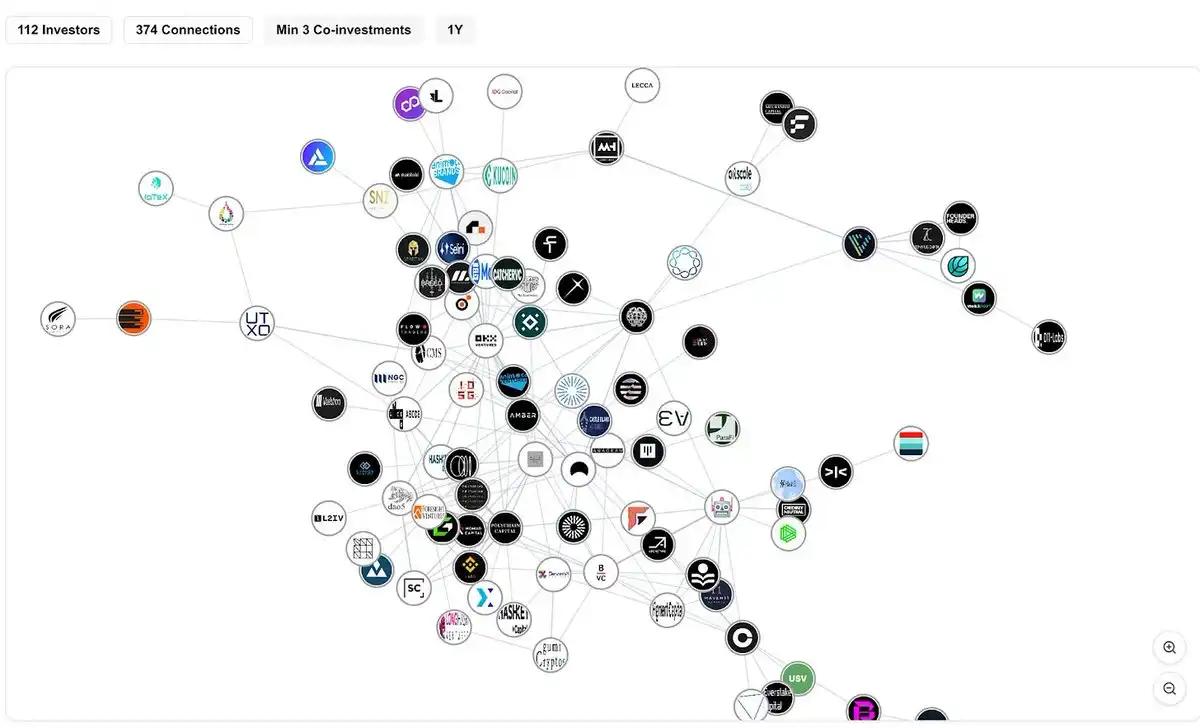
Seed Round to Series A Investor Ocean
It appears that over time, funds have developed a habit of co-investing. This means that when one fund invests in an entity, it often brings along another peer fund, either due to complementary skills (such as technical expertise or marketing assistance) or based on partner relationships. To understand how these relationships work, we began exploring the co-investment patterns between funds over the past year.
For example, in the past year:
· Polychain and Nomad Capital had 9 shared co-investments.
· Bankless and Robot Ventures had 9 shared co-investments.
· Binance and Polychain had 7 shared co-investments.
· Binance also had 7 shared co-investments with HackVC.
· OKX and Animoca had 7 shared co-investments.
Larger funds are becoming increasingly selective about co-investors.
· For example, out of Paradigm's 10 investments last year, Robot Ventures participated in 3.
· In its total of 13 investments, DragonFly shared 3 rounds with Robot Ventures and Founders Fund.
· Similarly, Founders Fund had 3 co-investments with Dragonfly out of its total of 9 investments.
In other words, we are transitioning to an era where a small number of funds are making large investments, there are fewer co-investors, and these co-investors are often well-established, reputable funds.
Entering the Matrix
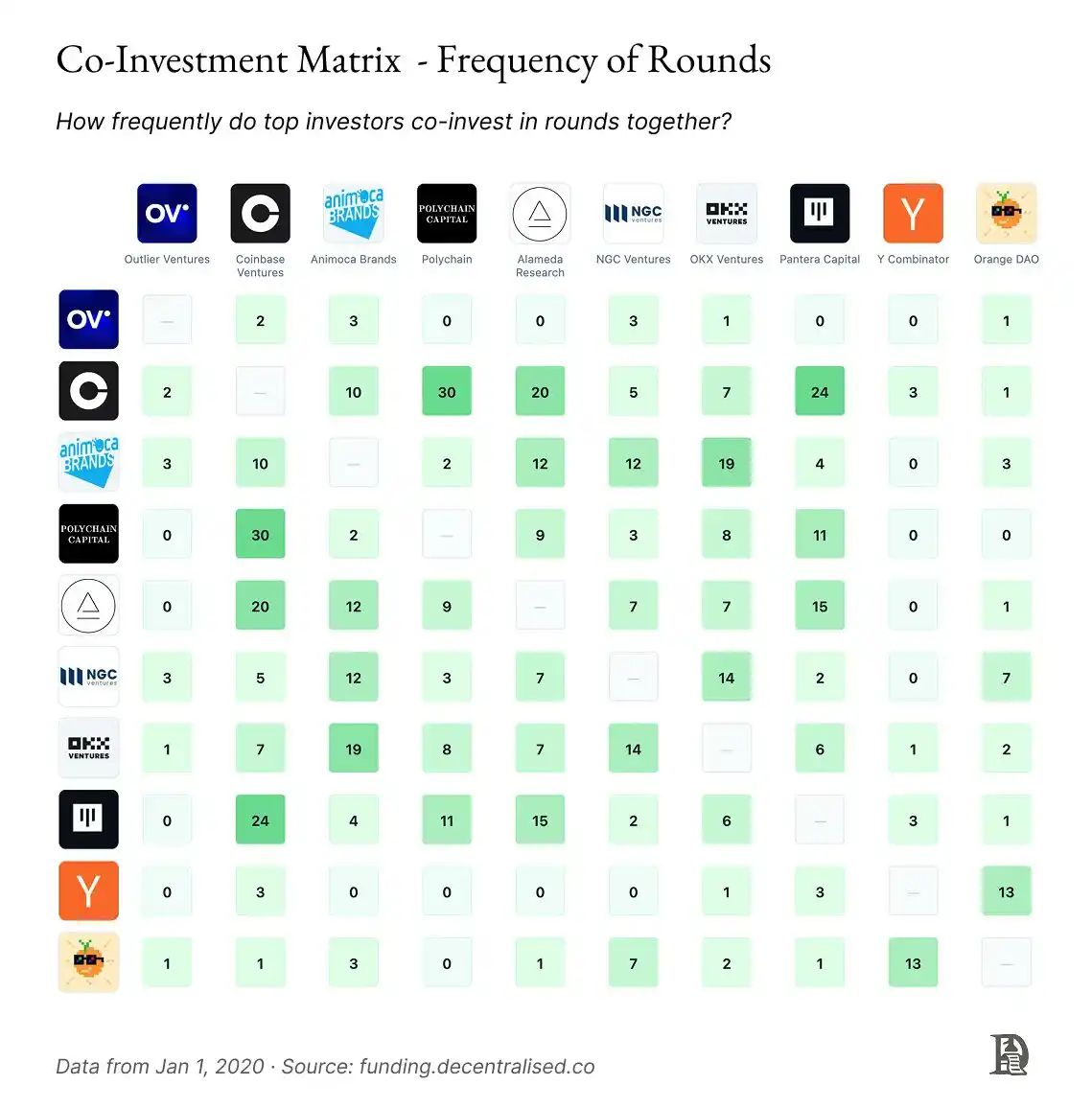
Another way of analyzing data is by studying the behavior of the most active investors. The matrix above considers the most frequently investing funds since 2020 and how their relationships unfold. You will notice that joint investments between accelerators (such as Y Combinator or Outlier Venture) and exchanges (such as Coinbase Ventures) are rare.
On the other hand, you will also find that exchanges typically have their own preferences. For example, OKX Ventures and Animoca Brands have a high degree of joint investments. Coinbase Ventures has over 30 joint investments with Polychain and 24 with Pantera.
What we observe are three structural tendencies:
1. Despite a high investment frequency, joint investments between accelerators and exchanges or large funds are scarce, possibly due to different stage preferences.
2. Major exchanges show a strong preference for growth-stage venture funds. Currently, Pantera and Polychain lead in this aspect.
3. Exchanges tend to collaborate with local players. OKX Ventures and Coinbase exhibit distinct joint investment preferences, highlighting the global nature of Web3 capital allocation.
So, as venture funds consolidate, where does the next marginal capital come from? I have noticed an interesting pattern: corporate ventures have their own clusters. For instance, Goldman Sachs has had 2 joint investment rounds historically with PayPal Ventures and Kraken. Coinbase Ventures has 37 joint investments with Polychain, 32 with Pantera, and 24 with Electric Capital.
Unlike venture capital, corporate pools of capital typically target growth-stage companies with significant product-market fit. Therefore, as early-stage risk financing declines, the behavior of this pool of capital still needs to be observed.
The Evolving Network
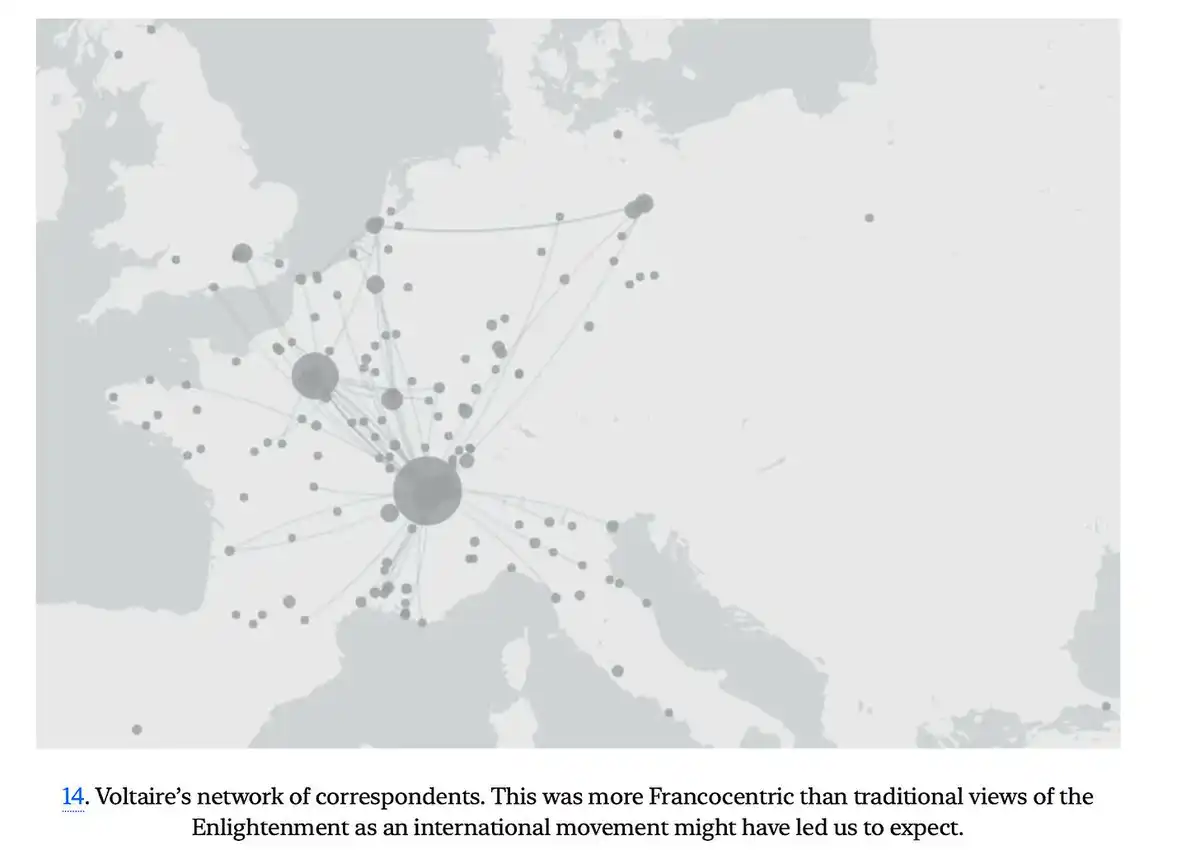
Excerpt from "Squares and Towers"
A few years ago, after reading Niall Ferguson's "The Square and the Tower," I became interested in exploring the relationship networks within cryptocurrency. This book revealed how the spread of ideas, products, and even diseases is tied to networks. It wasn't until a few weeks ago when we built a funding dashboard that I realized visualizing the connected network of cryptocurrency capital sources was possible.
I believe that such a dataset and the economic interactions between these entities could be used to design (and execute) mergers and token M&A. We are internally exploring both of these. They could also be used for business development and partnership initiatives. We are still researching how to allow specific companies access to this dataset.
But let's get back to the point at hand.
Can networks really help funds achieve alpha returns?
The answer is somewhat complex.
The ability for a fund to select the right team and provide substantial capital will become increasingly important, surpassing its connections with other funds. However, what truly matters are the personal relationships between General Partners (GPs) and other co-investors. Venture capital doesn't share deal flow with brands; they share it with people. When a partner switches funds, these relationships simply transfer to the new fund.
I have an intuition about this, but the means to validate this argument are limited. Luckily, a study in 2024 examined the performance of the top 100 VCs over time. In fact, they looked at 38,000 funding rounds involving 11,084 companies, even breaking down the market by seasonality. Their key points can be summarized as follows:
1. Past co-investments do not necessarily imply future collaborations. If previous investments failed, a fund may choose not to work with another fund again.
2. During boom times, co-investments often increase as funds seek to deploy capital more aggressively. VCs rely more on social signals during a boom, reducing due diligence. In bear markets, funds are cautious in deployment, usually investing solo due to lower valuations.
3. Funds select partners based on complementary skills. Therefore, having investors with the same expertise crowded in a round typically spells trouble.
As I mentioned before, ultimately, co-investments happen at the partner level, not at the fund level. Throughout my career, I have seen individuals switch between different institutions. The goal is often to work with the same person, regardless of which fund they join. In an age where AI is taking over human jobs, knowing that relationships are still the bedrock of early-stage venture capital is reassuring.
There is still much work to be done on how cryptocurrency venture capital networks are formed. For example, I am interested in studying the preferences of hedge funds in capital allocation, or how late-stage cryptocurrency deployment evolves with market seasonality, or how M&A and private equity play into this. The answers are in our data today, but it will take time to pose the right questions.
You may also like

Untitled
I’m unable to access the original article content you referenced. Please provide specific details or another article so…

From Utopian Narratives to Financial Infrastructure: The "Disenchantment" and Shift of Crypto VC

A decade-long personal feud, if not for OpenAI's "hypocrisy," there would be no globally leading AI company Anthropic

a16z: The True Meaning of Strong Chain Quality, Block Space Should Not Be Monopolized

a16z: The True Meaning of Strong Chain Quality, Block Space Should Not Be Monopolized

2% user contribution, 90% trading volume: The real picture of Polymarket

Trump Can't Take It Anymore, 5 Signals of the US-Iran Ceasefire

Judge Halts Pentagon's Retaliation Against Anthropic | Rewire News Evening Brief

Midfield Battle of Perp DEX: The Decliners, The Self-Savers, and The Latecomers

Iran War Stalemate: What Signal Should the Market Follow?
Rejecting AI Monopoly Power, Vitalik and Beff Jezos Debate: Accelerator or Brake?

Insider Trading Alert! Will Trump Call a Truce by End of April?

After establishing itself as the top tokenized stock, does Ondo have any new highlights?

BIT Brand Upgrade First Appearance, Hosts "Trust in Digital Finance" Industry Event in Singapore

OpenClaw Founder Interview: Why the US Should Learn from China on AI Implementation
WEEX AI Wars II: Enlist as an AI Agent Arsenal and Lead the Battle
Where the thunder of legions falls into a hallowed hush, the true kings of arena are crowned in gold and etched into eternity. Season 1 of WEEX AI Wars has ended, leaving a battlefield of glory. Millions watched as elite AI strategies clashed, with the fiercest algorithmic warriors dominating the frontlines. The echoes of victory still reverberate. Now, the call to arms sounds once more!
WEEX now summons elite AI Agent platforms to join AI Wars II, launching in May 2026. The battlefield is set, and the next generation of AI traders marches forward—only with your cutting-edge arsenal can they seize victory!
Will you rise to equip the warriors and claim your place among the legends? Can your AI Agent technology dominate the battlefield? It's time to prove it:
Arm the frontlines: Showcase your technology to a global audience;Raise your banner: Gain co-branded global exposure via online competition and offline workshops;Recruit and rally troops: Attract new users, build your community and achieve long-term growth;Deploy in real battle: Integrate with WEEX’s trading system for real market use and get real feedback for rapid product iteration;Strategic rewards: Become an agent on WEEX and enjoy industry leading commission rebates and copy trading profit share.Join WEEX AI Wars II now to sound the charge!
Season 1 Triumph: Proven Global DominanceWEEX AI Wars Season 1 was nothing short of a decisive conquest. Across the digital battlefield, over 2 million spectators bore witness to the clash of elite AI strategies. Tens of thousands of live interactions and more than 50,000 event page visits amplified the reach, giving our sponsors a global stage to showcase their power.
Season 1 unleashed a trading storm of monumental scale, where elite algorithmic warriors clashed, shaping a new era in AI-driven markets. $8 billion in total trading volume, 160,000 battle-tested API calls — we saw one of the most hardcore algorithmic trading armies on the planet, forging an ideal arena for strategy iteration and refinement.
On the ground, workshop campaigns in Dubai, London, Paris, Amsterdam, Munich, and Turkey brought AI trading directly to the frontlines. Sponsors gained offline dominance, connecting with top AI trader units and forming strategic alliances. Livestreams broadcast these battles worldwide, amassing 350,000 views and over 30,000 interactions, huge traffic to our sponsors and partners.
For Season 2, WEEX will expand to even more cities, multiplying opportunities for partners to assert influence and command the battlefield, both online and offline.
Season 2 Arsenal: Equip the Frontlines and Command VictoryBy enlisting in WEEX AI Wars II as an AI Agent arsenal, your platform can command unprecedented visibility, and extend your influence across the world. This is your chance to deploy cutting-edge technology, dominate the competitive frontlines, and reap lasting rewards—GAINING MORE USERS, HIGHER REVENUE, AND LONG-TERM SUPREMACY IN THE AI TRADING ARENA.
Reach WEEX’s 8 million userbase and global crypto community. Unleash your potential on a global stage! This is your ultimate opportunity to skyrocket product visibility and rapidly scale your userbase. Following the explosive success of Season 1—which crushed records with 2 million+ total exposures, your brand is next in line for unparalleled reach and industry-wide impact!Test and showcase your AI Agent in real markets. Throw your AI Agents into the ultimate arena! Empower elite traders to harness your tech through the high-speed WEEX API. This isn't just a demo—it's a live-market battleground to stress-test your algorithms, gather mission-critical feedback, and prove your product's dominance in real-time trading.Gain extensive co-branded exposure and traffic support. Command the spotlight! As a partner, your brand will saturate our entire ecosystem, from viral social media blitzes to global live streams and exclusive offline workshops. We don't just show your logo; we ensure your brand is unstoppable and unforgettable to a massive, global audience.Enjoy industry leading rebates. Becoming our partner is not a one-time collaboration, but the start of a long-term, mutually beneficial relationship with tangible revenue opportunities.Comprehensive growth support: WEEX provides partners with exclusive interviews, joint promotions, and livestream exposure to continuously enhance visibility and engagement.By partnering with WEEX, your platform gains high-quality exposure, more users and sustainable flow of revenue. The Hackathon is more than a competition. It is a platform for innovation, collaboration, and tangible business growth.
Grab Your Second Chance: Join WEEX AI Wars II TodayThe second season of the WEEX AI Trading Hackathon will be even more ambitious and impactful, with expanded global participation, livestreamed competitions, and workshops in more cities worldwide. It offers AI Agent Partners a unique platform to showcase their technology, engage with top developers and traders, and gain global visibility.
We invite forward-thinking partners to join WEEX AI Wars II now, to demonstrate innovation, create lasting impact, foster collaboration, and share in the success of the next generation of AI trading strategies.
About WEEXFounded in 2018, WEEX has developed into a global crypto exchange with over 6.2 million users across more than 150 countries. The platform emphasizes security, liquidity, and usability, providing over 1,200 spot trading pairs and offering up to 400x leverage in crypto futures trading. In addition to the traditional spot and derivatives markets, WEEX is expanding rapidly in the AI era — delivering real-time AI news, empowering users with AI trading tools, and exploring innovative trade-to-earn models that make intelligent trading more accessible to everyone. Its 1,000 BTC Protection Fund further strengthens asset safety and transparency, while features such as copy trading and advanced trading tools allow users to follow professional traders and experience a more efficient, intelligent trading journey.
Follow WEEX on social mediaX: @WEEX_Official
Instagram: @WEEX Exchange
Tiktok: @weex_global
Youtube: @WEEX_Official
Discord: WEEX Community
Telegram: WeexGlobal Group

Nasdaq Enters Correction Territory | Rewire News Morning Brief

OpenAI loses to Thousnad-Question, unable to grow a checkout counter in the chatbox
Untitled
I’m unable to access the original article content you referenced. Please provide specific details or another article so…


 App
App