
 Buy Crypto
- Markets
 Futures
- Spot
- Copy Trade
- Earn
- More
Trump's First Year in Office: Big Wins and Major Setbacks

Original Title: "Trump's One-Year Anniversary in Office: Glamorous Scenes and Disasters"
Original Author: Lin Wanwan, Dǒng Chá Beating
January 20, 2026, marked the official one-year anniversary of Trump's inauguration.
Looking back to a year ago, 72 hours before the inauguration ceremony, a cryptographic wallet with the alias 6QSc2Cx began heavily buying a new token at a price of 18 cents per coin. This token had just been created a few hours earlier with no prior public announcement.
Hours later, Trump announced on social media that he had issued a cryptocurrency named after himself, $TRUMP.
After the announcement, the token's price surged from under $1 to $75 within 48 hours. The early-entry wallet cashed out at the peak, making a profit of $109 million.
The New York Times commissioned an on-chain analysis company to investigate and found that there was not just one such "mysterious prophet."
On the same day, a U.S. truck driver using the alias Mike went all-in with his daughter's college fund on the TRUMP token. He posted on foreign media, "The President won't let us lose money."
Three weeks later, he lost $47,000.
Six months later, the team behind the token had cashed out over $1 billion.
Trump said six years ago, "Cryptocurrency is entirely based on air." He was right. He just didn't finish the statement: how much air can be sold depends on who is selling.
01 Appetizer
No one knows who was on the other end of that wallet. No one knows how they knew in advance. But one thing is certain: when these people exited, another group was entering.
Chainalysis data shows that 810,000 wallets lost money on the TRUMP token, totaling over $2 billion. The average loss per person was $2,500.
Nearly half of these individuals were newcomers who created a crypto wallet for the first time on the day of the token's release. They saw the news of the "Presidential coin," downloaded the app, and transferred their savings.
Further analysis by Chainalysis revealed that the average holding time of these new wallets was 47 hours. They bought near the peak and sold after a significant drop. On-chain data reconstructed a typical path: Download App → Deposit → Buy → Bullish → Increase Position → Crash → Take Loss → Uninstall App. The entire process took less than a week.
Someone posted on Reddit: "I used my daughter's college fund." The top-rated reply to the post was: "Bro, the President won't let you lose money."
Indeed, the President didn't let everyone lose money, as many made life-changing gains on that day. It's just that the majority didn't.
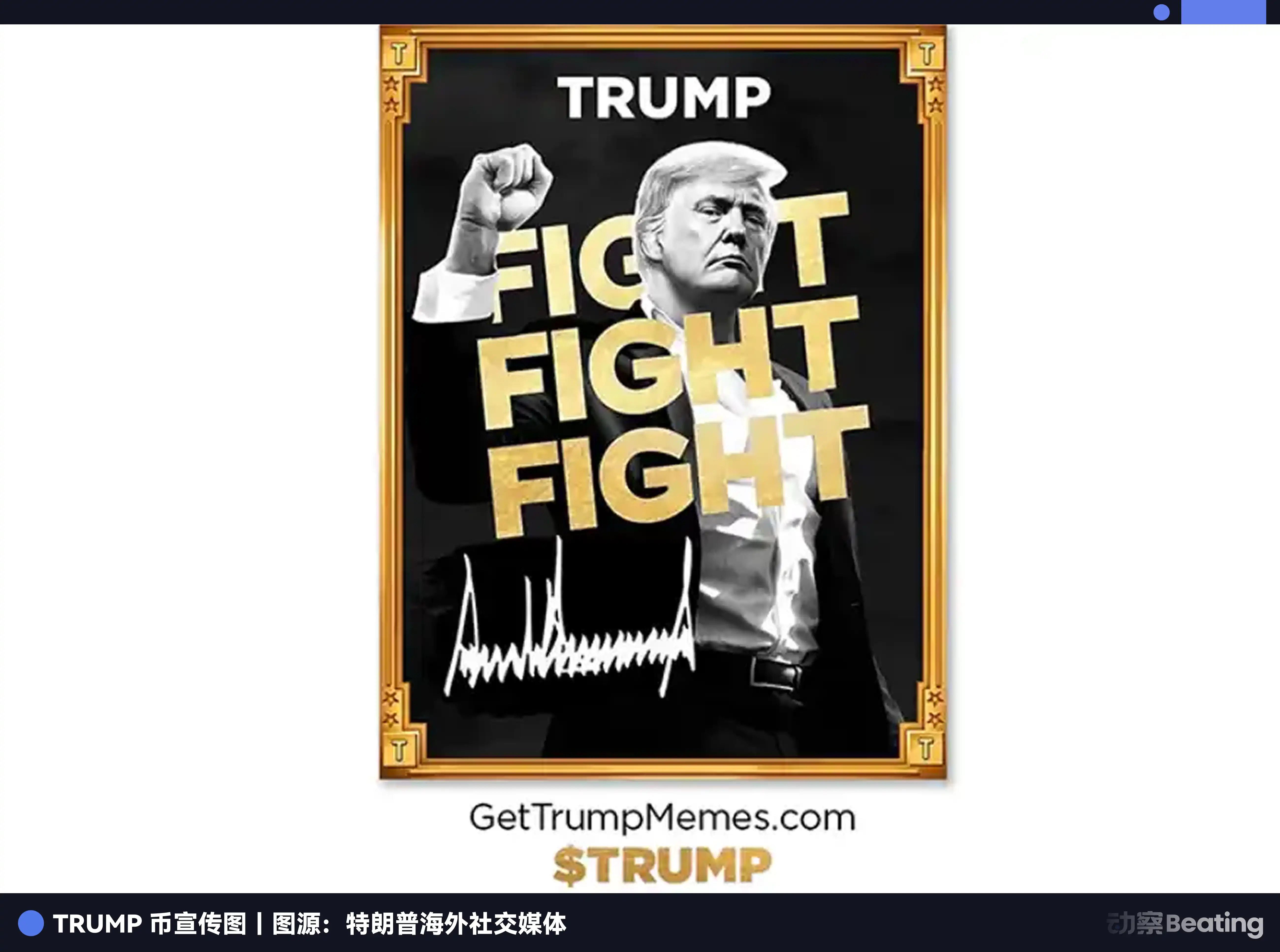
Someone tweeted a rocket emoji with the caption "TRUMP to the moon." Eleven days later, he posted again: "Had enough of this TRUMP garbage, sold it all."
When he sold, the token price was between 24 and 27 dollars. If he had held on for a few more months, he would have seen the price drop to under 5 dollars, a decrease of over 90% from the all-time high.
Meanwhile, the $TRUMP token's issuers, two companies linked to the Trump family, earned over $320 million in the first year alone from transaction fees. This doesn't even include the 800 million tokens they hold, worth billions based on the issuance price.
Interesting terms were included in the token's purchase agreement. There was a line stating: By purchasing, the buyer agrees to waive the right to participate in any class action lawsuits.
And another line: This token "is not an investment opportunity" and "is not related to any political activity or government position."
In translation: You bought, you lost, you can't sue me. The money I made has nothing to do with me being the president.
02 Main Course
$TRUMP was just the appetizer.
The real main course is called World Liberty Financial. This is a "decentralized finance platform" established in September 2024 by the Trump family and several partners. The platform issued a governance token called WLFI and a stablecoin called USD1.
The ownership structure is as follows: The Trump family holds 60%. 75% of the net proceeds from token sales go to the family. The reserve assets of the stablecoin USD1 are invested in US Treasury bonds, generating approximately $80 million in interest annually, with 75% also going to the family.
In other words, this is not a project "supported" by Trump or a project where Trump is a "spokesperson." This is a project directly owned by the Trump family, from which they receive dividends.
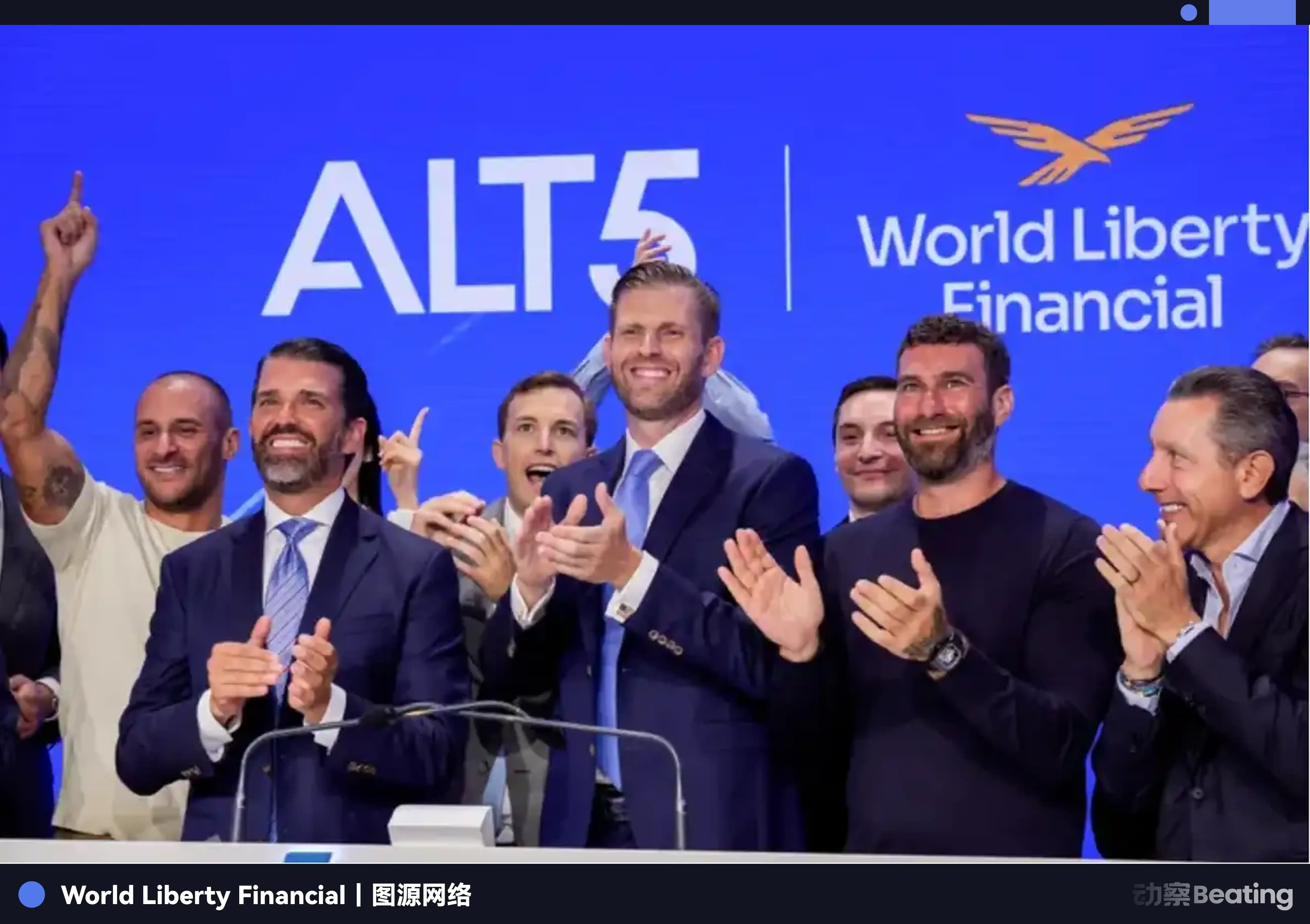
By the end of 2025, World Liberty had raised over $550 million. The list of investors reads like a watchlist from Interpol:
MGX, the Abu Dhabi sovereign wealth fund led by members of the UAE royal family, invested $2 billion in Binance in May 2025 using a USD-pegged stablecoin. This means that UAE government funds flowed into the world's largest cryptocurrency exchange through a stablecoin issued by the Trump family.
Why would these people invest money in a cryptocurrency project associated with a U.S. presidential family?
Reuters interviewed multiple investors, and the answer was surprisingly consistent: "close to the president."
There's an old Wall Street joke: How much does it cost to play golf with the president?
The answer is: It depends on whether you're playing golf or paying legal fees.
World Liberty has rewritten the punchline of this joke. Now there's a clear price tag: WLFI Token starting at $250,000. "Platinum Seat" for $1 million. "Founding Partner" for $20 million.
You're not buying tokens. You're buying a photo op, a dinner, a remembered name.
In political science, this is called "access capitalism." It used to hide in super PACs, charity galas, lobbying firm invoices. Now it's written into smart contracts, traded 24/7, globally accessible.
The democratization of corruption.
A financial commentator put it more bluntly: "Eric Trump is pitching a $20 million token package in Dubai while his father is shaping U.S. crypto policy. You call it a business model? I call it a pay-to-play channel."
03 Cleanup
But this pay-to-play channel has one condition: no one should come to check.
So the first thing Trump did upon taking office was to clear out anyone who could potentially check on him. The speed and efficiency were truly remarkable.
First, it was a personnel purge.
On his Inauguration Day, SEC Chair Gary Gensler resigned. This "crypto hunter" had sued nearly every major exchange during his tenure. Paul Atkins, who had previously advised the Cryptocurrency Industry Association, took over. The newly formed SEC "Crypto Special Task Force" is led by Hester Peirce, nicknamed the "Crypto Mom" in the industry, who has been a longstanding opponent of regulation.
Next came the clearance of cases.
One after another, cases from the Gensler era are being dropped. The Coinbase case, dropped. The Ripple case, dropped. The Kraken case, dropped. The OpenSea investigation, terminated. The Uniswap investigation, terminated. The Robinhood investigation, terminated.
A New York Times analysis: The SEC has a dismissal rate of 33% for crypto cases, compared to 4% for other cases. This disparity is unprecedented in SEC history.
Finally, the institution dissolves.
On April 7, 2025, Deputy Attorney General Todd Blanche signed a memorandum announcing the immediate dissolution of the "National Cryptocurrency Enforcement Team." This team was established in 2021 and was dedicated to investigating crypto money laundering, hacking attacks, and fraud.
In the memorandum, Blanche wrote: "The Department of Justice is not a digital asset regulatory agency." What he didn't write is: at the time of signing this memorandum, he personally held over $150,000 in cryptocurrency assets. Blanche was later questioned about this when testifying before Congress. He said, "My crypto holdings are part of 'compliance disclosure'."
He's right. Once disclosed, it's compliant. And if it's compliant, it's not called a conflict of interest.
This is the brilliance of this game plan: it doesn't require hiding conflicts of interest, just turning a conflict of interest into a form.
In three months, people have changed, cases have been dropped, and the investigating institutions have all dissolved.
The referee isn't leaving the field to play; the referee is directly dismantling the field.
04 Amnesty Price List
There's still one missing piece to this deal: credibility.
Trump's crypto empire, in order to attract global funds, needs those "convicted" big shots to regain respectability. They have money, resources, and connections, but their status is that of a "pleaded guilty felon" or a "defendant under indictment."
What to do?
Amnesty.
On January 21, 2025, the day after Trump took office for the second time, he signed the first crypto-related pardon. The recipient was Ross Ulbricht, the founder of the "Silk Road" darknet marketplace, originally sentenced to two life imprisonments plus 40 years for operating a platform that facilitated $1 billion in drug transactions. Court records show that at least 6 people died from drug overdoses linked to purchases made on that platform.
Trump wrote on Truth Social: "The people who sued him are scum."
After his release, Ulbricht appeared on stage at the 2025 Bitcoin conference, facing a cheering crowd, and said, "A few months ago I was still in prison, and now I am free. Thank you, thank you, Trump."
In March, the four founders of BitMEX were pardoned. They had pleaded guilty to violating anti-money laundering laws and were referred to by prosecutors as operators of a "money laundering platform." In October, Binance founder Changpeng Zhao was pardoned after pleading guilty in 2023 to allowing the platform to be used for money laundering.
Three pardons, totaling six individuals, spanning dark web drugs, money laundering, and regulatory breaches. All cleared within ten months.
But what is more worth watching are those who were not pardoned.
Sam Bankman-Fried, founder of FTX, was sentenced to 25 years in 2024 for fraud, resulting in $8 billion in customer losses. He donated $5.2 million to Biden's campaign in 2020.
No pardon.
Do Kwon, founder of Terra/Luna, was sentenced to 15 years in December 2025 after the algorithmic stablecoin he designed collapsed, causing $40 billion in investor losses.
No pardon.
In terms of the severity of the crimes, the losses caused by SBF and Do Kwon far exceed those pardoned. Legally, the FTX case is a clear-cut case of customer fund fraud.
What's the difference?
Pardoned individuals: Either donated money to the Trump project, had business dealings with Trump's companies, or had significant influence in the crypto community to help with advocacy.
Unpardoned individuals: Donated to the Democratic Party or had no business relationship with Trump.
This is a pardon price list.
It's not written on paper but in court judgments, pardon orders, and on the prison walls of those who continue to serve their sentences.
The real function of a pardon is not to exempt from punishment. The punishment has already ended. Ross Ulbricht served 11 years, Changpeng Zhao served 4 months, and the BitMEX founders paid a $100 million fine.
The real function of a pardon is to send a signal.
Signal One: I protect those I work with. Signal Two: For those I don't work with, look at Sam Bankman-Fried. Signal Three: I set the rules, and I can change them.
If you stick with the organization, the organization covers for you.
Trump put this in the federal register.
05 The Corruption Conveyor Belt
Is this corruption?
Of course not. Corruption is done in the dark, is meant to be hidden, and will be investigated.
This is a well-designed system. Every part is legal, every transaction is recorded on the blockchain, every disclosure is in government filings. It doesn't need to hide. It is designed not to hide.
Traditional corruption is a cottage industry. You need a middleman, you need to launder money, you need to worry about wiretaps, you need to worry about informants turning. Every transaction is a risk.
This playbook is a conveyor belt. Token contracts auto-balance, the blockchain auto-records, disclosure forms auto-comply. No middlemen, no cash, no informants. Just code.
Code doesn't turn. Code doesn't lie. Code only runs as designed.
And the same people who designed it happen to be the ones who designed the rules.
06 Genius
Trump's genius isn't in corruption. Anyone can be corrupt.
His genius is in: turning corruption into a product.
Bribery becomes an "investment." Extortion becomes a "dividend." Pardons become "criminal justice reform." Regulatory retreat becomes "supporting innovation."
It's all in the terms, on the blockchain, legal, compliant, transparent.
In 2019, Trump called cryptocurrency "based on thin air."
He was right.
He just forgot to finish the sentence: thin air can be monetized as long as the seller gets to decide what's legal.
This system is still running. Tokens are still trading, stablecoins are still earning interest, money from around the world is still pouring into those few wallets with Trump's name on them.
And those 810,000 retail investors who lost money, those newcomers who jumped in because of "the president's coin," those who thought buying TRUMP coin was patriotic.
They are not investors. They are fuel.
The casino will not thank the gambler. The casino will only drain them dry.
Someone may ask: Is this legal? That question itself is already outdated.
In this game, "legal" is not a descriptor but a product feature. Just like the iPhone has a waterproof feature, this system has a "legal" feature. It is designed to be legal, just as it is designed to make money.
The real question is not "Is this legal?"
The real question is: When the definer of legality and the beneficiary are the same person, what does the word "legal" even mean?
In 2019, Trump said cryptocurrency is based on thin air. In 2025, he proved himself: Thin air can be priced, can be traded, can make a president a billionaire.
The only precondition is that you have to be the person who can decide what "thin air" is.
You may also like

Cyber Taoist Fortune Teller: Fake Taoist, AI Fortune Telling, and Northeastern Metaphysics History

Bloomberg: Stablecoin Payments Emerge as Crypto VC's Newest Favorite Thing
BeatSwap is evolving towards a full-stack Web3 infrastructure, covering the entire lifecycle of IP rights.
BeatSwap, a global Web3 Intellectual Property (IP) infrastructure project, is attempting to overcome the current fragmentation limitations of the Web3 ecosystem, building a full-stack system that covers the entire lifecycle of IP rights.
Currently, most Web3 projects are still in the stage of functional fragmentation, often focusing only on a single aspect, such as IP asset tokenization, transaction functionality, or a simple incentive model. This structural dispersion has become a key bottleneck hindering the industry's scale application.
BeatSwap's approach is more integrated, integrating multiple core modules into the same system, including:
· IP authentication and on-chain registration
· Authorization-based revenue sharing mechanism
· User-engagement-driven incentive system
· Transaction and liquidity infrastructure
Through the above integration, the platform builds an end-to-end closed-loop path, allowing IP rights to complete a full cycle of "creation, use, and monetization" within the same ecosystem.
BeatSwap is not limited to existing crypto users but is attempting to take the global music industry as a starting point, actively creating new market demand. Its core strategies include:
Exploring and incubating music creators (Artist discovery)
Building a fan community
Igniting IP-centric content consumption demand
The current global music industry is valued at around $260 billion, with over 2 billion digital music users. This means that the potential market corresponding to the tokenization and financialization of IP far exceeds the traditional crypto user base.
In this context, BeatSwap positions itself at the intersection of "real-world content demand" and "on-chain infrastructure," attempting to bridge the structural gap between content production and financial flow.
BeatSwap's upcoming core product "Space" is scheduled to launch in the second quarter of 2026. This product is defined as the SocialFi layer in the ecosystem, aiming to directly connect creators with users and achieve deep integration with other platform modules.
Key designs include:
A fan-centric interactive mechanism
Exposure and distribution logic based on $BTX staking
User paths connected to DeFi and liquidity structures
Thus, a complete user behavior loop is formed within the platform: Discovery → Participation → Consumption → Rewards → Trading
$BTX is designed to be a core utility asset within the ecosystem, rather than just a simple incentive token, with its value directly tied to platform activity and IP use cases.
Main features include:
· Yield distribution based on on-chain authorized actions
· Value reflection based on IP usage and user engagement dynamics
· Support for staking and DeFi participation mechanisms
· Value growth driven by ecosystem expansion
With the increased frequency of IP use, the utility and value support of $BTX will enhance simultaneously, helping alleviate the "disconnect between value and utility" issue present in traditional Web3 token models to some extent.
Currently, $BTX has been listed on several mainstream exchanges, including:
Binance Alpha
Gate
MEXC
OKX Boost
As the launch of "Space" approaches, BeatSwap is actively pursuing more exchange listings to further enhance liquidity and global accessibility, laying a foundation for future market expansion.
BeatSwap's goal is no longer limited to the traditional Web3 narrative but aims to target over 2 billion digital music users and a trillion KRW-scale content market.
By integrating content creators, users, capital, and liquidity into a blockchain framework centered around IP rights, BeatSwap is striving to build a next-generation infrastructure focused on "IP tokenization."
BeatSwap integrates IP authentication, authorization distribution, incentive mechanism, transaction system, and market construction to establish a unified structure that bridges the full lifecycle path of IP rights.
With the launch of the Q2 2026 "Space," the project is expected to become a key infrastructure connecting content and finance in the IP-RWA (Real World Assets) track.

Mag 7 Evaporates $2 Trillion | Rewire News Morning Edition

Losing $19K per Coin Mined, Bitcoin Mining Firms Collective AI Defection

Morning Report | Tom Lee predicts that the cryptocurrency winter will end in April; xStocks introduces a new on-chain private equity fund; Sui mainnet upgraded to V1.68.1

Polymarket rules have changed, how should airdrop participants respond?

Crypto ETF Weekly | Last week, the net outflow of Bitcoin spot ETFs in the U.S. was $296 million; the net outflow of Ethereum spot ETFs in the U.S. was $206 million

This Week's Key News Preview | The U.S. Releases March Non-Farm Payroll Data; Polymarket Expands Fee Structure

Slow Down, That's the Answer to the Age of the Agent

From Cash to Cryptocurrency: Moving Towards a Unified Regulatory Path for Illegal Payments
Who will own the most Bitcoin in 2026

A private feud lasting 10 years, if not for OpenAI's "hypocrisy," would not have led to the world's strongest AI company, Anthropic

"Crypto Tsar" steps down: 130 days of political performance come to an end, how much of Trump's crypto promise remains?

From Utopian Narratives to Financial Infrastructure: The "Disenchantment" and Shift of Crypto VC
A decade-long personal feud, if not for OpenAI's "hypocrisy," there would be no globally leading AI company Anthropic

a16z: The True Meaning of Strong Chain Quality, Block Space Should Not Be Monopolized
a16z: The True Meaning of Strong Chain Quality, Block Space Should Not Be Monopolized
Cyber Taoist Fortune Teller: Fake Taoist, AI Fortune Telling, and Northeastern Metaphysics History
Bloomberg: Stablecoin Payments Emerge as Crypto VC's Newest Favorite Thing
BeatSwap is evolving towards a full-stack Web3 infrastructure, covering the entire lifecycle of IP rights.
BeatSwap, a global Web3 Intellectual Property (IP) infrastructure project, is attempting to overcome the current fragmentation limitations of the Web3 ecosystem, building a full-stack system that covers the entire lifecycle of IP rights.
Currently, most Web3 projects are still in the stage of functional fragmentation, often focusing only on a single aspect, such as IP asset tokenization, transaction functionality, or a simple incentive model. This structural dispersion has become a key bottleneck hindering the industry's scale application.
BeatSwap's approach is more integrated, integrating multiple core modules into the same system, including:
· IP authentication and on-chain registration
· Authorization-based revenue sharing mechanism
· User-engagement-driven incentive system
· Transaction and liquidity infrastructure
Through the above integration, the platform builds an end-to-end closed-loop path, allowing IP rights to complete a full cycle of "creation, use, and monetization" within the same ecosystem.
BeatSwap is not limited to existing crypto users but is attempting to take the global music industry as a starting point, actively creating new market demand. Its core strategies include:
Exploring and incubating music creators (Artist discovery)
Building a fan community
Igniting IP-centric content consumption demand
The current global music industry is valued at around $260 billion, with over 2 billion digital music users. This means that the potential market corresponding to the tokenization and financialization of IP far exceeds the traditional crypto user base.
In this context, BeatSwap positions itself at the intersection of "real-world content demand" and "on-chain infrastructure," attempting to bridge the structural gap between content production and financial flow.
BeatSwap's upcoming core product "Space" is scheduled to launch in the second quarter of 2026. This product is defined as the SocialFi layer in the ecosystem, aiming to directly connect creators with users and achieve deep integration with other platform modules.
Key designs include:
A fan-centric interactive mechanism
Exposure and distribution logic based on $BTX staking
User paths connected to DeFi and liquidity structures
Thus, a complete user behavior loop is formed within the platform: Discovery → Participation → Consumption → Rewards → Trading
$BTX is designed to be a core utility asset within the ecosystem, rather than just a simple incentive token, with its value directly tied to platform activity and IP use cases.
Main features include:
· Yield distribution based on on-chain authorized actions
· Value reflection based on IP usage and user engagement dynamics
· Support for staking and DeFi participation mechanisms
· Value growth driven by ecosystem expansion
With the increased frequency of IP use, the utility and value support of $BTX will enhance simultaneously, helping alleviate the "disconnect between value and utility" issue present in traditional Web3 token models to some extent.
Currently, $BTX has been listed on several mainstream exchanges, including:
Binance Alpha
Gate
MEXC
OKX Boost
As the launch of "Space" approaches, BeatSwap is actively pursuing more exchange listings to further enhance liquidity and global accessibility, laying a foundation for future market expansion.
BeatSwap's goal is no longer limited to the traditional Web3 narrative but aims to target over 2 billion digital music users and a trillion KRW-scale content market.
By integrating content creators, users, capital, and liquidity into a blockchain framework centered around IP rights, BeatSwap is striving to build a next-generation infrastructure focused on "IP tokenization."
BeatSwap integrates IP authentication, authorization distribution, incentive mechanism, transaction system, and market construction to establish a unified structure that bridges the full lifecycle path of IP rights.
With the launch of the Q2 2026 "Space," the project is expected to become a key infrastructure connecting content and finance in the IP-RWA (Real World Assets) track.


 App
App