
 Buy Crypto
- Markets
 Futures
- Spot
- Copy Trade
- Earn
- More
That person who cashed out at the NFT peak is now selling a new shovel in the OpenClaw craze

Original Title: "The Person Who Sold at the Peak of the NFT Craze Is Now the Most Secretive Winner Behind OpenClaw"
Original Author: David, Deep Tide TechFlow
OpenClaw is hot, but the company that quietly made money in this wave of craze is one you may not have heard of:
OpenRouter.
To use OpenClaw, you need to connect to various AI models to work. Each has its own fees and interfaces - Claude, GPT, DeepSeek. What OpenRouter does is package these models together so you can use them uniformly through it, and it earns the price difference.
The person behind this business is Alex Atallah. His company just received a $40 million investment led by a16z, now valued at $5 billion.
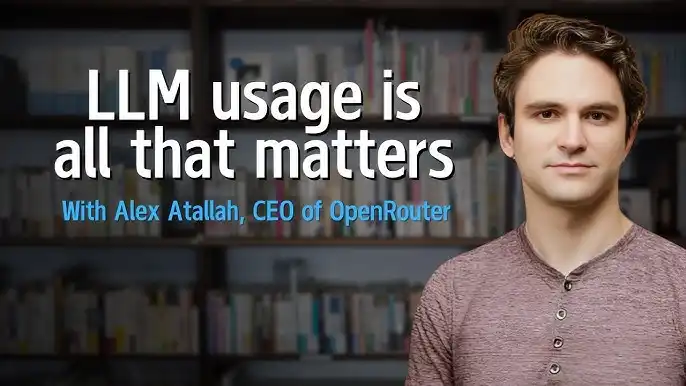
What you may be even less aware of is that his previous company was OpenSea, the world's largest NFT trading platform, which was once valued at over $13 billion at its peak.
However, he chose to exit during the hottest period of the NFT craze, and a few months later, the NFT market collapsed.
Now, he has made money again in this wave of AI craze.
From Liquidity Aggregation to Big Model Aggregation
Alex Atallah, a Stanford Computer Science graduate.
In 2018, he co-founded OpenSea with Devin Finzer. Their work was simple: while others minted NFTs, they provided a place for everyone to buy and sell, taking a 2.5% cut on each transaction.
OpenSea does not produce or hype NFTs; it only provides a platform, aggregating liquidity.
In 2021, during the NFT craze, popular NFTs like Bored Apes gradually became symbols of popularity. At that time, OpenSea's monthly trading volume reached over $5 billion, and Forbes estimated the net worth of Atallah and Finzer at a combined $22 billion.
In July 2022, he resigned as CTO, saying he wanted to do something new.
Everyone knows what happened next. The NFT market crashed, the overall market entered a deep freeze, and OpenSea's own business was a mess. However, someone always foots the bill for the feast, and Alex left before the music stopped.
In 2023, he started working on something called OpenRouter. In short:
A large-scale aggregation routing platform that puts hundreds of model APIs behind a single interface for developers to call, charging a 5% fee per invocation.
You might ask, why not just use OpenAI, Anthropic, Claude, or GPT for model inference?
Of course, you could.
But nowadays, no one is likely using just one model. They code with Claude, search with Gemini, delegate cost-saving tasks to DeepSeek, each requiring separate registration, separate top-up, and even different API formats...
Not to mention that many users want to use both Claude and GPT, with no direct API access from mainland China.
So, OpenRouter is the path of least resistance. One interface, 500+ models, unified format, auto-switching, all managed with a single key.
You may not have noticed when using OpenClaw, but the default provider in the configuration file used to be OpenRouter.
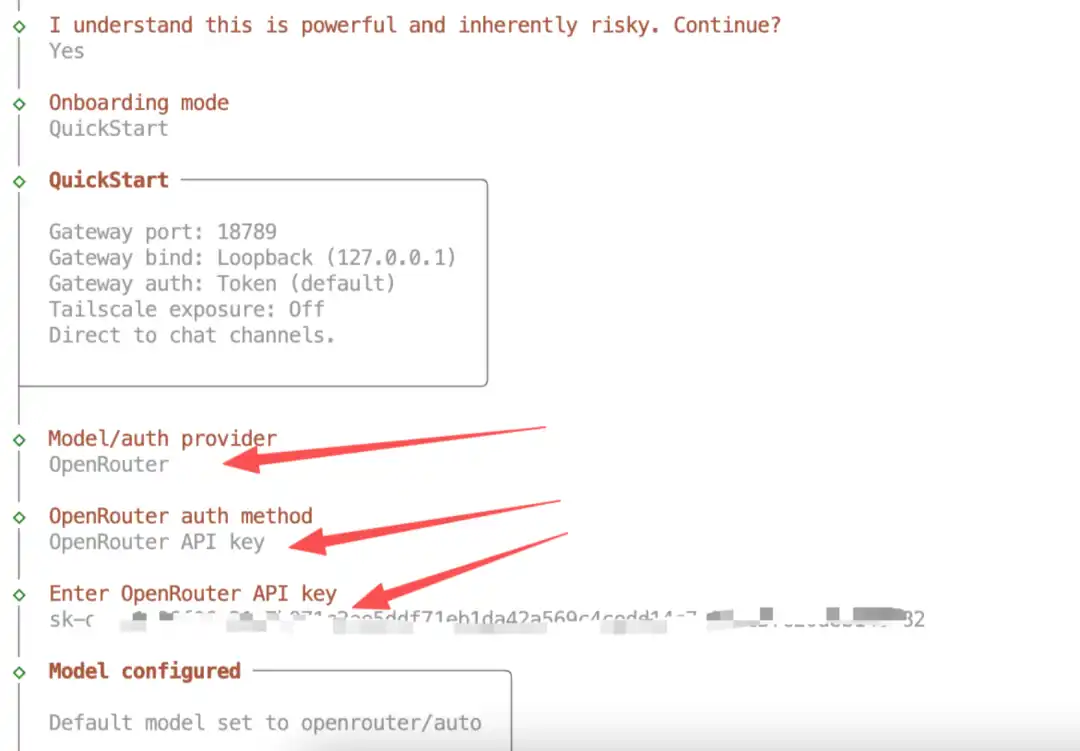
Image Source: Zhihu user Feng Alchemist
When you call Claude, invoke DeepSeek, your requests first come here before being routed to the model vendors. Even the OpenClaw documentation states:
If the system doesn't recognize your API key format, it defaults to OpenRouter.
How fast did this business grow?
In October 2024, the money flowing through OpenRouter each month was $800,000. By May 2025, this number had increased to $8 million.
Seven months, tenfold.
Over the course of a year, the money that passed through his hands exceeded 100 million U.S. dollars. He took a 5% cut, walking away with 5 million, and the team was fewer than ten people.
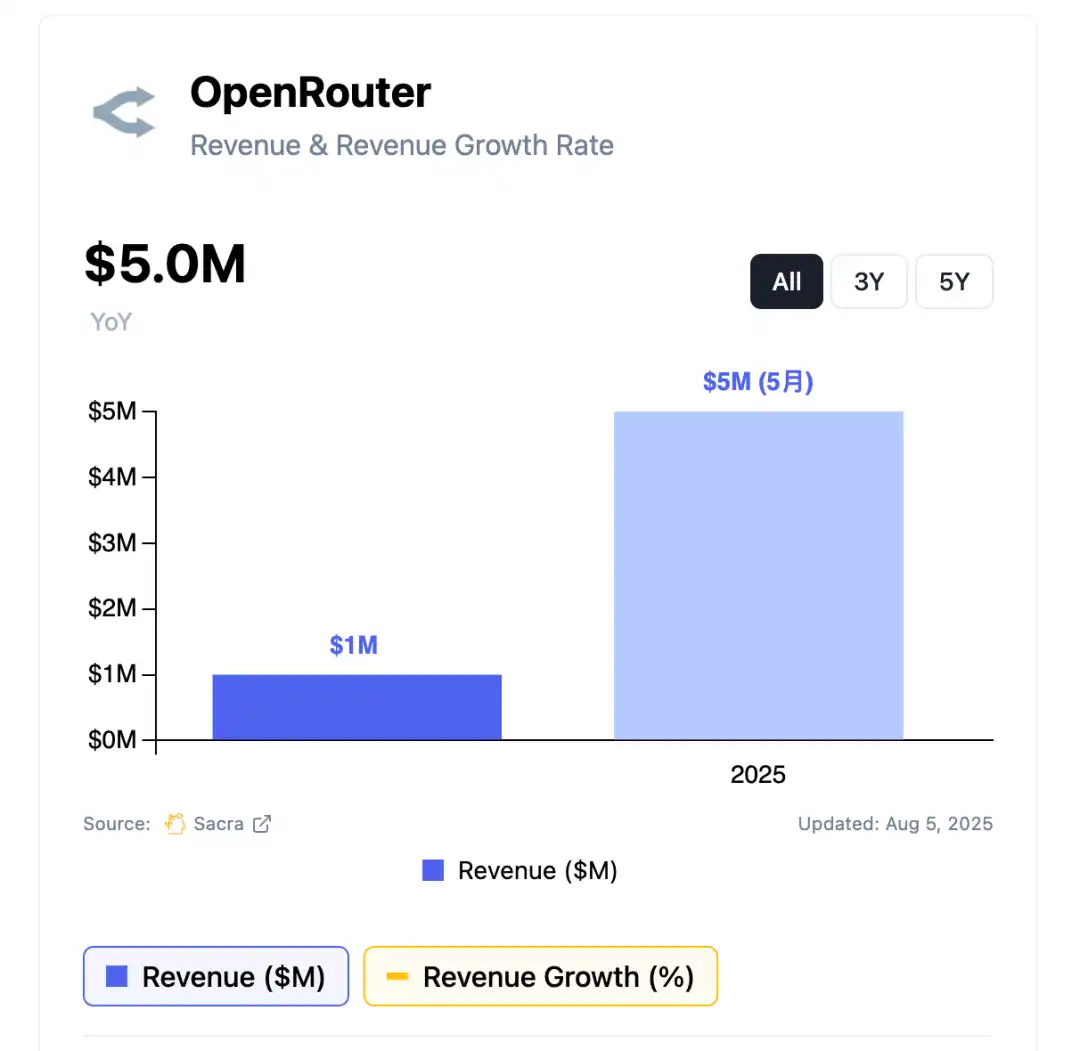
Image Source: sacra.com
a16z took his data and wrote an industry report called "The State of AI with 1 Trillion Tokens"; Stripe specially customized a billing system for him.
And with this year's explosion of OpenClaw, more developers and enthusiasts poured in, creatively burning tokens, inevitably needing to call various large models, which also completely lit up OpenRouter's business.
Furthermore, a16z led the investment in this company, giving it a valuation of 5 billion.
A person who sells shovels has once again become a person who sells shovels.
Different Hotspots, Same Pattern
If you look carefully at Alex's two businesses, the structure is actually the same.
OpenSea's business is not minting NFTs; it places NFTs minted by others in one place for buyers and sellers to trade, taking a 2.5% cut. OpenRouter's business is not training models; it puts models trained by others in one place for developers to call, taking a 5% cut.
This approach seems to have become his comfort zone, whether in NFTs or AI, the entire market structure is very similar:
The supply side is extremely decentralized, the demand side buyers don't know where to find supply, and he stands in the middle as a shelf.
How decentralized was NFT in 2021? Dozens of chains, hundreds of projects, tens of thousands of new collections every day. You want to buy a bored ape, it's impossible to visit each project's official website one by one. OpenSea brings them together for you to choose and buy, with the seller offering a price to you.
How decentralized will large models be in 2025? OpenAI, Anthropic, Google, Meta, DeepSeek, Mistral, Zero to One... Just mainstream, there are more than a dozen, plus hundreds in the open-source community.
Today you code best with Claude, tomorrow Gemini releases a new and more powerful search, and the day after tomorrow DeepSeek lowers its price by half. Each change requires modifying the interface.
Atallah once said a sentence, explaining this logic very clearly:
“OpenSea consolidates very fragmented inventory into one place, today’s AI looks very similar to that.”
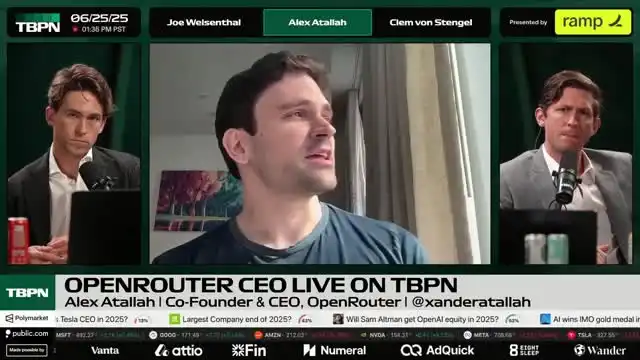
He doesn’t need to know which NFT will appreciate, nor does he need to know which model will win. All he needs to know is one thing: the more dispersed the supply, the more valuable the middleman.
Moreover, the interesting thing is the timing.
When he left in July 2022, OpenSea’s valuation was still high, although the monthly NFT transaction volume had fallen from its peak, no one felt it was going to collapse. He said he wanted to “create something new from zero,” and six months later, ChatGPT was released, marking the beginning of the era of large models.
Did he see something, or was he just lucky?
I don’t know. But one thing is certain:
When he registered OpenRouter at the beginning of 2023, there were almost no AI large model routing products on the market. By the time everyone realized the need for a unified interface, he was already there.
Previously, he did the same thing in the NFT field. When everyone crowded in, he was already the biggest platform.
Is AI the one that is on fire important?
In each wave of frenzy, the question most people ask is: What will be the next big thing?
In 2021, it was which NFT would appreciate; in 2024, it was which meme coin would skyrocket; in 2025, it was which AI application would emerge; in 2026, it was what lobsters could do.
Atallah's question may be different. I think his thought process should be, no matter what becomes popular, where will the money flow?
These two questions may seem similar, but they are actually entirely different bets.
Betting on “what will be the next big thing,” you have to guess right once. Bored Apes would surge, PEPE would increase a hundredfold, some AI product would be the next ChatGPT. Guess right and get rich, guess wrong and lose it all. Most people experience the latter.
Follow the Money, you don't need to guess either one. NFTs are up, trades are happening on OpenSea, he collects the fee. The fiercer the AI model war, the more developers need a unified interface to switch back and forth, the busier OpenRouter becomes.
Don't bet on who wins, bet that this battle will last a long time.
In hindsight, the biggest money makers in each cycle, regardless of the industry, are basically the platforms in this position.
Gold diggers come and go, but the water sellers have always been making money.
But I think just saying "water seller" or "shovel seller" is not enough. There are also a bunch of failed shovel sellers, Atallah did something more specific right: he always got stuck at the aggregation position.
It's not easy to collect tolls with just any tool. You have to be the one who brings together the dispersed supply. The more fragmented the supply, the higher the switching costs, and the aggregation layer in the middle has more pricing power.
This also explains why he entered the game early both times. Because aggregation business has one characteristic:
The first to arrive locks in the supply, making it hard for latecomers to catch up.
So, Atallah's remarkable point, I summarize in two sentences:
· First, don't bet on who wins, just find a junction that everyone has to pass through.
· Second, when others haven't realized the need for the junction yet, he has already built the road.
Great Minds Never Pick Tables
Now, I think there are two particularly loud voices around me.
One says the AI Agent is a toy, installing OpenClaw is only good for burning tokens; the other says this is another wave of AI hype, and no one will remember it in three months.
Maybe both of these views are correct.
But for people like Alex Atallah, it doesn't really matter.
Whether OpenClaw is useful or not, he is still making money. Whether you think lobsters are boring now and unload them, the tokens burned in the past two weeks have already passed through his hands.
Some people think NFTs are dirty, are Ponzi schemes, are scams. He built a company with a $13.3 billion valuation on it. Some people think AI Agents are a bubble, are hype, can't see the business model. He built a company with a $5 billion valuation on it...
Genius may truly not need us to admire the track they are on.
That NFT table, he made money. That AI table, he made money again. What will be placed on the next table, no one knows.
But I guess he will still be collecting tickets at the door when the time comes.
You may also like

From x402 to MPP: Cloudflare's crucial vote, will it go to Coinbase or Stripe?

BlackRock CEO issues annual open letter: The wave of tokenization has arrived, and we will lead this trend

When Backpack backstabs the community

When gold is no longer a safe haven, and Bitcoin continues to panic

Trump, the World's Largest Oil Trader

If the US and Iran have not reached an agreement in 5 days, what other cards does Trump have?

Tether Whale Dumps £12 Million, Backing Crypto’s ‘British Trump’
Ethereum Foundation Post: Rethinking the Division of Work Between L1 and L2 to Build the Ultimate Ethereum Ecosystem

Two Major Prediction Market Platforms Unite Rarely, What Is the Story Behind This New Fund?
Dragonfly Partners: Most agents will not engage in autonomous trading, how can crypto payments prevail?

US AI Startup Goes All In on Chinese Mega-Model | Rewire News Morning Brief

Trump Lies Again: A "Five-Day Pause" Psyop, How Wall Street, Bitcoin, and Polymarket Insiders Synced Uposciogen

When a Token Becomes Labor, People Become the Interface

Ceasefire News Leaked Ahead of Time? Large Polymarket Bets on Outcome Before Trump's Tweet
BlackRock CEO's Annual Shareholder Letter: How is Wall Street Using AI to Keep Profiting from National Pension Funds?

Sun Valley Releases 2025 Financial Report: Bitcoin Mining Revenue Reaches $670 Million, Accelerating Transformation to AI Infrastructure Platform
On March 16, 2026, in Dallas, Texas, USA, CanGu Company (New York Stock Exchange code: CANG, hereinafter referred to as "CanGu" or the "Company") today announced its unaudited financial performance for the fourth quarter and full year ended December 31, 2025. As a btc-42">bitcoin mining enterprise relying on a globally operated layout and dedicated to building an integrated energy and AI computing power platform, CanGu is actively advancing its business transformation and infrastructure development.
• Financial Performance:
Total revenue for the full year 2025 was $688.1 million, with $179.5 million in the fourth quarter.
Bitcoin mining business revenue for the full year was $675.5 million, with $172.4 million in the fourth quarter.
Full-year adjusted EBITDA was $24.5 million, while the fourth quarter was -$156.3 million.
• Mining Operations and Costs:
A total of 6,594.6 bitcoins were mined throughout the year, averaging 18.07 bitcoins per day; of which 1,718.3 bitcoins were mined in the fourth quarter, averaging 18.68 bitcoins per day.
The average mining cost for the full year (excluding miner depreciation) was $79,707 per bitcoin, and for the fourth quarter, it was $84,552;
The all-in sustaining costs were $97,272 and $106,251 per bitcoin, respectively.
As of the end of December 2025, the company has cumulatively produced 7,528.4 bitcoins since entering the bitcoin mining business.
• Strategic Progress:
The company has completed the termination of the American Depositary Receipt (ADR) program and transitioned to a direct listing on the NYSE to enhance information transparency and align with its strategic direction, with a long-term goal of expanding its investor base.
CEO Paul Yu stated: "2025 marked the company's first full year as a bitcoin mining enterprise, characterized by rapid execution and structural reshaping. We completed a comprehensive adjustment of our asset system and established a globally distributed mining network. Additionally, the company introduced a new management team, further strengthening our capabilities and competitive advantage in the digital asset and energy infrastructure space. The completion of the NYSE direct listing and USD pricing also signifies our transformation into a global AI infrastructure company."
"As we enter 2026, the company will continue to optimize its balance sheet structure and enhance operational efficiency and cost resilience through adjustments to the miner portfolio. At the same time, we are advancing our strategic transformation into an AI infrastructure provider. Leveraging EcoHash, we will utilize our capabilities in scalable computing power and energy networks to provide cost-effective AI inference solutions. The relevant site transformations and product development are progressing simultaneously, and the company is well-positioned to sustain its execution in the new phase."
The company's Chief Financial Officer, Michael Zhang, stated: "By 2025, the company is expected to achieve significant revenue growth through its scaled mining operations. Despite recording a net loss of $452.8 million from ongoing operations, mainly due to one-time transformation costs and market-driven fair value adjustments, the company, from a financial perspective, will reduce its leverage, optimize its Bitcoin reserve strategy and liquidity management, introduce new capital to strengthen its financial position, and seize investment opportunities in high-potential areas such as AI infrastructure while navigating market volatility."
The total revenue for the fourth quarter was $1.795 billion. Of this, the Bitcoin mining business contributed $1.724 billion in revenue, generating 1,718.3 Bitcoins during the quarter. Revenue from the international automobile trading business was $4.8 million.
The total operating costs and expenses for the fourth quarter amounted to $4.56 billion, primarily attributed to expenses related to the Bitcoin mining business, as well as impairment of mining machines and fair value losses on Bitcoin collateral receivables.
This includes:
· Cost of Revenue (excluding depreciation): $1.553 billion
· Cost of Revenue (depreciation): $38.1 million
· Operating Expenses: $9.9 million (including related-party expenses of $1.1 million)
· Mining Machine Impairment Loss: $81.4 million
· Fair Value Loss on Bitcoin Collateral Receivables: $171.4 million
The operating loss for the fourth quarter was $276.6 million, a significant increase from a loss of $0.7 million in the same period of 2024, primarily due to the downward trend in Bitcoin prices.
The net loss from ongoing operations was $285 million, compared to a net profit of $2.4 million in the same period last year.
The adjusted EBITDA was -$156.3 million, compared to $2.4 million in the same period last year.
The total revenue for the full year was $6.881 billion. Of this, the revenue from the Bitcoin mining business was $6.755 billion, with a total output of 6,594.6 Bitcoins for the year. Revenue from the international automobile trading business was $9.8 million.
The total annual operating costs and expenses amount to $1.1 billion.
Specifically, they include:
· Revenue Cost (excluding depreciation): $543.3 million
· Revenue Cost (depreciation): $116.6 million
· Operating Expenses: $28.9 million (including related-party expenses of $1.1 million)
· Miner Impairment Loss: $338.3 million
· Bitcoin Collateral Receivable Fair Value Change Loss: $96.5 million
The full-year operating loss is $437.1 million. The continuing operations net loss is $452.8 million, while in 2024, there was a net profit of $4.8 million.
The 2025 non-GAAP adjusted net profit is $24.5 million (compared to $5.7 million in 2024). This measure does not include share-based compensation expenses; refer to "Use of Non-GAAP Financial Measures" for details.
As of December 31, 2025, the company's key assets and liabilities are as follows:
· Cash and Cash Equivalents: $41.2 million
· Bitcoin Collateral Receivable (Non-current, related party): $663.0 million
· Miner Net Value: $248.7 million
· Long-Term Debt (related party): $557.6 million
In February 2026, the company sold 4,451 bitcoins and repaid a portion of related-party long-term debt to reduce financial leverage and optimize the asset-liability structure.
As per the stock repurchase plan disclosed on March 13, 2025, as of December 31, 2025, the company had repurchased a total of 890,155 shares of Class A common stock for approximately $1.2 million.

The US AI Startup Is Loving China's Open Source Model



 App
App