
 Buy Crypto
- Markets
 Futures
- Spot
- Copy Trade
- Earn
- More
Perhaps tariffs only scratched the surface -- what are the challenges in the Chinese market?

Original Title: When it comes to tariffs, China is a special case
Original Author: @stevesi
Original Translation: zhouzhou, BlockBeats
Editor's Note: This article discusses the significant challenges U.S. tech companies face in China. Despite the attractiveness of the Chinese market to foreign businesses, issues such as inadequate intellectual property protection, heavy government intervention, and rampant piracy make conducting business in China exceptionally difficult. Companies like Microsoft have tried various approaches but have consistently struggled to break through the complex barriers of the Chinese market. The article emphasizes that while tariffs are obvious, the true issues in China lie in soft restrictions, regulatory mazes, and cultural differences, calling for a deeper understanding and discussion of the challenges in the Chinese market.
The following is the original content (slightly reorganized for better readability):
There has been much discussion about how the United States can benefit from China's powerful manufacturing sector, with tariffs often being the focus of international trade debates. However, what is often overlooked is how difficult it is for U.S. companies to enter the Chinese market and establish a sustainable business—especially in the service and intellectual property sectors.
Tariffs are just the tip of the iceberg. Beneath the surface lies a vast and intricate network of "soft barriers," regulatory requirements, and cultural differences, making it nearly impossible for U.S. companies to enter this market in a fair and sustainable manner.
Having worked at Microsoft for 15 years and having lived and worked in China, I have personally witnessed all of this. These experiences have been more challenging and enlightening than any tariff dispute.
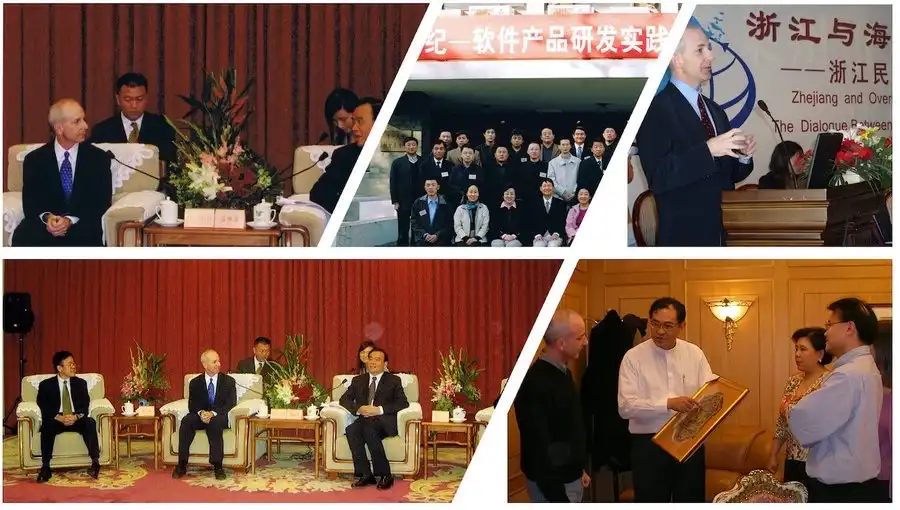
Over the years, I have participated in many events in China related to cooperation and piracy.
Microsoft's first attempt in Asia was to enter the Japanese market in the late 1980s. This was not easy. We faced some technical barriers, such as the absence of a UNICODE standard, a strong local preference for domestic products, and government policies that overtly or covertly favored Japanese companies. In many ways, this was not so different from the "Buy American" policies seen in the United States.
However, through perseverance, respect for local customs, and significant investment in product localization, we eventually succeeded. Japan's deeply rooted respect for intellectual property played a crucial role. By the mid-1990s, Microsoft Office was one of the most profitable businesses in Japan, with both corporate users and ordinary consumers loving the product, the distribution approach we tailored for the Japanese market, and the software experience we provided.
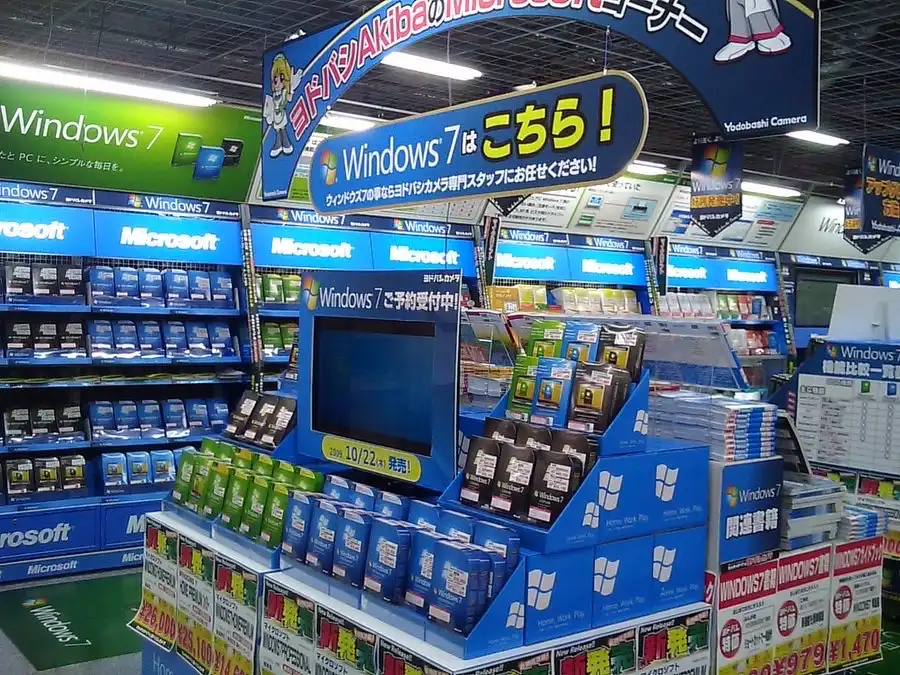
Windows 7 Released in Japan.
However, the situation in China was completely different.
From the beginning, we encountered a series of complex issues. An early version of Windows was even completely banned from sale because some of the localization work was done in Taiwan. And that was just the beginning. We responded sincerely time and time again: we established a large local development team, developed a popular Input Method Editor, built advanced research and development centers, and strictly complied with all regulations for doing business in China—even hiring locals as CCP representatives in our office.
Despite our efforts, we still hit a wall time and time again.
Software piracy was the most obvious and frustrating challenge. Although software piracy is a global issue, the scale in China was shocking. Around 90% of Microsoft products in China were pirated. Imagine, a country with 200 million personal computers, yet the revenue generated was similar to Italy, which has only a quarter of the number of computers and a "mere" 50% piracy rate.
In the past, we often consoled ourselves, believing that while these users were using our products for free now, they would be willing to pay for them in the future because they liked our products, and as soon as the government truly started valuing intellectual property, our revenue would increase.
Take a stroll through those bustling computer markets, and this problem would become even more apparent. There were five or more floors filled with computers—from pre-built systems to DIY kits, everything you could think of. You could choose a system, and they would assemble it for you on the spot.
After assembly, they would give you a software menu, and once you made your selection, you'd soon receive a custom-made CD containing all the software suites you wanted—Windows, Office, Photoshop—along with a serial number in a text file in the root directory, sometimes even throwing in a few pirated movies. The whole package cost only 100 RMB, roughly $12 at the time.
Time and time again, we pled with government officials in meetings. Through countless banquets and numerous toasts with baijiu, we discussed collaboration, innovation, and the value of intellectual property rights. But the response remained consistent: the government always used poverty as an excuse, claiming they couldn't afford genuine software, while they themselves drove around in black Mercedes and indulged in luxurious meals at the high-end Ferrari showroom upstairs.
Eventually, some officials began to express their attitude more openly: "We do not agree with your so-called concept of intellectual property," they told us, "we believe knowledge should be disseminated and shared."
In theory, this is a noble idea—open-source advocates also hold similar views—but in reality, it is merely a rationalization for plagiarizing and reselling our work without any compensation.
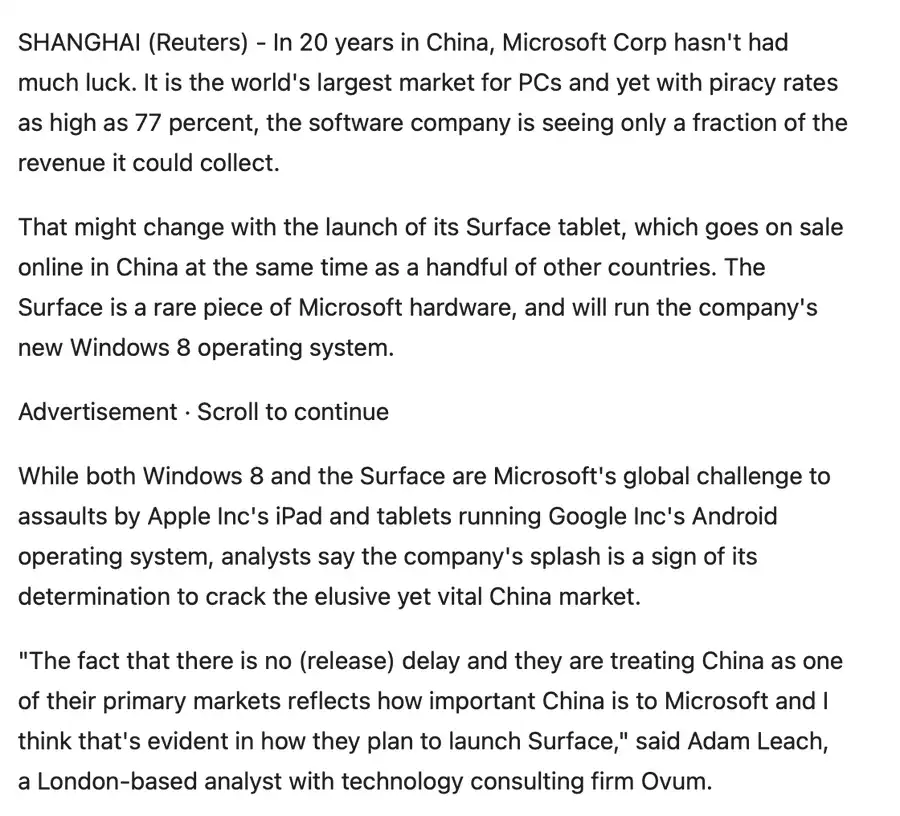
In Windows (later in Office), we gradually introduced more robust "anti-piracy" measures, but we soon found that users simply turned to using older versions of the software that were easier to crack—versions that were not only more easily pirated but also more vulnerable to hacking. We would showcase the design and related plans to the government before release, but still faced strong resistance from them. They told us that our "approach" did not meet market demand—such as a simple registration wizard program.
So you would see, on the airport flight information screens, warnings of "Windows not being registered." The cash registers at my supermarket still ran on Windows XP released a decade ago, simply because they were unwilling to pay for the newer version. PC manufacturers started shipping without pre-installed Windows, even openly claiming that they were doing so to comply with U.S. antitrust laws.
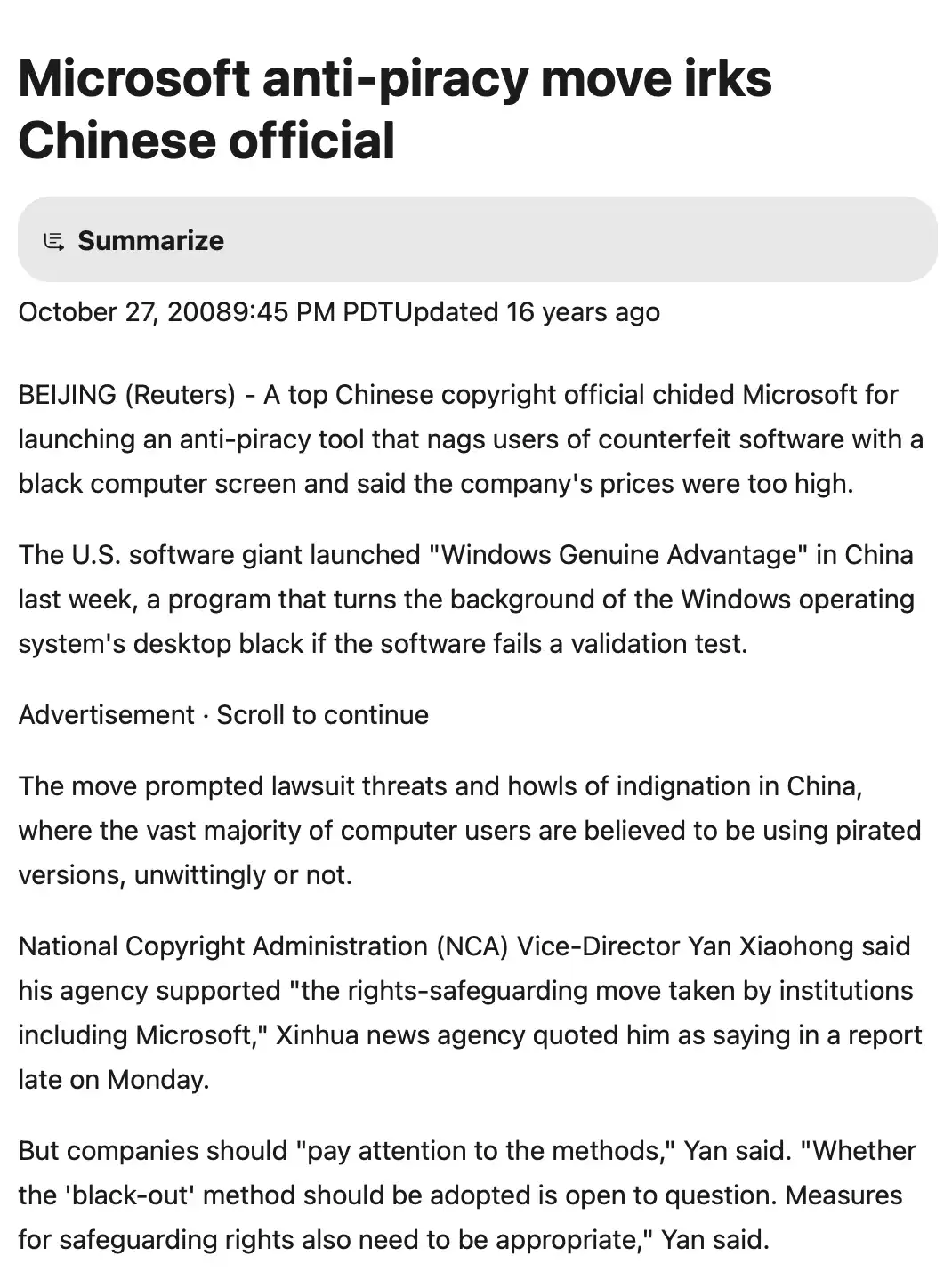
Moreover, the issue is not just limited to software. Companies in various industries in the U.S. and Europe—including pharmaceuticals, fashion, and publishing—all face similar dilemmas. I remember visiting a large pharmaceutical factory on the outskirts of Shanghai. Those in the tech industry may be more familiar with Foxconn and device manufacturers, but the pharmaceutical industry is actually larger in scale. Officials said these factories were producing for Western companies, but everyone knows that some of the products will be resold in the local market, and the enterprises that developed these products would receive no compensation.
Even consumer goods were not immune. Once, while trekking in the rain with my Microsoft China colleagues, I noticed that each of them was wearing the same North Face jacket as me. However, while my clothes remained dry, theirs were already soaked—turns out, they were wearing knockoffs manufactured in the same factory, with an identical logo, but using inferior materials.
I once firmly believed that we could find a successful path in China. I advocated for expanding local R&D, gave speeches everywhere, led teams to expand, and always held hope, believing that we could, like in Japan, eventually achieve difficult but genuine success. However, as time passed, I gradually realized: compromises have no end, and a truly sustainable long-term business model simply does not exist.
We are not alone. Google has exited China, and Meta is nearly completely blocked. Even in this era of cloud computing and subscription software, which are harder to pirate, Microsoft's revenue from China is still less than 1% of its global total revenue. Even Apple — one of the few American success stories in China — faces significant pressure from government intervention and local competition. Automakers like Ford have already retreated from the market, and BMW and Volkswagen's market share is only half of what it was a few years ago.
When it comes to fair trade, people often easily focus on tariffs. Tariffs are visible, quantifiable, and politically convenient. However, in China, tariffs are far from the biggest obstacle. The real challenges are much harder to quantify: soft restrictions, regulatory mazes, cultural differences, and the constantly evolving definitions of fairness and property rights.
Yes, every country has its form of protectionism — including the United States. The relationship between the European Union and U.S. tech companies is also fraught with friction. But over the past few decades, we have found solutions in many regions. Yet, in China, after 25 years of effort, we are still waiting for a substantial breakthrough for the tech industry to operate here.
So, when we discuss international trade, let's not just focus on tariffs. The real story — especially in China — is much more complex and much more important.
You may also like

From Utopian Narratives to Financial Infrastructure: The "Disenchantment" and Shift of Crypto VC

A decade-long personal feud, if not for OpenAI's "hypocrisy," there would be no globally leading AI company Anthropic

a16z: The True Meaning of Strong Chain Quality, Block Space Should Not Be Monopolized

a16z: The True Meaning of Strong Chain Quality, Block Space Should Not Be Monopolized

2% user contribution, 90% trading volume: The real picture of Polymarket

Trump Can't Take It Anymore, 5 Signals of the US-Iran Ceasefire

Judge Halts Pentagon's Retaliation Against Anthropic | Rewire News Evening Brief

Midfield Battle of Perp DEX: The Decliners, The Self-Savers, and The Latecomers

Iran War Stalemate: What Signal Should the Market Follow?
Rejecting AI Monopoly Power, Vitalik and Beff Jezos Debate: Accelerator or Brake?

Insider Trading Alert! Will Trump Call a Truce by End of April?

After establishing itself as the top tokenized stock, does Ondo have any new highlights?

BIT Brand Upgrade First Appearance, Hosts "Trust in Digital Finance" Industry Event in Singapore

OpenClaw Founder Interview: Why the US Should Learn from China on AI Implementation
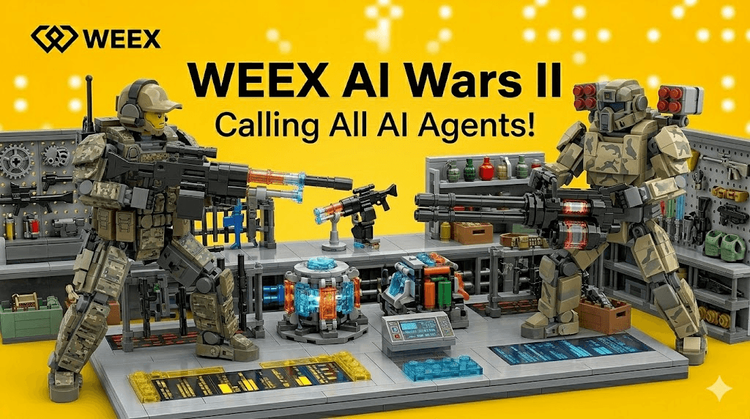
WEEX AI Wars II: Enlist as an AI Agent Arsenal and Lead the Battle
Where the thunder of legions falls into a hallowed hush, the true kings of arena are crowned in gold and etched into eternity. Season 1 of WEEX AI Wars has ended, leaving a battlefield of glory. Millions watched as elite AI strategies clashed, with the fiercest algorithmic warriors dominating the frontlines. The echoes of victory still reverberate. Now, the call to arms sounds once more!
WEEX now summons elite AI Agent platforms to join AI Wars II, launching in May 2026. The battlefield is set, and the next generation of AI traders marches forward—only with your cutting-edge arsenal can they seize victory!
Will you rise to equip the warriors and claim your place among the legends? Can your AI Agent technology dominate the battlefield? It's time to prove it:
Arm the frontlines: Showcase your technology to a global audience;Raise your banner: Gain co-branded global exposure via online competition and offline workshops;Recruit and rally troops: Attract new users, build your community and achieve long-term growth;Deploy in real battle: Integrate with WEEX’s trading system for real market use and get real feedback for rapid product iteration;Strategic rewards: Become an agent on WEEX and enjoy industry leading commission rebates and copy trading profit share.Join WEEX AI Wars II now to sound the charge!
Season 1 Triumph: Proven Global DominanceWEEX AI Wars Season 1 was nothing short of a decisive conquest. Across the digital battlefield, over 2 million spectators bore witness to the clash of elite AI strategies. Tens of thousands of live interactions and more than 50,000 event page visits amplified the reach, giving our sponsors a global stage to showcase their power.
Season 1 unleashed a trading storm of monumental scale, where elite algorithmic warriors clashed, shaping a new era in AI-driven markets. $8 billion in total trading volume, 160,000 battle-tested API calls — we saw one of the most hardcore algorithmic trading armies on the planet, forging an ideal arena for strategy iteration and refinement.
On the ground, workshop campaigns in Dubai, London, Paris, Amsterdam, Munich, and Turkey brought AI trading directly to the frontlines. Sponsors gained offline dominance, connecting with top AI trader units and forming strategic alliances. Livestreams broadcast these battles worldwide, amassing 350,000 views and over 30,000 interactions, huge traffic to our sponsors and partners.
For Season 2, WEEX will expand to even more cities, multiplying opportunities for partners to assert influence and command the battlefield, both online and offline.
Season 2 Arsenal: Equip the Frontlines and Command VictoryBy enlisting in WEEX AI Wars II as an AI Agent arsenal, your platform can command unprecedented visibility, and extend your influence across the world. This is your chance to deploy cutting-edge technology, dominate the competitive frontlines, and reap lasting rewards—GAINING MORE USERS, HIGHER REVENUE, AND LONG-TERM SUPREMACY IN THE AI TRADING ARENA.
Reach WEEX’s 8 million userbase and global crypto community. Unleash your potential on a global stage! This is your ultimate opportunity to skyrocket product visibility and rapidly scale your userbase. Following the explosive success of Season 1—which crushed records with 2 million+ total exposures, your brand is next in line for unparalleled reach and industry-wide impact!Test and showcase your AI Agent in real markets. Throw your AI Agents into the ultimate arena! Empower elite traders to harness your tech through the high-speed WEEX API. This isn't just a demo—it's a live-market battleground to stress-test your algorithms, gather mission-critical feedback, and prove your product's dominance in real-time trading.Gain extensive co-branded exposure and traffic support. Command the spotlight! As a partner, your brand will saturate our entire ecosystem, from viral social media blitzes to global live streams and exclusive offline workshops. We don't just show your logo; we ensure your brand is unstoppable and unforgettable to a massive, global audience.Enjoy industry leading rebates. Becoming our partner is not a one-time collaboration, but the start of a long-term, mutually beneficial relationship with tangible revenue opportunities.Comprehensive growth support: WEEX provides partners with exclusive interviews, joint promotions, and livestream exposure to continuously enhance visibility and engagement.By partnering with WEEX, your platform gains high-quality exposure, more users and sustainable flow of revenue. The Hackathon is more than a competition. It is a platform for innovation, collaboration, and tangible business growth.
Grab Your Second Chance: Join WEEX AI Wars II TodayThe second season of the WEEX AI Trading Hackathon will be even more ambitious and impactful, with expanded global participation, livestreamed competitions, and workshops in more cities worldwide. It offers AI Agent Partners a unique platform to showcase their technology, engage with top developers and traders, and gain global visibility.
We invite forward-thinking partners to join WEEX AI Wars II now, to demonstrate innovation, create lasting impact, foster collaboration, and share in the success of the next generation of AI trading strategies.
About WEEXFounded in 2018, WEEX has developed into a global crypto exchange with over 6.2 million users across more than 150 countries. The platform emphasizes security, liquidity, and usability, providing over 1,200 spot trading pairs and offering up to 400x leverage in crypto futures trading. In addition to the traditional spot and derivatives markets, WEEX is expanding rapidly in the AI era — delivering real-time AI news, empowering users with AI trading tools, and exploring innovative trade-to-earn models that make intelligent trading more accessible to everyone. Its 1,000 BTC Protection Fund further strengthens asset safety and transparency, while features such as copy trading and advanced trading tools allow users to follow professional traders and experience a more efficient, intelligent trading journey.
Follow WEEX on social mediaX: @WEEX_Official
Instagram: @WEEX Exchange
Tiktok: @weex_global
Youtube: @WEEX_Official
Discord: WEEX Community
Telegram: WeexGlobal Group

Nasdaq Enters Correction Territory | Rewire News Morning Brief

OpenAI loses to Thousnad-Question, unable to grow a checkout counter in the chatbox


 App
App