
 Buy Crypto
- Markets
 Futures
- Spot
- Copy Trade
- Earn
- More
Federal Reserve Chair Powell recently commented on cryptocurrency, what bullish signals did he give to the industry?

On April 17, 2025, Federal Reserve Chair Powell delivered a highly anticipated speech at the Chicago Economic Club. Although the crypto market did not receive explicit good news such as a rate cut, Powell clearly stated that there is "room for relaxation" in cryptocurrency regulation for banking institutions. He acknowledged the mainstream trend of cryptocurrencies in recent years, specifically emphasizing the need to establish a clear regulatory framework for stablecoins, sending a positive signal supporting innovation and development in the crypto industry.
Shift in Banking Regulation Direction
Powell pointed out that there is "room for relaxation" in the current cryptocurrency regulatory policies for banking institutions. While affirming the mainstream trend of the cryptocurrency market in recent years, he particularly emphasized the need to establish a clear regulatory framework for stablecoins. This statement, while emphasizing the maintenance of financial security and stability, sends a policy signal supporting industry innovation and development. He acknowledged that regulatory agencies had been cautious due to the "successive scams and frauds" in the cryptocurrency field but noted that the current market environment has fundamentally changed.
On March 7 of this year, during the first-ever White House cryptocurrency summit, the Office of the Comptroller of the Currency (OCC) issued a series of interpretive letters, marking a substantive shift in the U.S.'s regulatory stance on digital assets.
For years, the U.S. banking system has been resistant to cryptocurrencies, often outright refusing to serve blockchain companies, earning itself the nickname of "Operation Chokepoint 2.0." The latest guidance issued by the OCC eliminates key obstacles, allowing national banks to engage more freely in digital asset activities while maintaining a strict risk management framework.
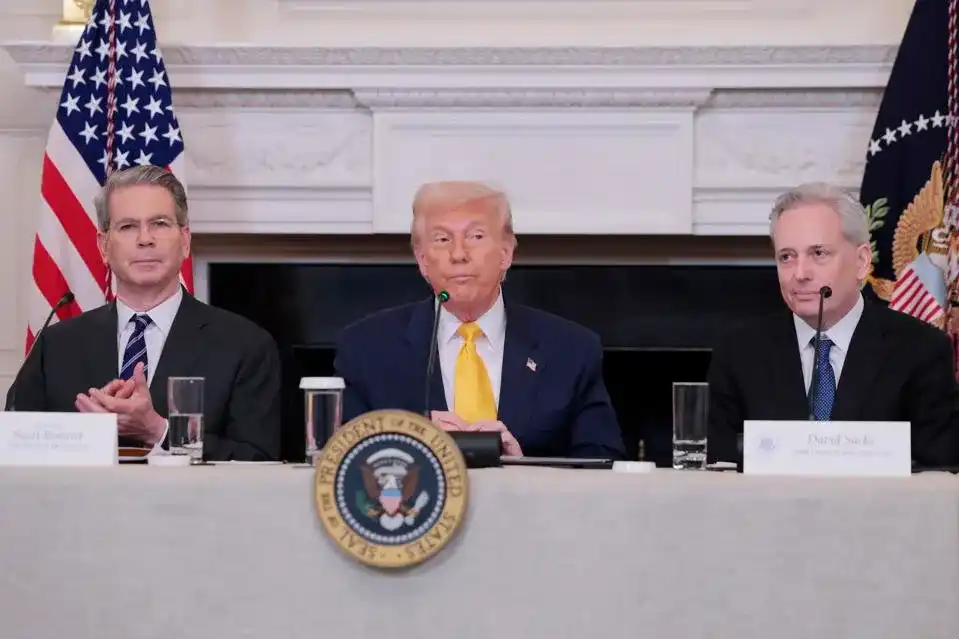
OCC Relaxes Crypto Regulation to Embrace Financial Innovation
As an independent bureau within the U.S. Department of the Treasury, the OCC is primarily responsible for regulating national banks to ensure their safe and sound operation. Historically, the OCC has maintained a cautious stance on bank involvement in cryptocurrency-related activities, requiring additional approvals and strict scrutiny. However, under Acting Comptroller Hood, who took office in early 2025, the OCC has adopted a more supportive attitude toward innovation, aligning with broader efforts to mainstream digital assets.
On March 7, 2025, the OCC officially announced that banks can now offer services such as cryptocurrency custody, stablecoin reserves, and participation in blockchain nodes without the need for special approvals. This overturns the restrictive guidance from the Biden administration era, which required banks to consult with regulators before engaging in crypto-related activities.
The OCC's new stance essentially considers cryptocurrency services as part of traditional banking activities, eliminating additional regulatory barriers that previously hindered financial institutions from entering this field. "Digital assets should and must also become part of the U.S. economy," Acting Comptroller Hsu stated. "I am committed to developing a regulatory framework for digital assets that promotes innovation while maintaining the safety, soundness, and fairness of the federal banking system."
The new interpretive letter rescinds Interpretive Letter 1179 from 2021, which previously imposed strict regulatory requirements on banks engaging in cryptocurrency activities. Under the revised policy, national banks can now provide cryptocurrency custody services to customers, ensuring the secure storage and management of private keys. Additionally, banks are allowed to hold reserves backing stablecoins pegged 1:1 to the U.S. dollar. Furthermore, banks can also participate as nodes in blockchain networks, validating transactions, thereby enhancing their support for decentralized financial activities. These changes signify a significant adjustment to the regulatory framework, providing banks with more flexible operational space to deeply integrate into the digital asset space.
U.S. Accelerates Bank and Blockchain Integration
This move by the OCC demonstrates increased confidence in banks' ability to manage crypto-related risks and aligns with the overall trend of integrating blockchain technology into the financial system. Given the industry's growing maturity and improved risk management practices, the agency believes that previous stringent scrutiny is no longer necessary.
This regulatory shift coincides with President Trump's reiteration of his commitment to repeal the "Exclusion of Cryptocurrency Companies from the Banking System" policy. He stated at a White House cryptocurrency summit, "Last year, I promised to make America the world's Bitcoin superpower and the global capital of crypto, and today we are taking historic action to fulfill that promise."
While the OCC's move is a significant boon to the digital asset industry, challenges still remain. The Federal Reserve and the FDIC have not clearly stated their positions on crypto banking activities, and federal agencies may still impose restrictions through other regulatory channels. However, the OCC's latest guidance undoubtedly marks a turning point—the U.S. financial system has finally opened its doors to digital assets. By streamlining the approval process and recognizing the legitimate financial status of digital assets, the OCC has laid the foundation for broader cryptocurrency adoption. The banking industry now has clear regulatory guidance to leverage blockchain technology to meet the new demands of economic development.
The banking sector may be concerned that stablecoins could drain bank deposits and weaken lending capacity. However, regulatory clarity will also attract new participants. Bank of America CEO Brian Moynihan has clearly stated that they will issue their own stablecoin once the legislation is in place.
Stablecoin Legislation Progresses Rapidly
Regarding the highly anticipated stablecoins, Powell commented, "Cryptocurrency is gradually becoming mainstream, and establishing a legal framework for stablecoins is a good idea. Stablecoins may have broad appeal and should establish consumer protection measures." He expressed positive views on the stablecoin legislation efforts pushed by Congress, and Trump has also stated his hope to expedite the passage of this bill.
The Regulatory Framework for Stablecoins is Becoming Increasingly Clear
Under the push of the Trump administration, the specific process of stablecoin regulatory legislation in the United States is accelerating. On April 3, the U.S. House Financial Services Committee passed the "Stablecoin Tethering and Bank Licensing Enforcement (STABLE) Act" with 32 votes in favor and 17 against, and the bill will now move to the full House for consideration. The bill was co-sponsored by Republican representatives French Hill and Bryan Steil. During the committee hearing held on the 9th, Chairman Hill mentioned the approval of the bill, stating, "We have a responsibility to build on this momentum and continue to establish a comprehensive regulatory framework to clarify the rules of the digital asset market."
The approved bill aims to introduce a new compliance system, clarifying the issuance and use of U.S. dollar-backed digital assets. The bill particularly emphasizes the positioning of stablecoins as a "payment tool" while prohibiting offering interest to users.
On the Senate side, the Senate Committee on Banking, Housing, and Urban Affairs passed the "Growing and Enhancing Cyber-Resources Understanding Securities (GENIUS) Act" on March 13 by an overwhelming vote of 18:6. Committee Chairman Tim Scott commented, "This is a bipartisan and significant step forward to protect consumers and national security, while ensuring that the industry can achieve innovative development on U.S. soil."
The bill requires stablecoin issuers to maintain a 1:1 reserve, comply with anti-money laundering regulations, and ultimately aims to establish "common-sense rules" that can protect U.S. consumers and enhance the global status of the U.S. dollar. It is worth noting that stablecoin issuers providing yield are not within the scope of this legislation. The GENIUS Act has now been submitted to the full Senate for consideration, but it will require 60 votes to pass, with the Democratic Party's stance being key. Chairman Scott expressed his goal to complete the legislation before the first 100 days of President Trump's term (April 30, 2025).
On April 5, the SEC released new rules clarifying that certain stablecoins are not considered securities and may be exempt from trading reporting obligations. Some analysts believe that the stablecoins covered by the new SEC rules may not include those issued by industry giant Tether because the SEC stated that the acceptable reserves for stablecoins do not include precious metals or other crypto assets, both of which are included in Tether's reserves. In addition, the SEC also requires that any token must be redeemable for U.S. dollars at any time, while Tether's terms of service suggest that there may be minimum or delayed redemption amounts.
Related Reading: "Full Text of US SEC Stablecoin Regulation: What Kind of Stablecoin Is Not a Security?"
Division Exists Between House and Senate, Trump's WLFI Stablecoin May Impact Legislative Progress
While the House and Senate stablecoin bills remain generally aligned in their basic framework, there are still disagreements in areas such as algorithmic stablecoin regulation and the division of state and federal regulatory authority. Industry experts predict that if the GENIUS Act and the STABLE Act are merged after coordination, the legislation is expected to be completed before the August congressional recess. Ron Hammond, Government Affairs Director of the American Blockchain Association, predicts, "There will be a vote on the merged 'STABLE GENIUS Act' in the next 2-3 months."
In a March White House cryptocurrency summit, Trump explicitly stated his strong support for the legislative work on stablecoins and indicated his intention to sign the bill by August. Treasury Secretary Scott Bescent hinted at the same time that he would "consolidate the global reserve currency status of the US dollar through the stablecoin system." At the American Bankers Association (ABA) conference on April 9, Bescent reiterated that the Treasury Department is "carefully evaluating regulatory barriers for blockchain, stablecoins, and new payment systems" and stated that they are "considering reforms to unleash the enormous potential of the US capital markets."
With the strong push from the Trump administration, industry insiders predict that "2025 will be the watershed year for the widespread adoption of stablecoins." However, some Democratic lawmakers question potential conflicts of interest in the bill related to the Trump family's virtual currency DeFi project, "World Liberty Financial (WLFI)." Five Democratic senators wrote to the Federal Reserve and OCC, questioning the "unprecedented risks" posed by the USD1 stablecoin introduced by the Trump family-backed World Liberty Financial (WLFI) project. The letter pointed out that Trump, through a February executive order, weakened regulatory independence and holds a 60% stake in WLFI, creating a significant conflict of interest. Since its establishment in September 2024, WLFI has raised $550 million through two token sales and launched USD1 on the BNB chain and Ethereum on March 24. This move coincided with the Congressional consideration of the GENIUS Act, which may grant regulatory authority to the OCC and the Federal Reserve, raising concerns about the stability of the financial system.
The Complex and Far-reaching Impact of Tariffs
Regarding the recent tariff policies that have frequently caused significant market fluctuations, Powell stated, "The impact of tariffs on the economy may be greater than expected," "The tariff level has exceeded the optimistic expectations of the Federal Reserve," and "Currently, higher-than-expected tariffs may mean higher inflation and slower growth."
Although the original purpose of cryptocurrency was to be a financial instrument independent of government control, the price and market performance are still significantly affected by macroeconomic policies. Following the United States' announcement of a new global tariff policy on April 2, despite the general decline in global asset prices, Bitcoin's decline was relatively small, only 10%, while the S&P 500 index fell far more than this level (if calculated with a 1:1 correlation, Bitcoin should have fallen by 36%). This to some extent indicates that even during a market deep retracement, holding Bitcoin as part of an investment portfolio can still bring significant diversification benefits, highlighting its relative stability.
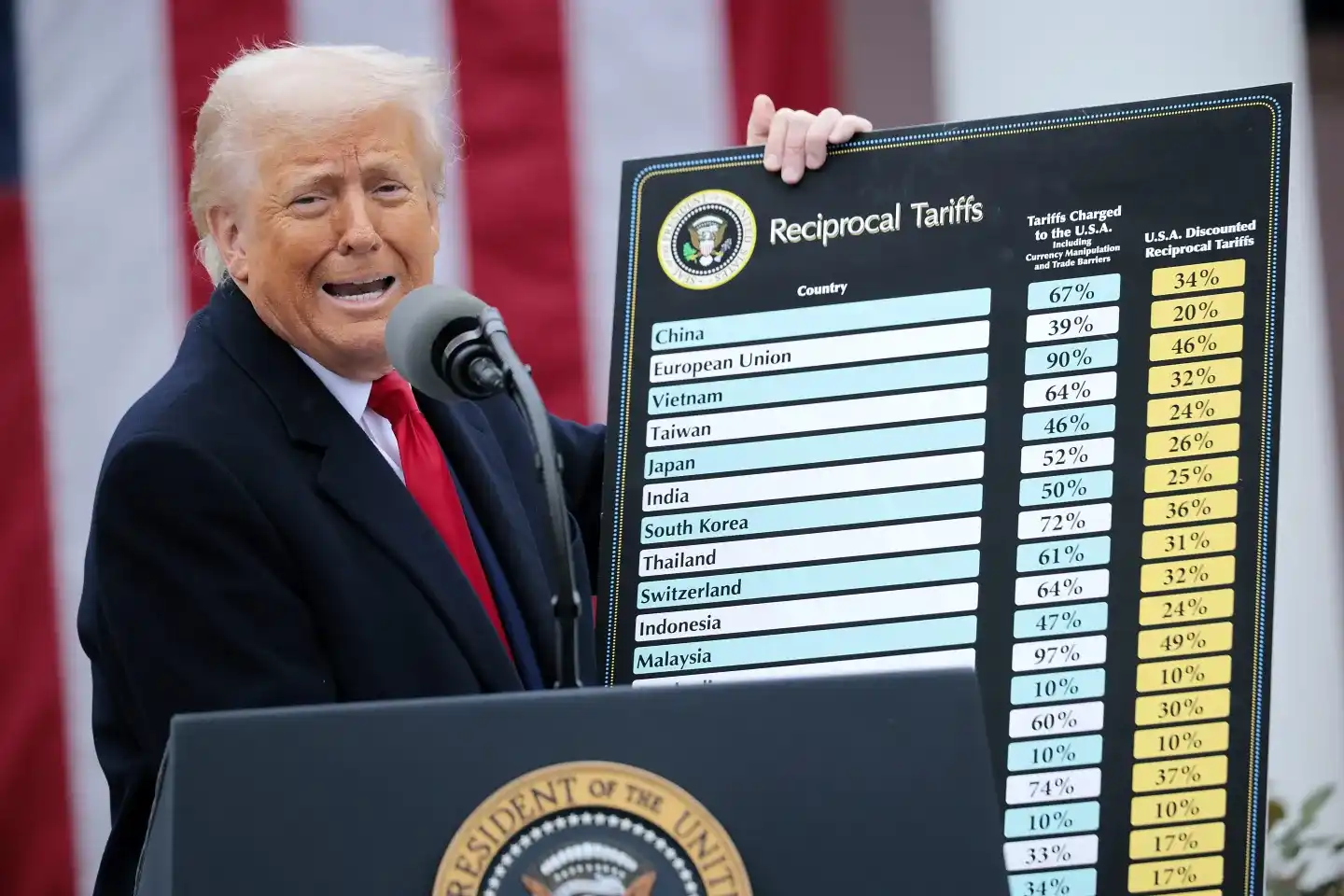
Tariffs raise the cost of cross-border transactions, potentially reducing global economic liquidity and capital inflows, decreasing the demand for speculative assets such as cryptocurrencies. In addition, tariffs on tech products, especially semiconductor chips and mining hardware, will significantly increase the mining costs of proof-of-work (PoW) cryptocurrencies such as Bitcoin, particularly in regions relying on Chinese-manufactured ASIC miners and GPUs, which may force miners to move to lower-cost regions or reduce operating scales, thereby impacting network security and market confidence.
Read More:《Mining Equipment Prices Rise by 24%, Trump's Tariff Policy Is Impacting the U.S. Bitcoin Mining Industry》
Tariffs may also indirectly affect the crypto market through exchange rate fluctuations. Historically, Bitcoin has had an inverse relationship with the US dollar, so when tariffs temporarily push up the dollar exchange rate, cryptocurrency prices are often under pressure. However, if tariffs trigger a trade war and lead to currency devaluation in certain countries, residents may turn to Bitcoin or stablecoins as a store of value, as seen in phenomena where crypto adoption surges in times of economic turmoil in countries like Argentina and Turkey.
Furthermore, the price increase of imported goods due to tariffs may trigger inflation, prompting central banks to raise interest rates, reducing the flow of funds into the crypto market. However, if inflation spirals out of control or trust in fiat currency collapses, Bitcoin may be seen as a safe-haven asset similar to gold, attracting investors seeking to hedge against inflation and currency devaluation.
The trade tension may further exacerbate regulatory scrutiny, with investors concerned that governments may take advantage of the situation to strengthen control over crypto assets, leading to increased market volatility. Different cryptocurrencies are affected by tariffs in different ways: Bitcoin may experience a short-term decline due to market risk-off sentiment but may benefit in the long term due to its "digital gold" properties; stablecoins, due to their stability, may become the preferred safe haven for traders in trade disputes; utility tokens dependent on specific blockchain use cases are more directly affected by their related industries. Tariffs on countries with concentrated mining activities (such as Canada, which accounted for 6.5% of Bitcoin mining electricity consumption in 2022) may directly disrupt the geographic distribution of mining activities, impacting market structure.
Related Reading: "History Repeating Itself: Grayscale Report Reveals New Safe-Haven Logic Amid Tariff Storm"
"Risk Warning" from Gary Gensler
Former U.S. Securities and Exchange Commission (SEC) Chair Gary Gensler appeared on the CNBC program "Squawk Box" on the 16th, stating that he believes that certain cryptocurrencies like Bitcoin may have long-term survival potential, and that crypto assets as an investment target will undergo a screening process.
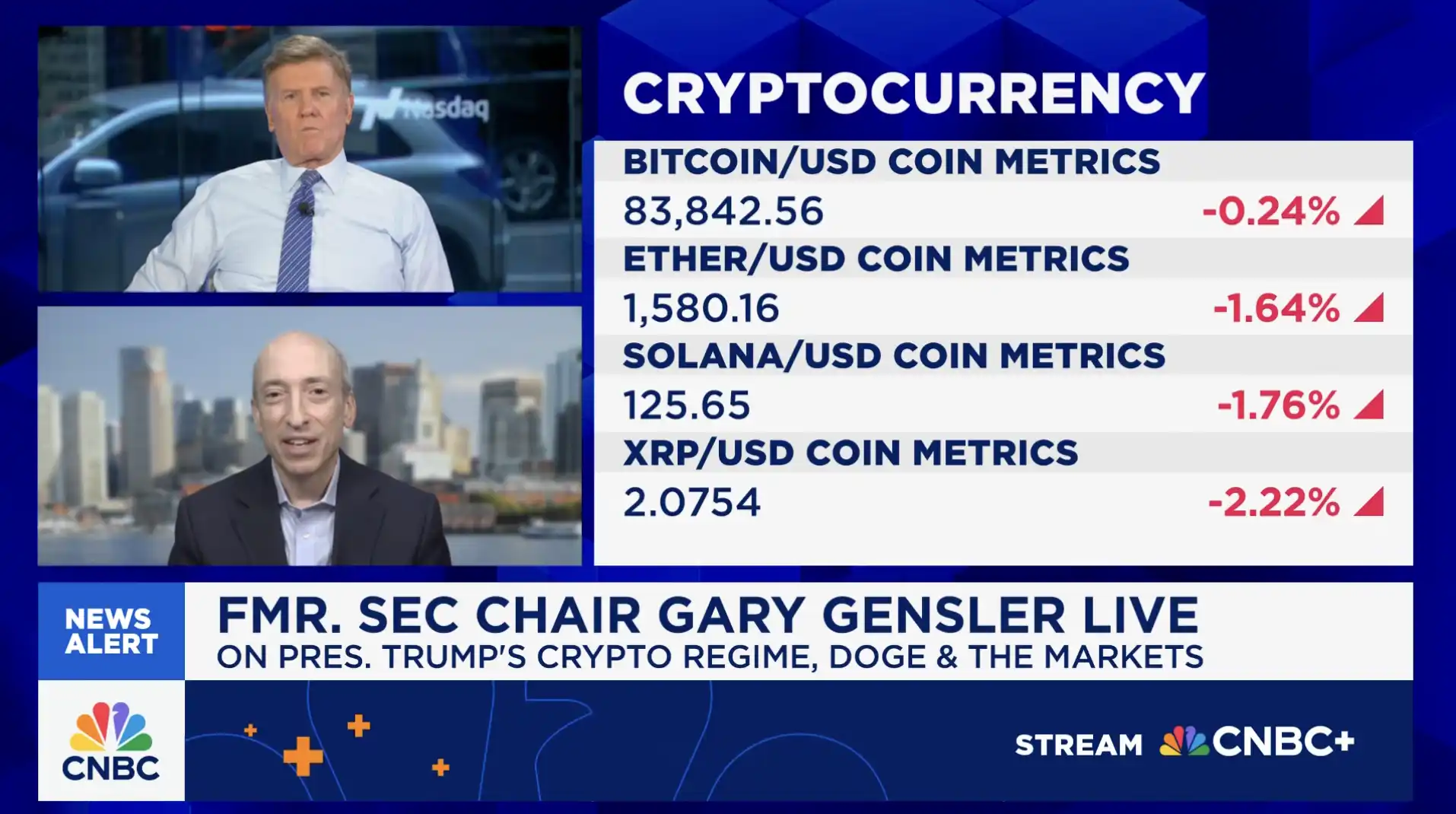
Gary Gensler stated that a few currencies like Bitcoin have garnered widespread attention globally, "Bitcoin may continue to exist for a long time because 7 billion people worldwide have shown strong interest in it."
During the interview, Gary Gensler discussed cryptocurrency as an aside to topics such as Trump's tariffs and the U.S.-China trade war, prompted by the host's question, "After you stepped down, the SEC under the Trump administration seemed to be withdrawing lawsuits against cryptocurrency companies. What are your thoughts on this?" To this, he simply responded by saying he was "stepping away from specific litigation." He further stated, "Cryptocurrency is only a small part of the financial markets, but since everyone is interested, I will talk about it." He then elaborated on the above points.
Gary Gensler also pointed out, "The trading of financial assets is based on fundamental value and market sentiment, but about 99% of cryptocurrency trading is purely driven by emotion." He also stated, "1,000 to 1,500 tokens, such as meme coins, which are driven by emotion, will lose their appeal in the long run for most people."
In the future, as regulatory frameworks continue to improve and market conditions gradually mature, cryptocurrencies and stablecoins may play a more important role in the global financial system.
Institutions and investors need to closely monitor policy dynamics and market trends to
seize a historic opportunity.
You may also like

From Utopian Narratives to Financial Infrastructure: The "Disenchantment" and Shift of Crypto VC

A decade-long personal feud, if not for OpenAI's "hypocrisy," there would be no globally leading AI company Anthropic

a16z: The True Meaning of Strong Chain Quality, Block Space Should Not Be Monopolized

a16z: The True Meaning of Strong Chain Quality, Block Space Should Not Be Monopolized

2% user contribution, 90% trading volume: The real picture of Polymarket

Trump Can't Take It Anymore, 5 Signals of the US-Iran Ceasefire

Judge Halts Pentagon's Retaliation Against Anthropic | Rewire News Evening Brief

Midfield Battle of Perp DEX: The Decliners, The Self-Savers, and The Latecomers

Iran War Stalemate: What Signal Should the Market Follow?
Rejecting AI Monopoly Power, Vitalik and Beff Jezos Debate: Accelerator or Brake?

Insider Trading Alert! Will Trump Call a Truce by End of April?

After establishing itself as the top tokenized stock, does Ondo have any new highlights?

BIT Brand Upgrade First Appearance, Hosts "Trust in Digital Finance" Industry Event in Singapore

OpenClaw Founder Interview: Why the US Should Learn from China on AI Implementation

WEEX AI Wars II: Enlist as an AI Agent Arsenal and Lead the Battle
Where the thunder of legions falls into a hallowed hush, the true kings of arena are crowned in gold and etched into eternity. Season 1 of WEEX AI Wars has ended, leaving a battlefield of glory. Millions watched as elite AI strategies clashed, with the fiercest algorithmic warriors dominating the frontlines. The echoes of victory still reverberate. Now, the call to arms sounds once more!
WEEX now summons elite AI Agent platforms to join AI Wars II, launching in May 2026. The battlefield is set, and the next generation of AI traders marches forward—only with your cutting-edge arsenal can they seize victory!
Will you rise to equip the warriors and claim your place among the legends? Can your AI Agent technology dominate the battlefield? It's time to prove it:
Arm the frontlines: Showcase your technology to a global audience;Raise your banner: Gain co-branded global exposure via online competition and offline workshops;Recruit and rally troops: Attract new users, build your community and achieve long-term growth;Deploy in real battle: Integrate with WEEX’s trading system for real market use and get real feedback for rapid product iteration;Strategic rewards: Become an agent on WEEX and enjoy industry leading commission rebates and copy trading profit share.Join WEEX AI Wars II now to sound the charge!
Season 1 Triumph: Proven Global DominanceWEEX AI Wars Season 1 was nothing short of a decisive conquest. Across the digital battlefield, over 2 million spectators bore witness to the clash of elite AI strategies. Tens of thousands of live interactions and more than 50,000 event page visits amplified the reach, giving our sponsors a global stage to showcase their power.
Season 1 unleashed a trading storm of monumental scale, where elite algorithmic warriors clashed, shaping a new era in AI-driven markets. $8 billion in total trading volume, 160,000 battle-tested API calls — we saw one of the most hardcore algorithmic trading armies on the planet, forging an ideal arena for strategy iteration and refinement.
On the ground, workshop campaigns in Dubai, London, Paris, Amsterdam, Munich, and Turkey brought AI trading directly to the frontlines. Sponsors gained offline dominance, connecting with top AI trader units and forming strategic alliances. Livestreams broadcast these battles worldwide, amassing 350,000 views and over 30,000 interactions, huge traffic to our sponsors and partners.
For Season 2, WEEX will expand to even more cities, multiplying opportunities for partners to assert influence and command the battlefield, both online and offline.
Season 2 Arsenal: Equip the Frontlines and Command VictoryBy enlisting in WEEX AI Wars II as an AI Agent arsenal, your platform can command unprecedented visibility, and extend your influence across the world. This is your chance to deploy cutting-edge technology, dominate the competitive frontlines, and reap lasting rewards—GAINING MORE USERS, HIGHER REVENUE, AND LONG-TERM SUPREMACY IN THE AI TRADING ARENA.
Reach WEEX’s 8 million userbase and global crypto community. Unleash your potential on a global stage! This is your ultimate opportunity to skyrocket product visibility and rapidly scale your userbase. Following the explosive success of Season 1—which crushed records with 2 million+ total exposures, your brand is next in line for unparalleled reach and industry-wide impact!Test and showcase your AI Agent in real markets. Throw your AI Agents into the ultimate arena! Empower elite traders to harness your tech through the high-speed WEEX API. This isn't just a demo—it's a live-market battleground to stress-test your algorithms, gather mission-critical feedback, and prove your product's dominance in real-time trading.Gain extensive co-branded exposure and traffic support. Command the spotlight! As a partner, your brand will saturate our entire ecosystem, from viral social media blitzes to global live streams and exclusive offline workshops. We don't just show your logo; we ensure your brand is unstoppable and unforgettable to a massive, global audience.Enjoy industry leading rebates. Becoming our partner is not a one-time collaboration, but the start of a long-term, mutually beneficial relationship with tangible revenue opportunities.Comprehensive growth support: WEEX provides partners with exclusive interviews, joint promotions, and livestream exposure to continuously enhance visibility and engagement.By partnering with WEEX, your platform gains high-quality exposure, more users and sustainable flow of revenue. The Hackathon is more than a competition. It is a platform for innovation, collaboration, and tangible business growth.
Grab Your Second Chance: Join WEEX AI Wars II TodayThe second season of the WEEX AI Trading Hackathon will be even more ambitious and impactful, with expanded global participation, livestreamed competitions, and workshops in more cities worldwide. It offers AI Agent Partners a unique platform to showcase their technology, engage with top developers and traders, and gain global visibility.
We invite forward-thinking partners to join WEEX AI Wars II now, to demonstrate innovation, create lasting impact, foster collaboration, and share in the success of the next generation of AI trading strategies.
About WEEXFounded in 2018, WEEX has developed into a global crypto exchange with over 6.2 million users across more than 150 countries. The platform emphasizes security, liquidity, and usability, providing over 1,200 spot trading pairs and offering up to 400x leverage in crypto futures trading. In addition to the traditional spot and derivatives markets, WEEX is expanding rapidly in the AI era — delivering real-time AI news, empowering users with AI trading tools, and exploring innovative trade-to-earn models that make intelligent trading more accessible to everyone. Its 1,000 BTC Protection Fund further strengthens asset safety and transparency, while features such as copy trading and advanced trading tools allow users to follow professional traders and experience a more efficient, intelligent trading journey.
Follow WEEX on social mediaX: @WEEX_Official
Instagram: @WEEX Exchange
Tiktok: @weex_global
Youtube: @WEEX_Official
Discord: WEEX Community
Telegram: WeexGlobal Group

Nasdaq Enters Correction Territory | Rewire News Morning Brief

OpenAI loses to Thousnad-Question, unable to grow a checkout counter in the chatbox


 App
App