
 Buy Crypto
- Markets
 Futures
- Spot
- Copy Trade
- Earn
- More
Chainalysis report: Stablecoins, TradFi and RWA are leading the next wave of Web3

Original title: Growth Opportunities: Stablecoins, TradFi Engagement, and Tokenization Lead Web3's Next Wave
Original source: Chainalysis
Original translation: 1912212.eth, Foresight News
The cryptocurrency industry has entered a new stage of maturity, driven by increasing adoption, continued innovation, and deeper integration with the traditional financial system around the world.
This year, BTC hit new all-time highs in March and December, reflecting huge demand. At the same time, DeFi's position in the global economy is constantly consolidating, and global capital inflows are also approaching new highs. In addition, traditional finance (TradFi) is revitalized, and funds are pouring into areas such as stablecoins and crypto exchange-traded products (ETP) markets, indicating that cryptocurrencies are quietly fulfilling their promise to reshape the global financial infrastructure.
This is not just another market cycle, but a critical moment for cryptocurrencies.
Atypical Bull Market
At the end of 2023, BTC began to rise, marking the beginning of a new round of rising market.
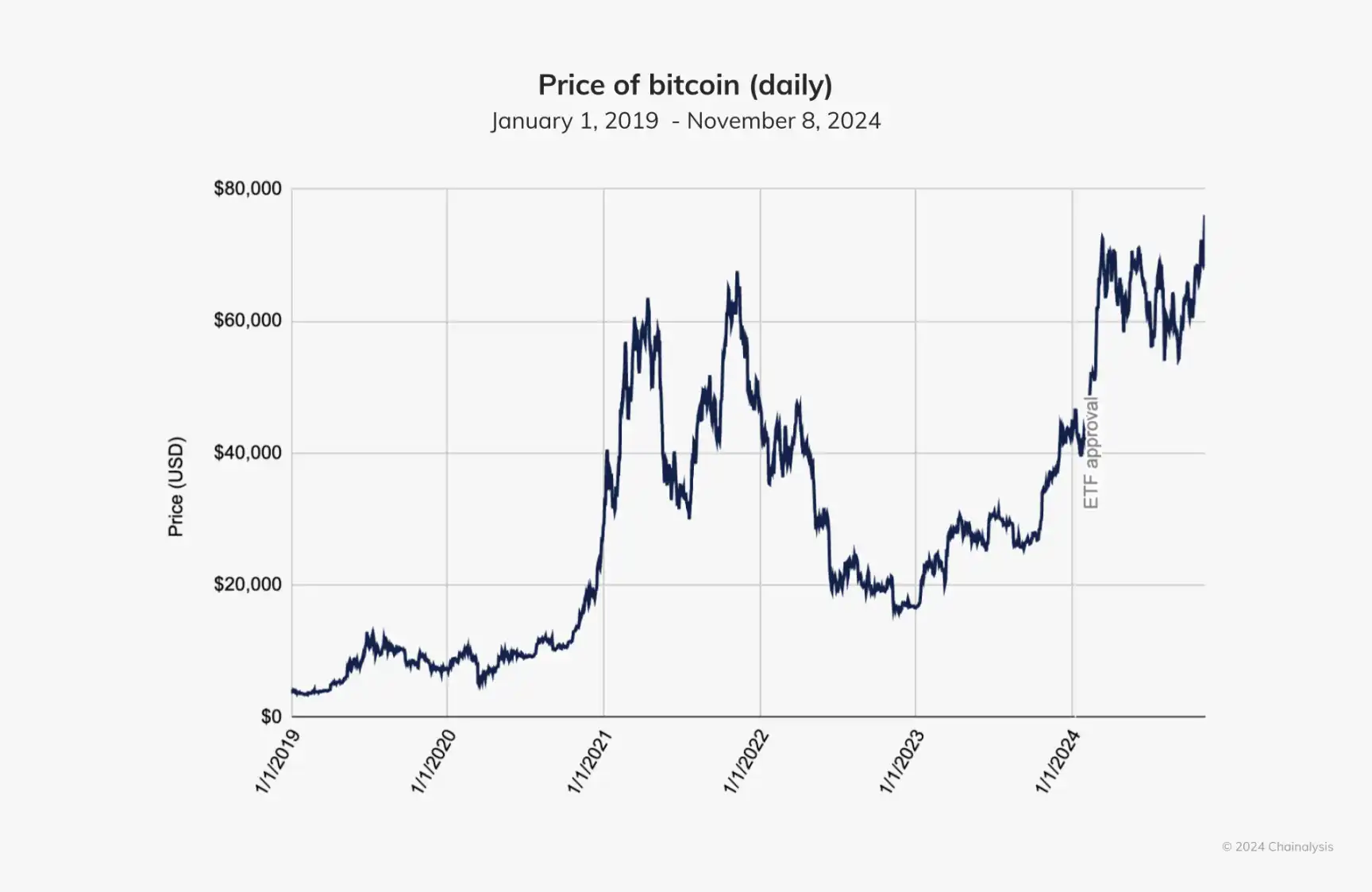
On March 5, 2024, BTC broke through its previous all-time high, rising to more than $73,000; in December of the same year, it broke through the $100,000 mark again.
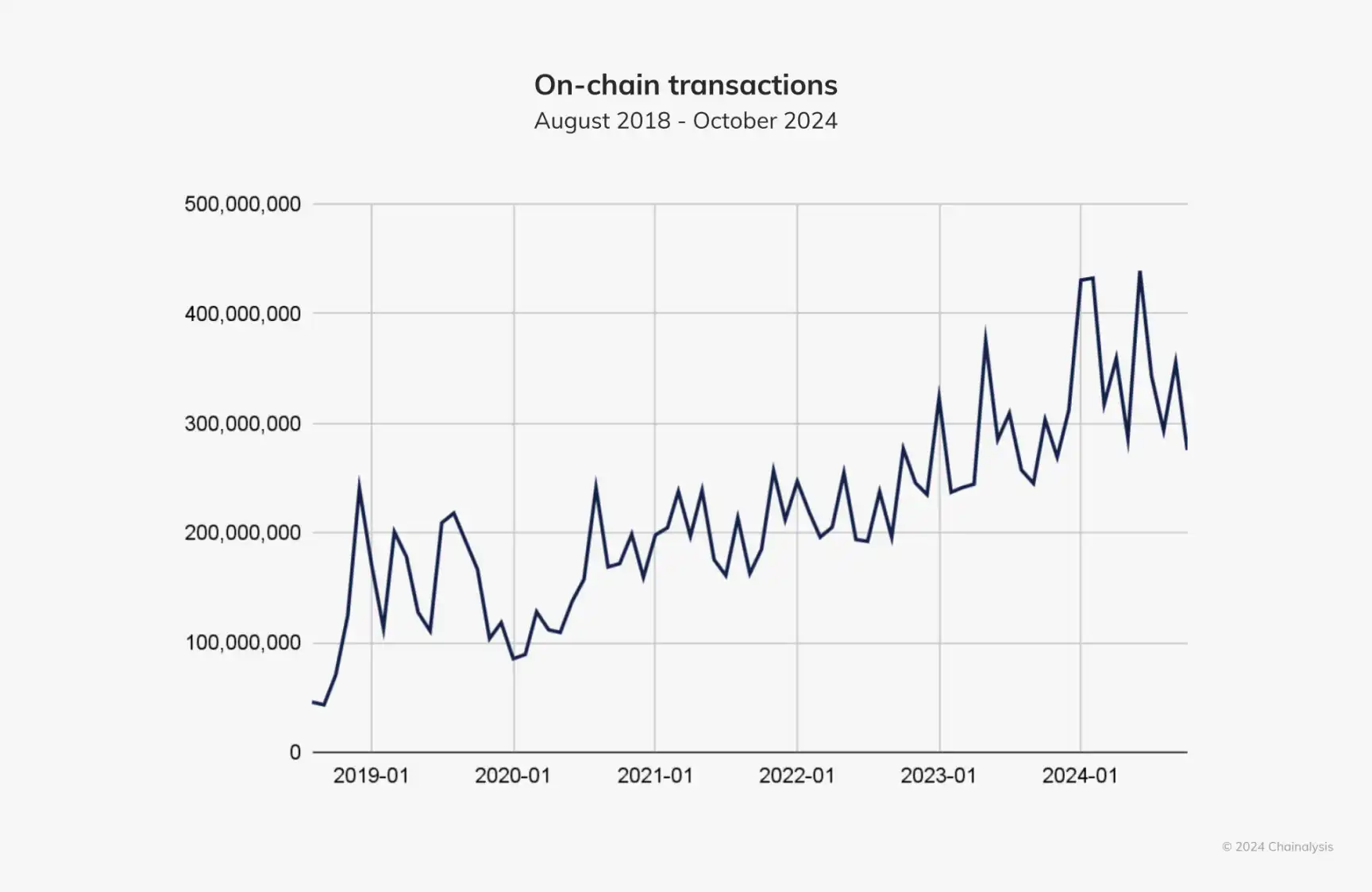
In addition, the transfer activity of all digital assets has exceeded the historical highs of the end of 2020 and 2021, indicating that the activity of this round of market cycle is far more active than the previous bull market.
From late 2023 to early 2024, DeFi began to show signs of recovery, with activity levels reaching previous all-time highs, as shown below.
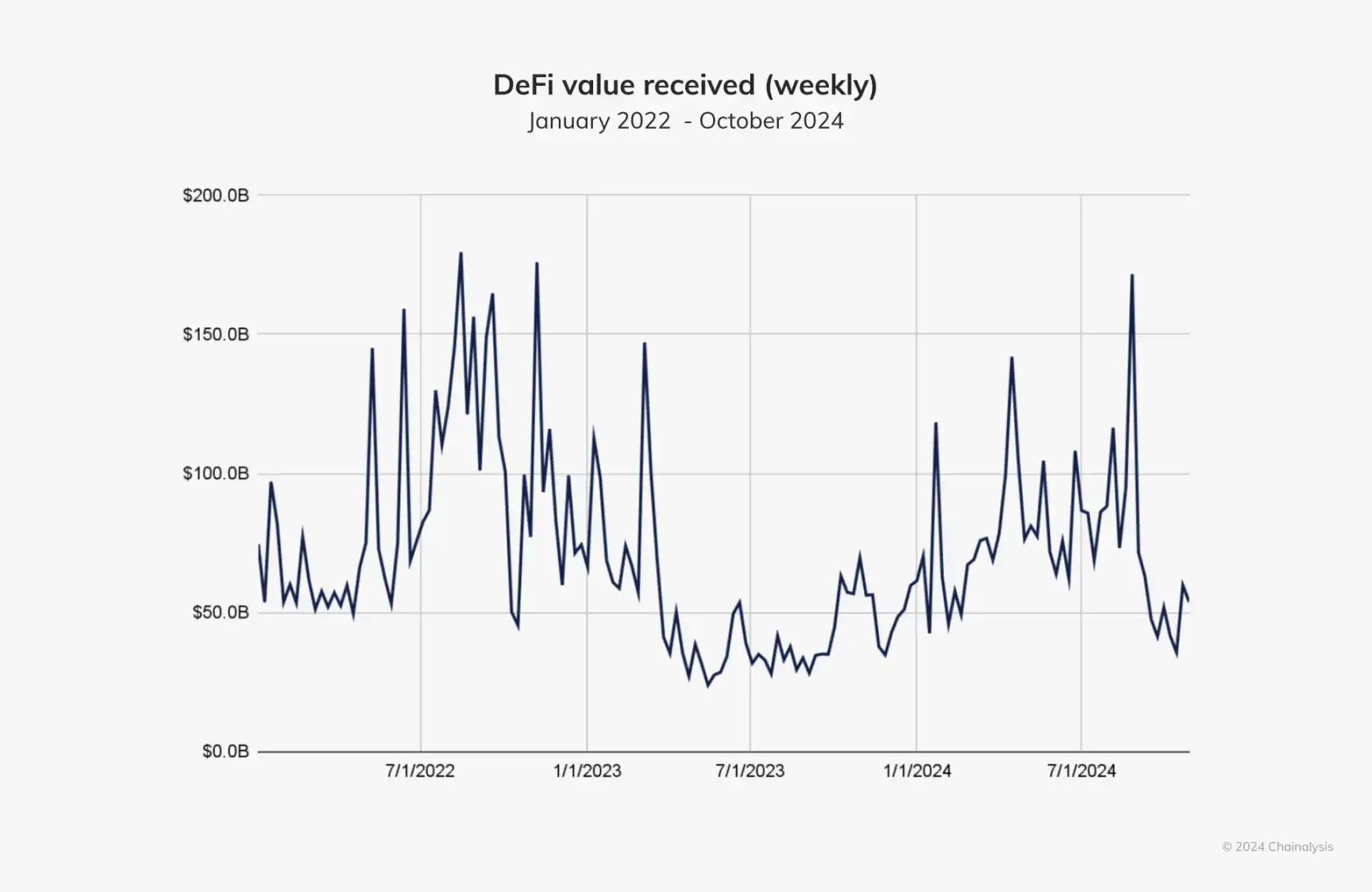
Current asset prices and DeFi activity are not the only indicators of market adaptability and resilience - global adoption of stablecoins, explosive interest in traditional finance (TradFi), and the rise of services for new use cases such as tokenization (described below) all indicate that cryptocurrencies are becoming more widely accepted and integrated into the global economy.
Global Utility Driving the Rise of Stablecoins
Stablecoins are typically pegged 1:1 to the U.S. dollar or other fiat currencies, combining the efficiency, security, and transparency of cryptocurrencies without the volatility risks common in other crypto markets.
While major cryptocurrencies such as BTC and ETH often dominate the headlines and offer returns that stablecoins cannot match, stablecoins have surpassed other types of cryptocurrencies in terms of adoption. In recent months, stablecoins have accounted for more than half of all on-chain transaction volume, reaching as much as 75%.
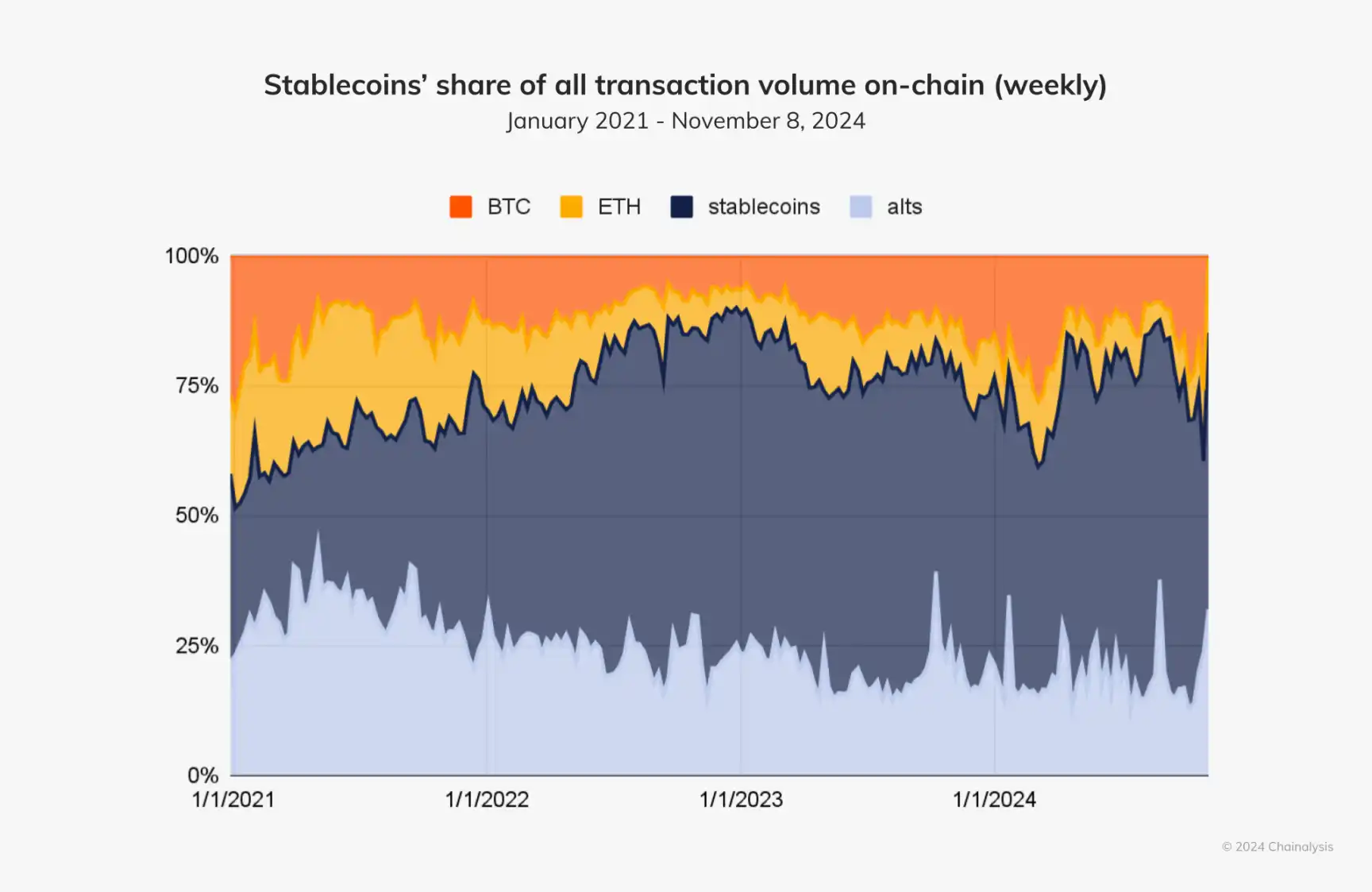
By making the stability of the U.S. dollar accessible to anyone in the world with an internet connection, stablecoins provide a critical solution for residents of countries facing currency volatility, both to protect savings and to facilitate commercial transactions.
The growing prominence of stablecoins in overall trading activity shows that this asset class has achieved a high level of utility among crypto users.
Bitcoin and Ethereum ETPs Mark a Historic Convergence of Cryptocurrency and Traditional Finance
Traditional finance (TradFi) validation of cryptocurrencies in 2024 reached a historic milestone, with the launch of spot Bitcoin exchange-traded products (ETPs) in the U.S. market further bolstering institutional investor interest. Exchange-traded funds (ETFs) – the most popular form of ETPs – have attracted significant interest from both retail and institutional investors.
With the launch of cryptocurrency ETFs, the entire market has experienced a rally based on this, as these funds offer regulated mainstream investment vehicles that can gain exposure to cryptocurrencies, which often attract investors who may be hesitant about the complexity and security issues of using traditional crypto trading platforms directly.
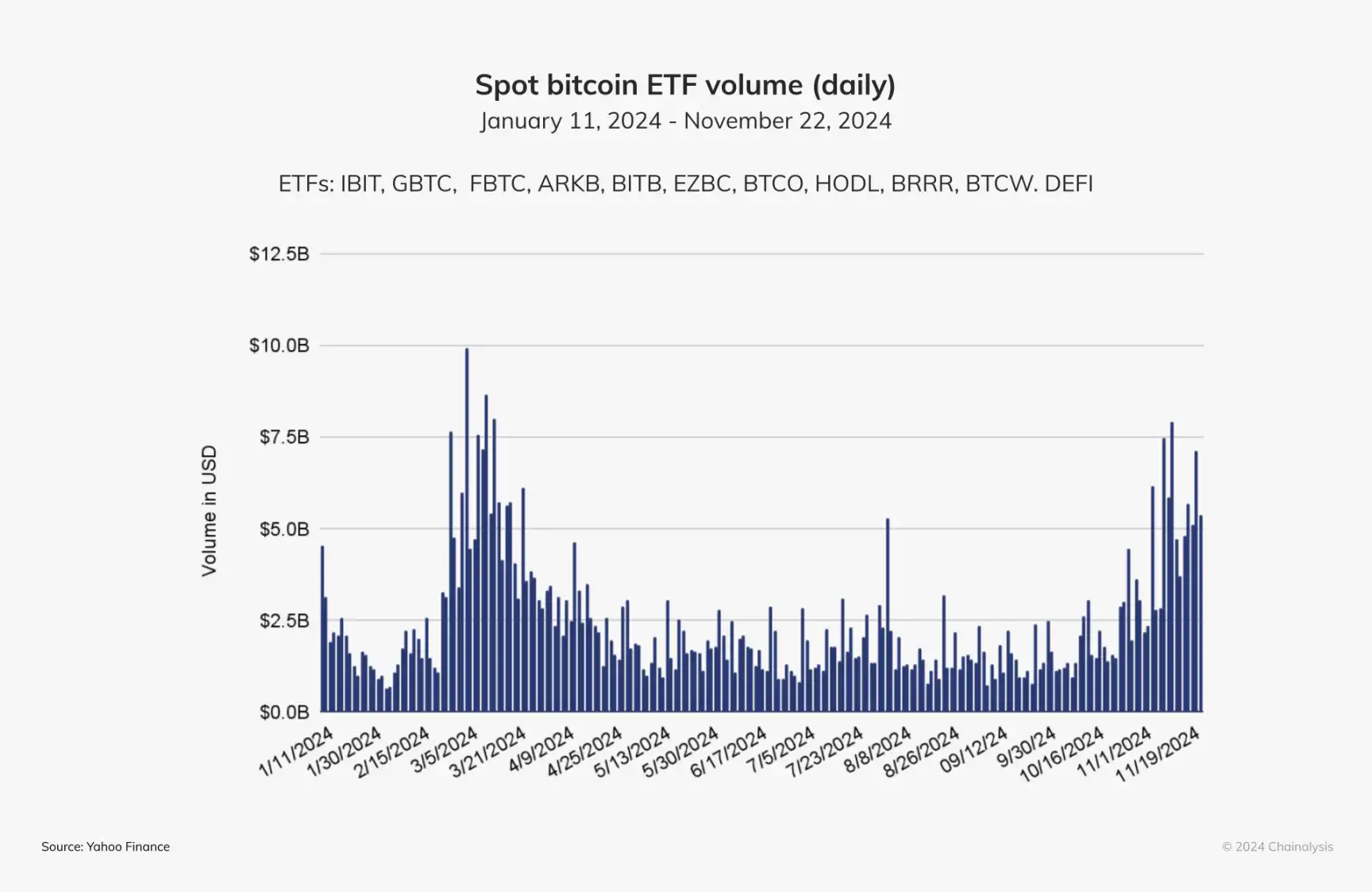
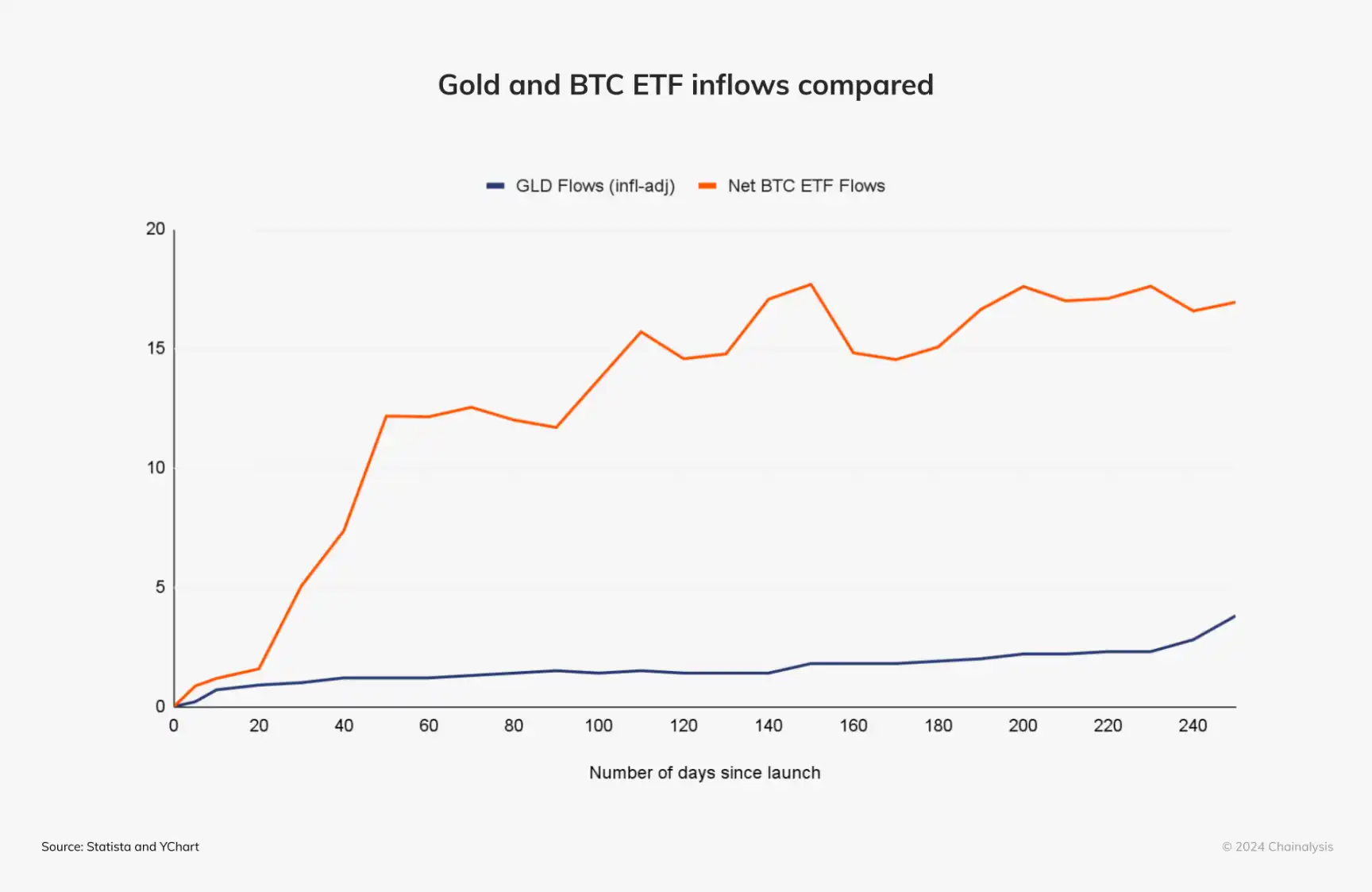
Daily trading volumes for Bitcoin ETFs have surged, approaching $10 billion in daily trading volume in March. Bitcoin ETF inflows have also surpassed those of the first net gold ETF launched in 2005 (adjusted for inflation), as shown in the chart below, making it the fastest growing ETF in history.
The price of Bitcoin began to rise rapidly following the news of the approval of the Bitcoin ETF on January 10, 2024, and trading began shortly thereafter.
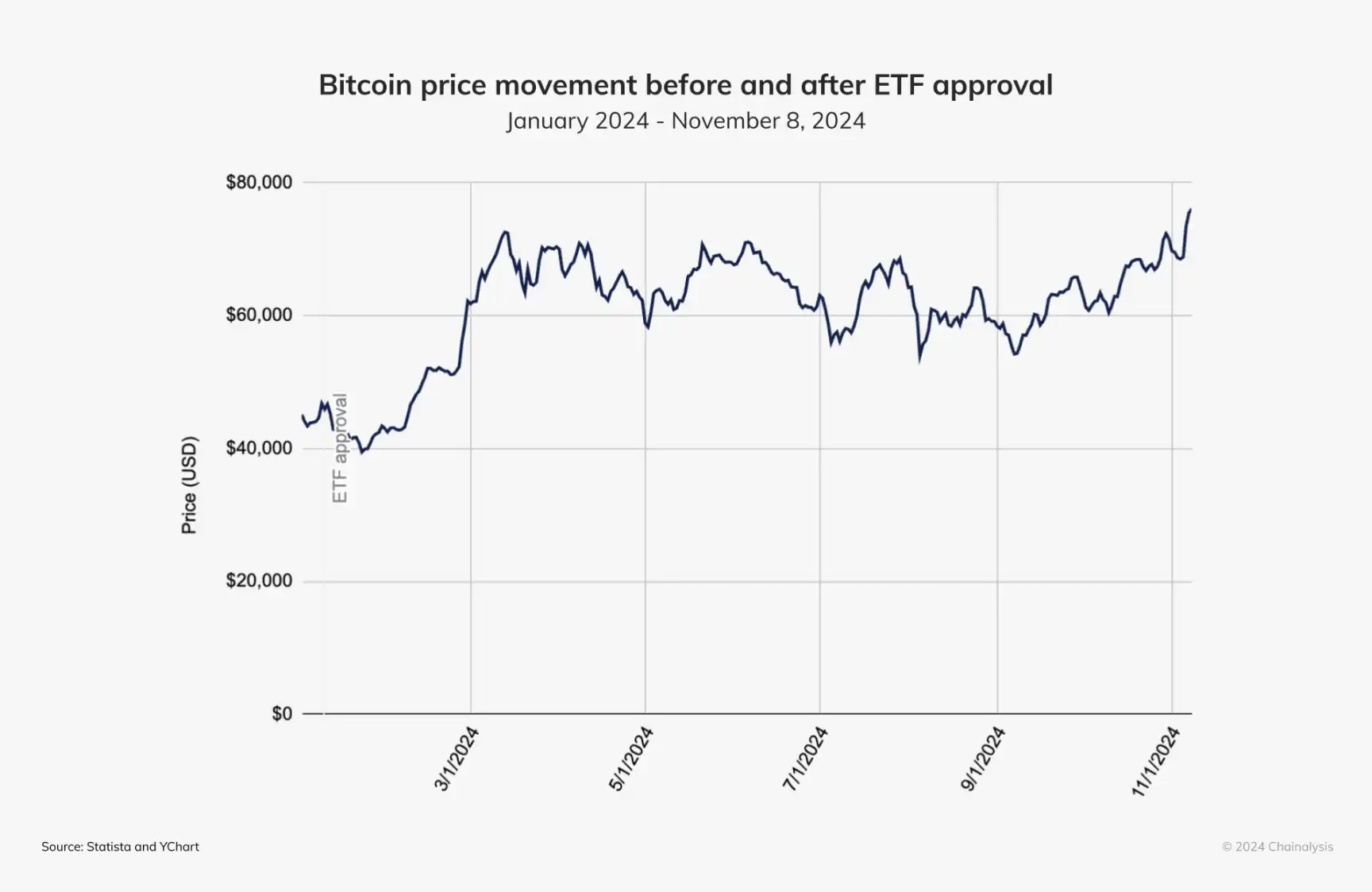
By providing easier access to cryptocurrencies through traditional trading platforms, ETPs can unlock new sources of demand for the underlying asset, which appears to be one of the important factors driving the recent price increase of Bitcoin (BTC).
While it is difficult to pinpoint the exact impact of the launch of Bitcoin ETPs in the U.S., it is widely believed to have boosted market optimism and expanded institutional investor exposure to Bitcoin. The surge in demand reflects the unique appeal of ETPs among retail and institutional investors, offering a regulated and familiar way to gain exposure to Bitcoin without the complexity of managing private key wallets.
Tokenization: Real World Assets (RWAs) Are Growing
The excitement surrounding the mass tokenization of real world assets (RWAs) is quietly changing the asset management and investment landscape, with many traditional finance (TradFi) giants, such as Franklin Templeton, already taking a stake in this market. Goldman Sachs reportedly plans to launch a crypto trading platform focused on tokenization in the next 12 to 18 months.
RWAs refer to any asset with value — whether tangible or intangible — that derives its value from something other than a blockchain. Through tokenization, the rights to these assets, from real estate to art to intellectual property, are represented as tokens on the blockchain. This process not only simplifies the process of selling and trading these assets, but also increases their accessibility to a wider audience, creating a more efficient and liquid market. RWAs also promise to enhance transparency in the investment market, as all transactions are recorded on-chain.
Currently, most RWA projects focus on tokenizing relatively simple and stable financial instruments, such as U.S. Treasuries, and lending platforms such as Goldfinch and Ondo Finance, which rely on tokenized RWAs as their core, have captured the majority of the RWA market. According to data compiled by asset management company 21.co, the total market value of tokenized projects has exceeded $100 billion.
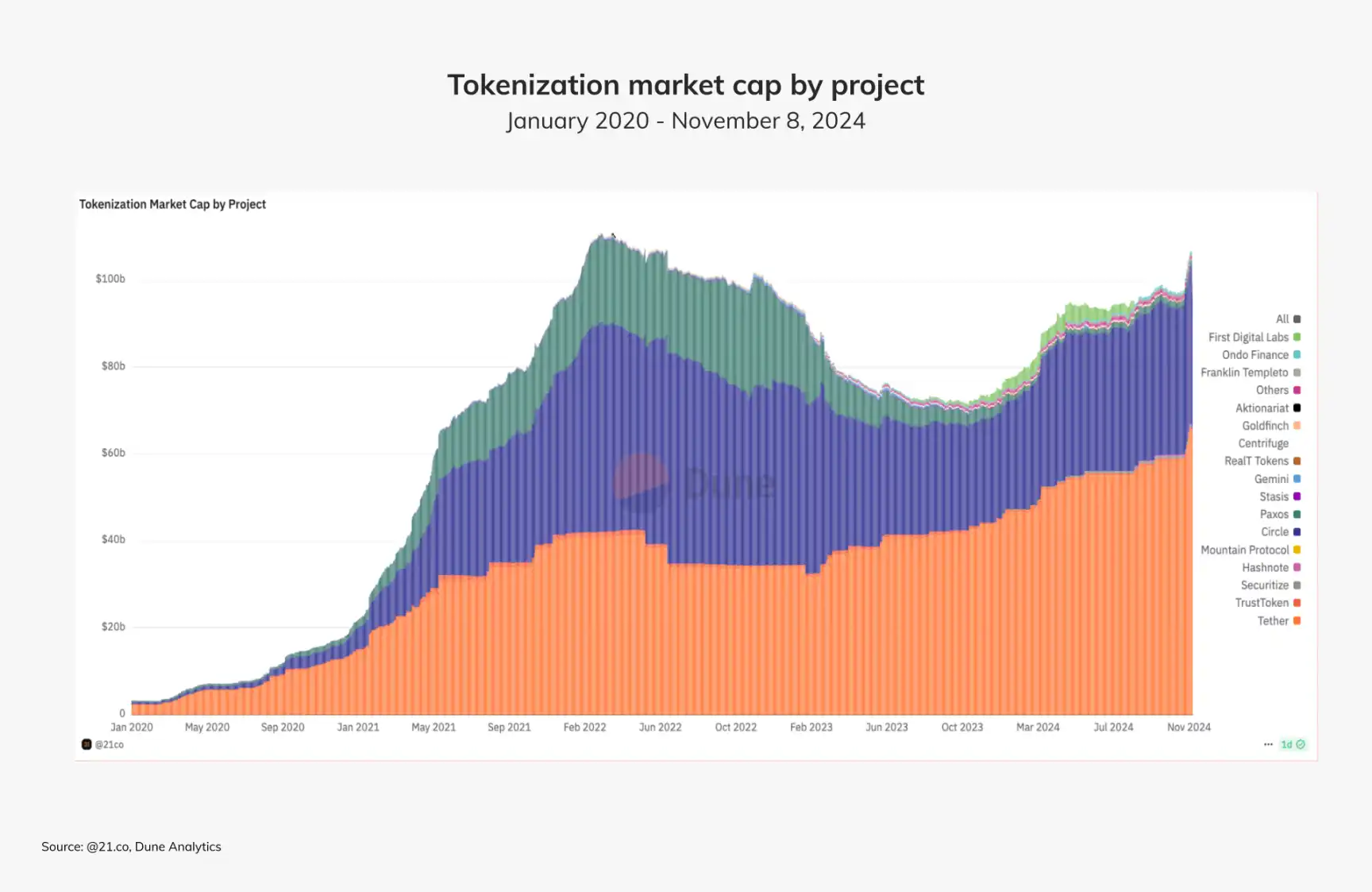
Although still in its early stages, the growing prominence of RWAs is a key step towards a future where most value transfers will take place on the blockchain, promoting a unified, open, and less frictional global market.
What the Cryptocurrency Industry Maturation Might Mean for Organizations
When we look at the progress of the crypto ecosystem, it is clear that we are experiencing a huge shift in perception and usage. While the cryptocurrency market may experience volatility and long bear cycles, one trend is consistent: wallets holding positive balances have grown linearly and continue to rise. Currently, over 400 million wallets hold cryptocurrency.
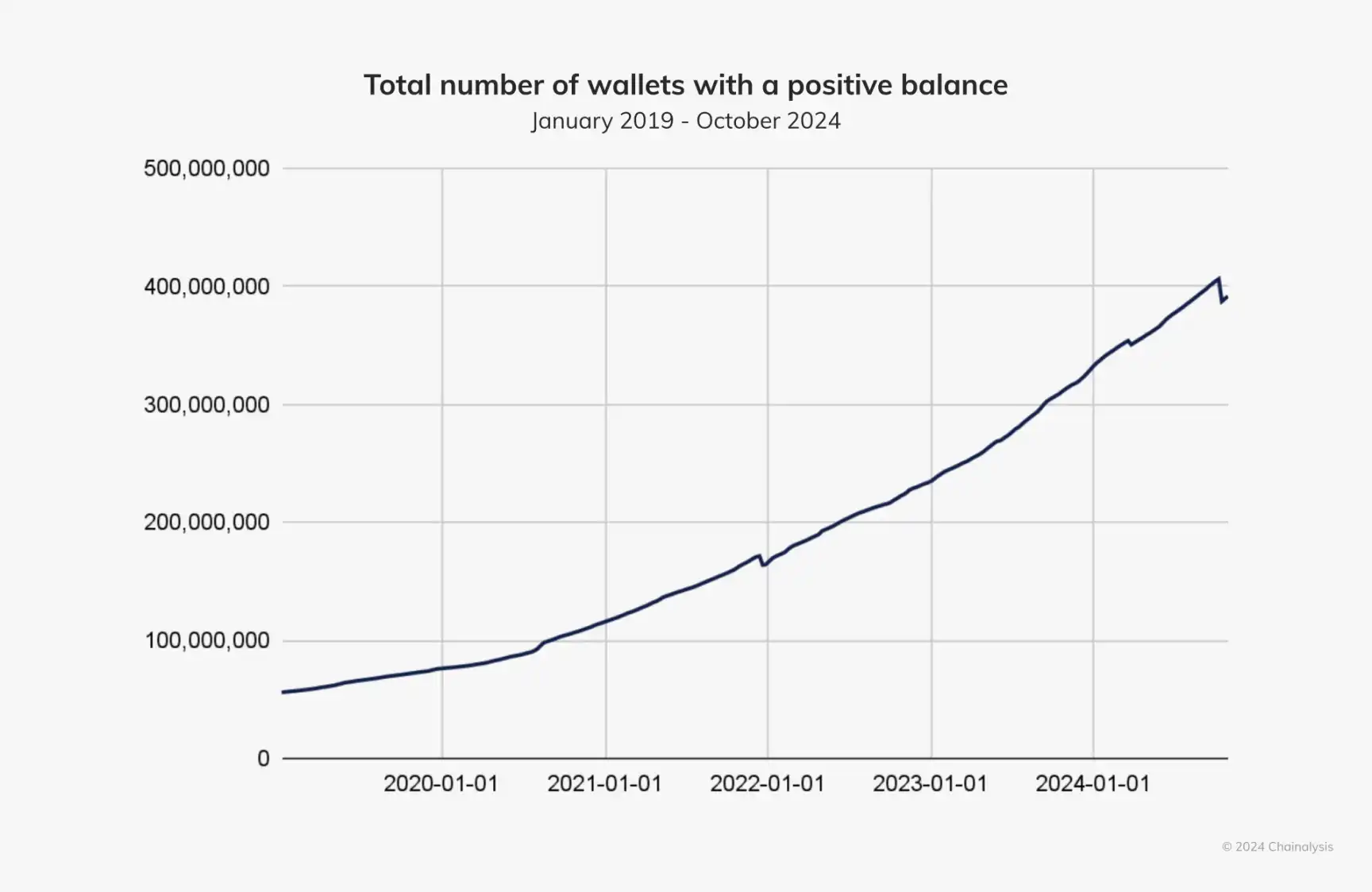
While one wallet does not mean only one user, as institutions and individuals can manage multiple wallets, the sheer volume of growth suggests that cryptocurrency adoption is steadily increasing.
As the influence of cryptocurrency continues to grow, it becomes even more important to measure success in this new paradigm. For organizations, adapting to the on-chain reality is more than just keeping up with technological advancements — it requires a complete reassessment of operating models to take advantage of the unique opportunities blockchain presents.
You may also like

US AI Startup Goes All In on Chinese Mega-Model | Rewire News Morning Brief

Trump Lies Again: A "Five-Day Pause" Psyop, How Wall Street, Bitcoin, and Polymarket Insiders Synced Uposciogen

When a Token Becomes Labor, People Become the Interface

Ceasefire News Leaked Ahead of Time? Large Polymarket Bets on Outcome Before Trump's Tweet

BlackRock CEO's Annual Shareholder Letter: How is Wall Street Using AI to Keep Profiting from National Pension Funds?

Sun Valley Releases 2025 Financial Report: Bitcoin Mining Revenue Reaches $670 Million, Accelerating Transformation to AI Infrastructure Platform
On March 16, 2026, in Dallas, Texas, USA, CanGu Company (New York Stock Exchange code: CANG, hereinafter referred to as "CanGu" or the "Company") today announced its unaudited financial performance for the fourth quarter and full year ended December 31, 2025. As a btc-42">bitcoin mining enterprise relying on a globally operated layout and dedicated to building an integrated energy and AI computing power platform, CanGu is actively advancing its business transformation and infrastructure development.
• Financial Performance:
Total revenue for the full year 2025 was $688.1 million, with $179.5 million in the fourth quarter.
Bitcoin mining business revenue for the full year was $675.5 million, with $172.4 million in the fourth quarter.
Full-year adjusted EBITDA was $24.5 million, while the fourth quarter was -$156.3 million.
• Mining Operations and Costs:
A total of 6,594.6 bitcoins were mined throughout the year, averaging 18.07 bitcoins per day; of which 1,718.3 bitcoins were mined in the fourth quarter, averaging 18.68 bitcoins per day.
The average mining cost for the full year (excluding miner depreciation) was $79,707 per bitcoin, and for the fourth quarter, it was $84,552;
The all-in sustaining costs were $97,272 and $106,251 per bitcoin, respectively.
As of the end of December 2025, the company has cumulatively produced 7,528.4 bitcoins since entering the bitcoin mining business.
• Strategic Progress:
The company has completed the termination of the American Depositary Receipt (ADR) program and transitioned to a direct listing on the NYSE to enhance information transparency and align with its strategic direction, with a long-term goal of expanding its investor base.
CEO Paul Yu stated: "2025 marked the company's first full year as a bitcoin mining enterprise, characterized by rapid execution and structural reshaping. We completed a comprehensive adjustment of our asset system and established a globally distributed mining network. Additionally, the company introduced a new management team, further strengthening our capabilities and competitive advantage in the digital asset and energy infrastructure space. The completion of the NYSE direct listing and USD pricing also signifies our transformation into a global AI infrastructure company."
"As we enter 2026, the company will continue to optimize its balance sheet structure and enhance operational efficiency and cost resilience through adjustments to the miner portfolio. At the same time, we are advancing our strategic transformation into an AI infrastructure provider. Leveraging EcoHash, we will utilize our capabilities in scalable computing power and energy networks to provide cost-effective AI inference solutions. The relevant site transformations and product development are progressing simultaneously, and the company is well-positioned to sustain its execution in the new phase."
The company's Chief Financial Officer, Michael Zhang, stated: "By 2025, the company is expected to achieve significant revenue growth through its scaled mining operations. Despite recording a net loss of $452.8 million from ongoing operations, mainly due to one-time transformation costs and market-driven fair value adjustments, the company, from a financial perspective, will reduce its leverage, optimize its Bitcoin reserve strategy and liquidity management, introduce new capital to strengthen its financial position, and seize investment opportunities in high-potential areas such as AI infrastructure while navigating market volatility."
The total revenue for the fourth quarter was $1.795 billion. Of this, the Bitcoin mining business contributed $1.724 billion in revenue, generating 1,718.3 Bitcoins during the quarter. Revenue from the international automobile trading business was $4.8 million.
The total operating costs and expenses for the fourth quarter amounted to $4.56 billion, primarily attributed to expenses related to the Bitcoin mining business, as well as impairment of mining machines and fair value losses on Bitcoin collateral receivables.
This includes:
· Cost of Revenue (excluding depreciation): $1.553 billion
· Cost of Revenue (depreciation): $38.1 million
· Operating Expenses: $9.9 million (including related-party expenses of $1.1 million)
· Mining Machine Impairment Loss: $81.4 million
· Fair Value Loss on Bitcoin Collateral Receivables: $171.4 million
The operating loss for the fourth quarter was $276.6 million, a significant increase from a loss of $0.7 million in the same period of 2024, primarily due to the downward trend in Bitcoin prices.
The net loss from ongoing operations was $285 million, compared to a net profit of $2.4 million in the same period last year.
The adjusted EBITDA was -$156.3 million, compared to $2.4 million in the same period last year.
The total revenue for the full year was $6.881 billion. Of this, the revenue from the Bitcoin mining business was $6.755 billion, with a total output of 6,594.6 Bitcoins for the year. Revenue from the international automobile trading business was $9.8 million.
The total annual operating costs and expenses amount to $1.1 billion.
Specifically, they include:
· Revenue Cost (excluding depreciation): $543.3 million
· Revenue Cost (depreciation): $116.6 million
· Operating Expenses: $28.9 million (including related-party expenses of $1.1 million)
· Miner Impairment Loss: $338.3 million
· Bitcoin Collateral Receivable Fair Value Change Loss: $96.5 million
The full-year operating loss is $437.1 million. The continuing operations net loss is $452.8 million, while in 2024, there was a net profit of $4.8 million.
The 2025 non-GAAP adjusted net profit is $24.5 million (compared to $5.7 million in 2024). This measure does not include share-based compensation expenses; refer to "Use of Non-GAAP Financial Measures" for details.
As of December 31, 2025, the company's key assets and liabilities are as follows:
· Cash and Cash Equivalents: $41.2 million
· Bitcoin Collateral Receivable (Non-current, related party): $663.0 million
· Miner Net Value: $248.7 million
· Long-Term Debt (related party): $557.6 million
In February 2026, the company sold 4,451 bitcoins and repaid a portion of related-party long-term debt to reduce financial leverage and optimize the asset-liability structure.
As per the stock repurchase plan disclosed on March 13, 2025, as of December 31, 2025, the company had repurchased a total of 890,155 shares of Class A common stock for approximately $1.2 million.

The US AI Startup Is Loving China's Open Source Model

Three Weeks of the US-Iran War: Who's Making Money, Who's Paying the Bill?

Interpreting Polymarket's Major Update Last Night: Fee Expansion, Self-Regulation, and New Incentives

From Human Application to Intelligent Collaboration: How GOAT Network Builds the Next Generation Digital Economy

CZ Washington Dialogue: Crypto Entrepreneurs are Accelerating Their Return to the United States

Morning Report | Strategy increased its holdings by 1,031 bitcoins last week; Katana Blockchain acquires IDEX; NYSE completes rule change to eliminate trading limits on crypto ETF options

Electric Capital: Tracking 501 types of yield-generating RWA assets, we discovered these patterns
Those who are cut off by AI will not disappear; they will become the creators of the next round of the economy

Stablecoins reshaping cross-border payments in Asia? Strategic panorama and investment opportunity analysis

Zuckerberg is building an AI agent to help him as CEO

Bloomberg: Swiss Private Bank Old Guard Rifts, Is Bitcoin the Spark?
Zuckerberg is building an AI assistant to help him be CEO
US AI Startup Goes All In on Chinese Mega-Model | Rewire News Morning Brief
Trump Lies Again: A "Five-Day Pause" Psyop, How Wall Street, Bitcoin, and Polymarket Insiders Synced Uposciogen
When a Token Becomes Labor, People Become the Interface
Ceasefire News Leaked Ahead of Time? Large Polymarket Bets on Outcome Before Trump's Tweet
BlackRock CEO's Annual Shareholder Letter: How is Wall Street Using AI to Keep Profiting from National Pension Funds?
Sun Valley Releases 2025 Financial Report: Bitcoin Mining Revenue Reaches $670 Million, Accelerating Transformation to AI Infrastructure Platform
On March 16, 2026, in Dallas, Texas, USA, CanGu Company (New York Stock Exchange code: CANG, hereinafter referred to as "CanGu" or the "Company") today announced its unaudited financial performance for the fourth quarter and full year ended December 31, 2025. As a btc-42">bitcoin mining enterprise relying on a globally operated layout and dedicated to building an integrated energy and AI computing power platform, CanGu is actively advancing its business transformation and infrastructure development.
• Financial Performance:
Total revenue for the full year 2025 was $688.1 million, with $179.5 million in the fourth quarter.
Bitcoin mining business revenue for the full year was $675.5 million, with $172.4 million in the fourth quarter.
Full-year adjusted EBITDA was $24.5 million, while the fourth quarter was -$156.3 million.
• Mining Operations and Costs:
A total of 6,594.6 bitcoins were mined throughout the year, averaging 18.07 bitcoins per day; of which 1,718.3 bitcoins were mined in the fourth quarter, averaging 18.68 bitcoins per day.
The average mining cost for the full year (excluding miner depreciation) was $79,707 per bitcoin, and for the fourth quarter, it was $84,552;
The all-in sustaining costs were $97,272 and $106,251 per bitcoin, respectively.
As of the end of December 2025, the company has cumulatively produced 7,528.4 bitcoins since entering the bitcoin mining business.
• Strategic Progress:
The company has completed the termination of the American Depositary Receipt (ADR) program and transitioned to a direct listing on the NYSE to enhance information transparency and align with its strategic direction, with a long-term goal of expanding its investor base.
CEO Paul Yu stated: "2025 marked the company's first full year as a bitcoin mining enterprise, characterized by rapid execution and structural reshaping. We completed a comprehensive adjustment of our asset system and established a globally distributed mining network. Additionally, the company introduced a new management team, further strengthening our capabilities and competitive advantage in the digital asset and energy infrastructure space. The completion of the NYSE direct listing and USD pricing also signifies our transformation into a global AI infrastructure company."
"As we enter 2026, the company will continue to optimize its balance sheet structure and enhance operational efficiency and cost resilience through adjustments to the miner portfolio. At the same time, we are advancing our strategic transformation into an AI infrastructure provider. Leveraging EcoHash, we will utilize our capabilities in scalable computing power and energy networks to provide cost-effective AI inference solutions. The relevant site transformations and product development are progressing simultaneously, and the company is well-positioned to sustain its execution in the new phase."
The company's Chief Financial Officer, Michael Zhang, stated: "By 2025, the company is expected to achieve significant revenue growth through its scaled mining operations. Despite recording a net loss of $452.8 million from ongoing operations, mainly due to one-time transformation costs and market-driven fair value adjustments, the company, from a financial perspective, will reduce its leverage, optimize its Bitcoin reserve strategy and liquidity management, introduce new capital to strengthen its financial position, and seize investment opportunities in high-potential areas such as AI infrastructure while navigating market volatility."
The total revenue for the fourth quarter was $1.795 billion. Of this, the Bitcoin mining business contributed $1.724 billion in revenue, generating 1,718.3 Bitcoins during the quarter. Revenue from the international automobile trading business was $4.8 million.
The total operating costs and expenses for the fourth quarter amounted to $4.56 billion, primarily attributed to expenses related to the Bitcoin mining business, as well as impairment of mining machines and fair value losses on Bitcoin collateral receivables.
This includes:
· Cost of Revenue (excluding depreciation): $1.553 billion
· Cost of Revenue (depreciation): $38.1 million
· Operating Expenses: $9.9 million (including related-party expenses of $1.1 million)
· Mining Machine Impairment Loss: $81.4 million
· Fair Value Loss on Bitcoin Collateral Receivables: $171.4 million
The operating loss for the fourth quarter was $276.6 million, a significant increase from a loss of $0.7 million in the same period of 2024, primarily due to the downward trend in Bitcoin prices.
The net loss from ongoing operations was $285 million, compared to a net profit of $2.4 million in the same period last year.
The adjusted EBITDA was -$156.3 million, compared to $2.4 million in the same period last year.
The total revenue for the full year was $6.881 billion. Of this, the revenue from the Bitcoin mining business was $6.755 billion, with a total output of 6,594.6 Bitcoins for the year. Revenue from the international automobile trading business was $9.8 million.
The total annual operating costs and expenses amount to $1.1 billion.
Specifically, they include:
· Revenue Cost (excluding depreciation): $543.3 million
· Revenue Cost (depreciation): $116.6 million
· Operating Expenses: $28.9 million (including related-party expenses of $1.1 million)
· Miner Impairment Loss: $338.3 million
· Bitcoin Collateral Receivable Fair Value Change Loss: $96.5 million
The full-year operating loss is $437.1 million. The continuing operations net loss is $452.8 million, while in 2024, there was a net profit of $4.8 million.
The 2025 non-GAAP adjusted net profit is $24.5 million (compared to $5.7 million in 2024). This measure does not include share-based compensation expenses; refer to "Use of Non-GAAP Financial Measures" for details.
As of December 31, 2025, the company's key assets and liabilities are as follows:
· Cash and Cash Equivalents: $41.2 million
· Bitcoin Collateral Receivable (Non-current, related party): $663.0 million
· Miner Net Value: $248.7 million
· Long-Term Debt (related party): $557.6 million
In February 2026, the company sold 4,451 bitcoins and repaid a portion of related-party long-term debt to reduce financial leverage and optimize the asset-liability structure.
As per the stock repurchase plan disclosed on March 13, 2025, as of December 31, 2025, the company had repurchased a total of 890,155 shares of Class A common stock for approximately $1.2 million.


 App
App