
2025's Biggest Miscalculation: Bitcoin Peaks in Q4, HODLing No Longer Effective

 Prefer us on Google


Original Article Title: Crypto Truths & Lies: Lessons from 2025
Original Article Author: Ignas, DeFi Research
Original Article Translation: Plain Blockchain
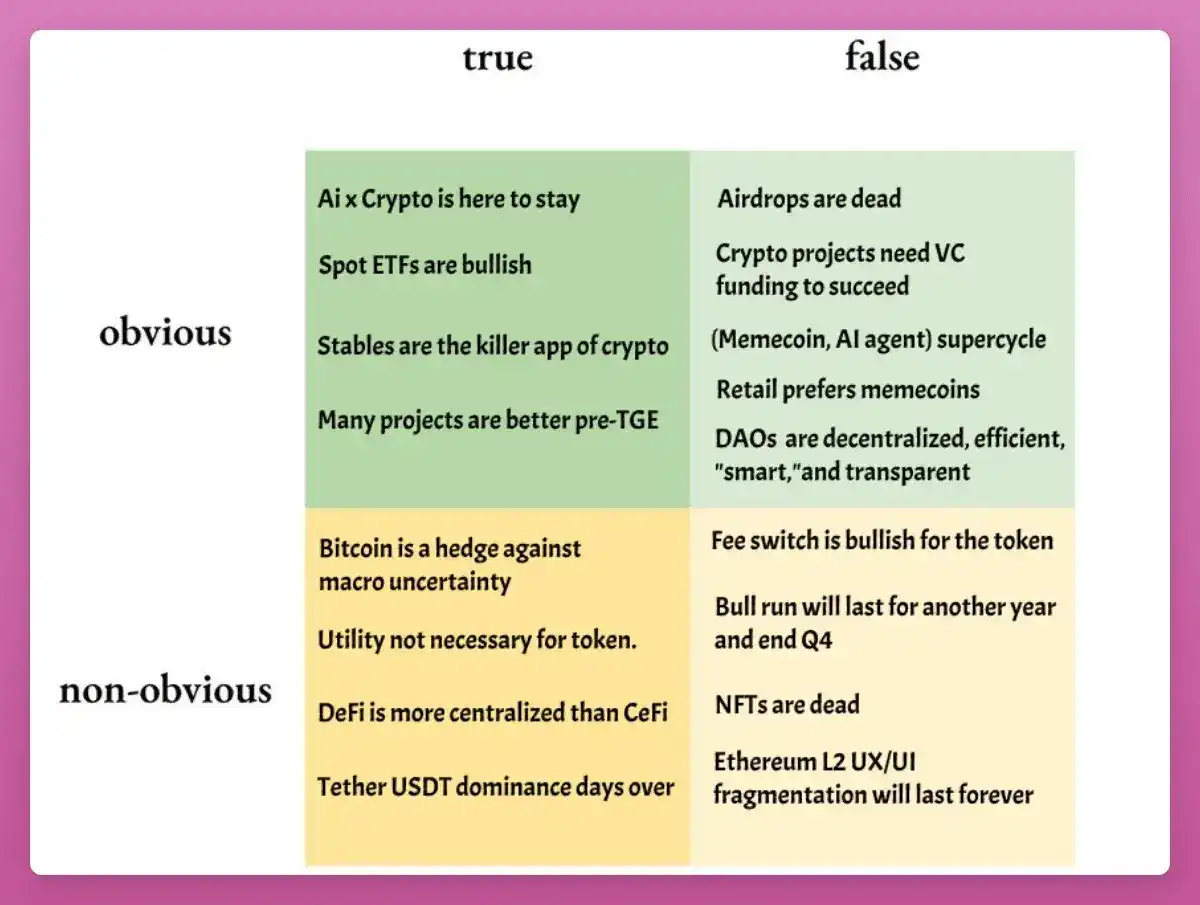
A year ago, I wrote about "The Truths and Lies of the 2025 Crypto Market."
Back then, everyone was sharing higher Bitcoin price targets. I wanted to find a different framework to uncover areas where the public might be wrong and to establish a differentiated position. The goal was simple: to find ideas that were already present but ignored, reviled, or misunderstood.
Before sharing the 2026 edition, let's take a clear look back at what truly mattered in 2025. What we got right, what we got wrong, and what we should learn from it. If you don't examine your thinking, you are not investing; you are gambling.
Quick Summary
"BTC Topped Out in Q4": Most people anticipated this, but it seemed too good to be true. Turns out they were right, and I was wrong (and paid the price for it). Unless BTC starts a parabolic rise now and breaks the 4-year cycle pattern, I concede this round. "Retail Favors Memecoins": The fact is, retail investors don't really favor cryptocurrencies. They bought gold, silver, AI stocks, and anything that wasn't a cryptocurrency. The supercycle of memecoins or AI agents did not materialize.
"AI x Crypto Remains Strong": A mixed bag. Projects continue to deliver, the x402 standard keeps evolving, and funding continues. However, tokens failed to sustain any uptrend.
"NFT Is Dead": Yes.
These are easy to look back on. The real insights lie in the following five broader themes.
1. Spot ETF Is the Floor, Not the Ceiling
Since March 2024, Bitcoin's long-term holders (OG) have sold approximately 1.4 million BTC, worth around $121.17 billion.
Imagine what the crypto market would be like without ETFs: Despite price drops, the BTC ETF still saw positive inflows (26.9 billion USD).
The approximately 95 billion USD gap is why BTC is lagging behind almost all macro assets. There is nothing wrong with BTC itself, no need to dive into unemployment or manufacturing data to explain—it's just the "great rotation" of whales and "4-year cycle believers."
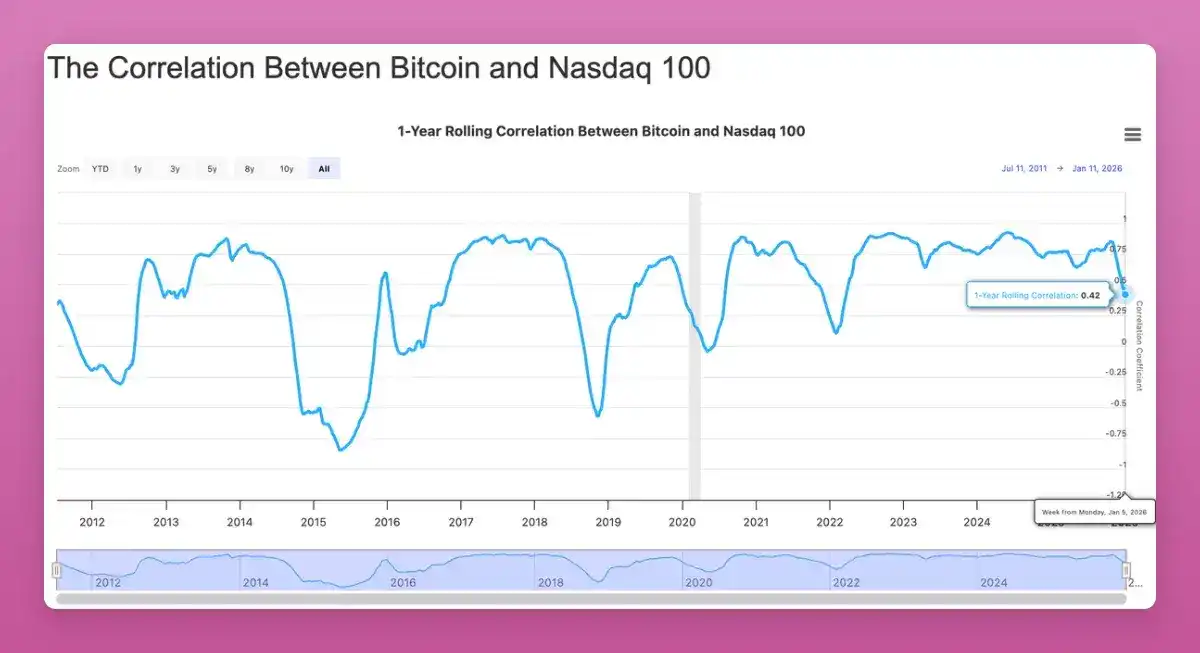
More importantly, Bitcoin's correlation with traditional risk assets like the Nasdaq has dropped to its lowest since 2022 (-0.42). While everyone hopes for a positive correlation breakout, in the long run, this is bullish as an uncorrelated portfolio asset sought by institutions.
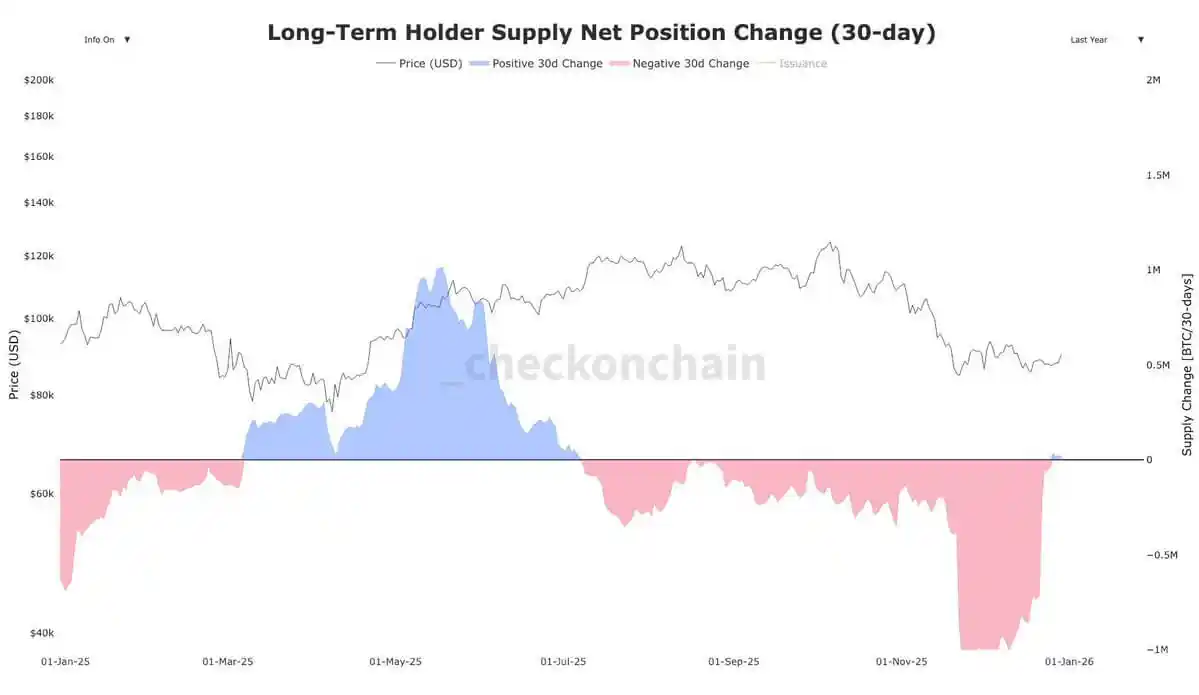
There are signs that the supply shock is over. Therefore, I dare to predict a BTC price of 174,000 USD in 2026 (equivalent to 10% of the gold market cap).
2. Airdrops Clearly Haven't "Disappeared"
The crypto community (CT) once again claimed airdrops were dead. But in 2025, we saw nearly 4.5 billion USD in large airdrop distributions:
Story Protocol (IP): ~$1.4B
Berachain (BERA): ~$1.17B
Jupiter (JUP): ~$7.91M
Animecoin (ANIME): ~$7.11M
The changes are: airdrop fatigue, improved rug pull detection, and a downward valuation. You still need to "claim and dump" to maximize gains.
2026 will be a big year for airdrops, heavyweight players like Polymarket, Metamask, Base (?), are ready to launch tokens. It's not a year to stop clicking buttons but a year to stop blind betting. Airdrop "farming" requires focused efforts for heavy bagging.
3. Fee Switch is Not an Engine for Price Rises, But a Floor
My prediction is that fee switch won't automatically drive up coin prices. Most protocols' generated revenue is insufficient to support their massive market caps.
"Fee switch doesn't dictate how high a token can rise but sets a 'floor price.'"
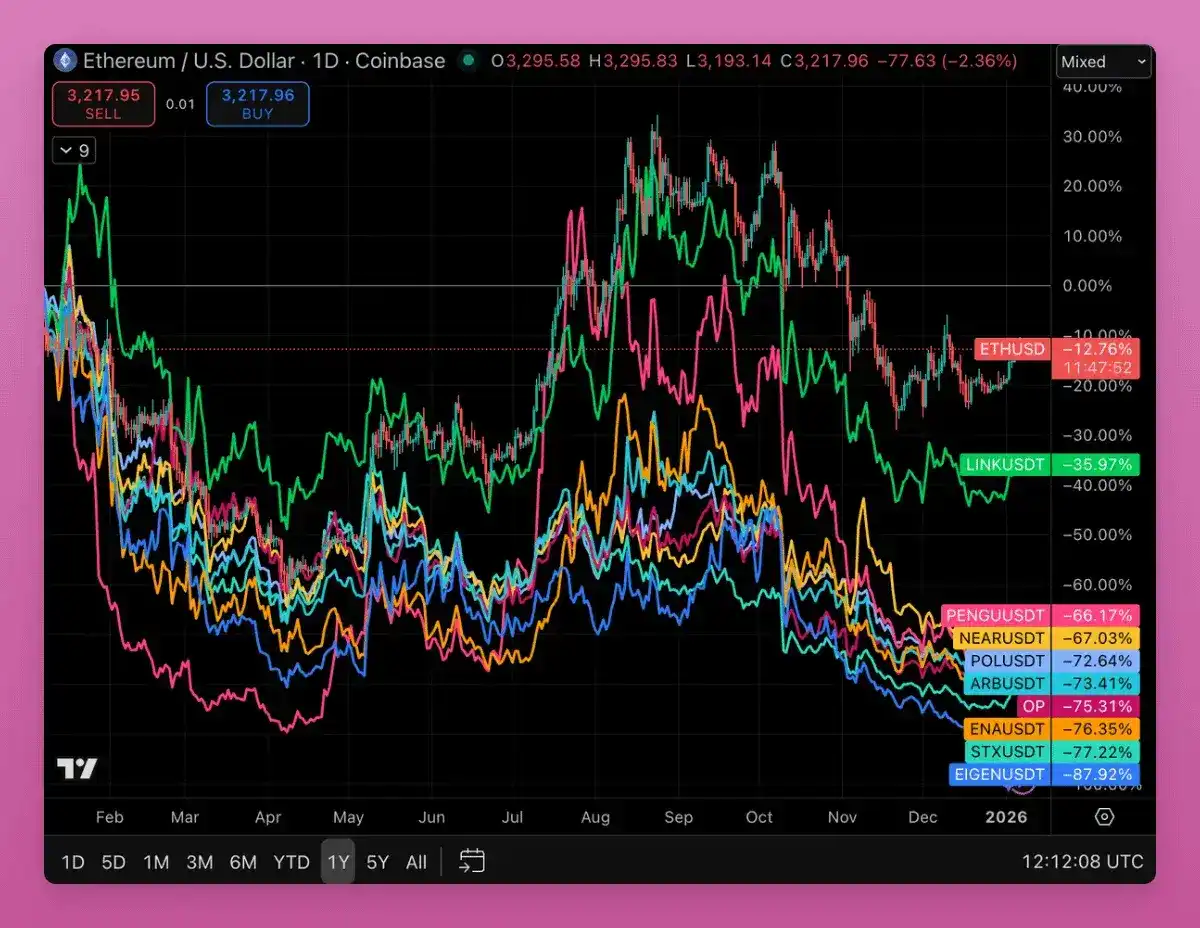
Watch the project on DeFi llama's "Holder Earnings" ranking: Except for $HYPE, all high-earning Tokenomics projects outperformed ETH (although ETH is now the benchmark that everyone aims to challenge).

Surprisingly, $UNI. Uniswap finally flipped the switch, even burning 1 billion tokens. UNI initially surged 75%, but later retraced all gains.
Three revelations:
A token buyback sets a price floor, not a ceiling.
Everything in this cycle is a trade (see UNI's surge and retracement).
A buyback is just one side of the story; supply pressure (unlocking) must be considered, as most tokens remain in low circulation.
4. Stablecoins Occupy the Mind, but "Proxy Transactions" Struggle to Profit
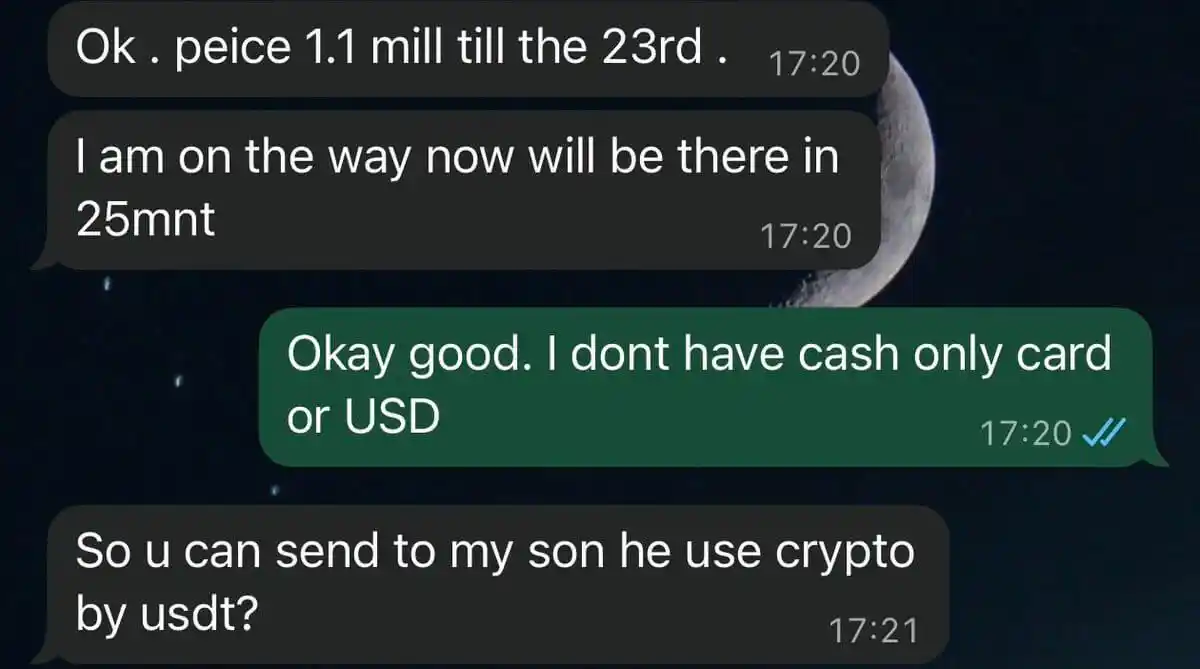
Stablecoins are going mainstream. When renting a scooter in Bali, the vendor even requested payment in USDT on TRON.
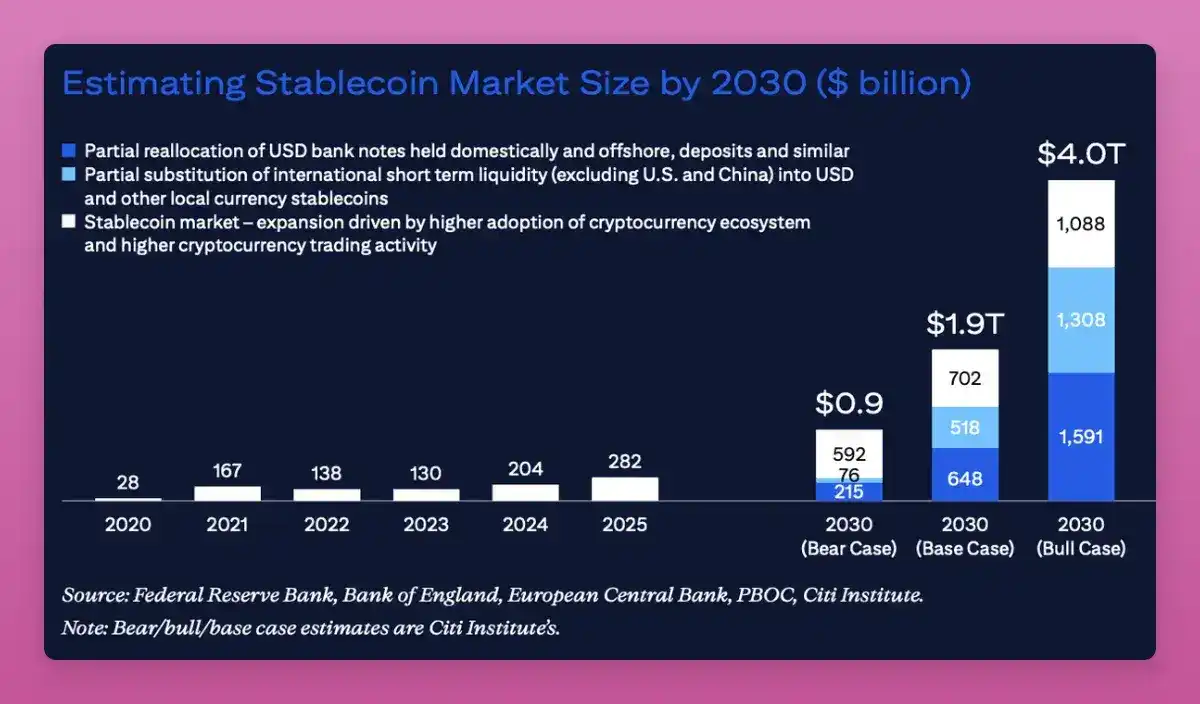
While USDT's dominance has dropped from 67% to 60%, its market cap is still growing. Citibank predicts that the stablecoin market cap could reach $19 trillion to $40 trillion by 2030.
By 2025, the narrative has shifted from "trading" to "payment infrastructure." However, the narrative of transacting stablecoins is not easy: Circle's IPO saw a surge followed by a retracement, and other proxy assets' performance has been lackluster.
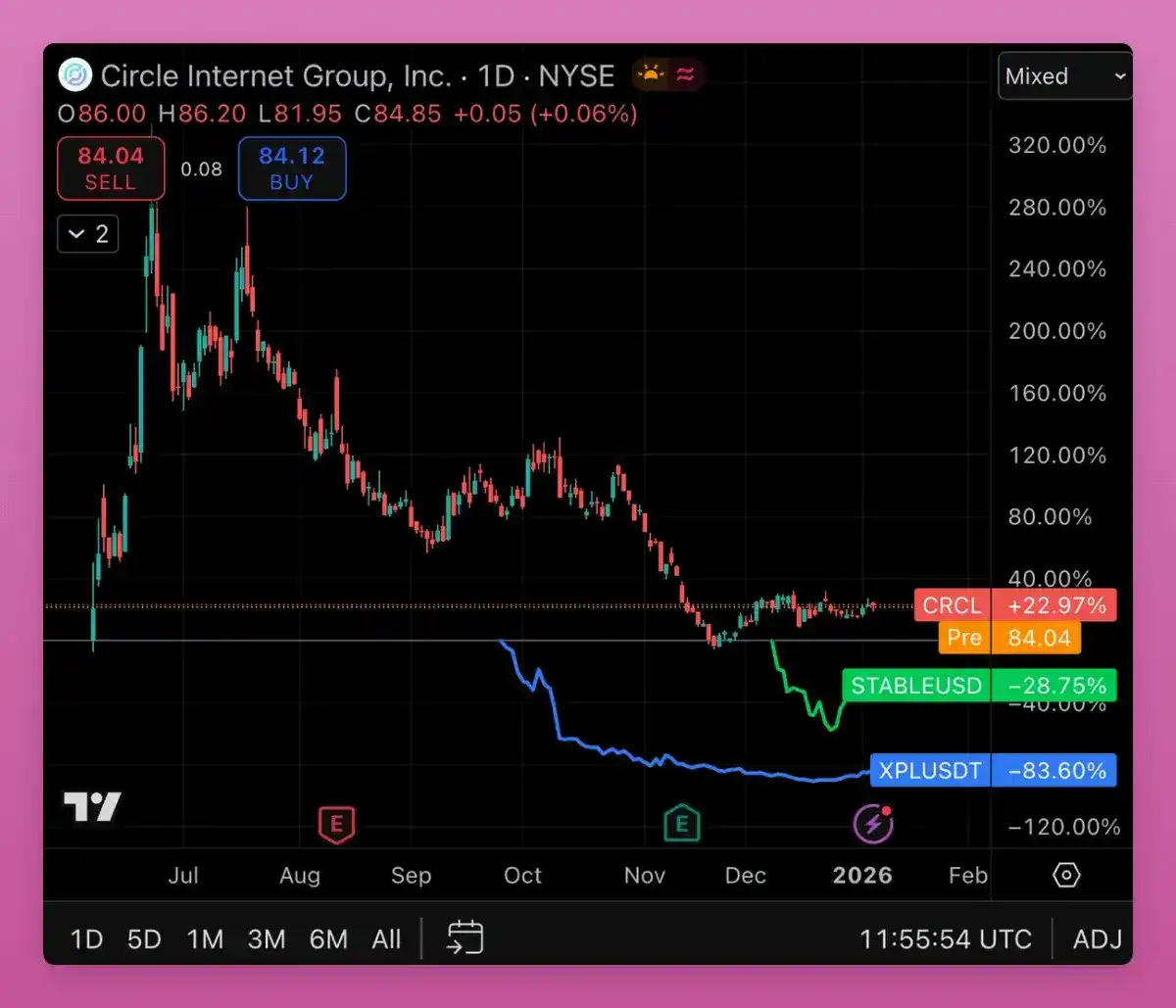
A truth of 2025 is: Everything is just a trade.
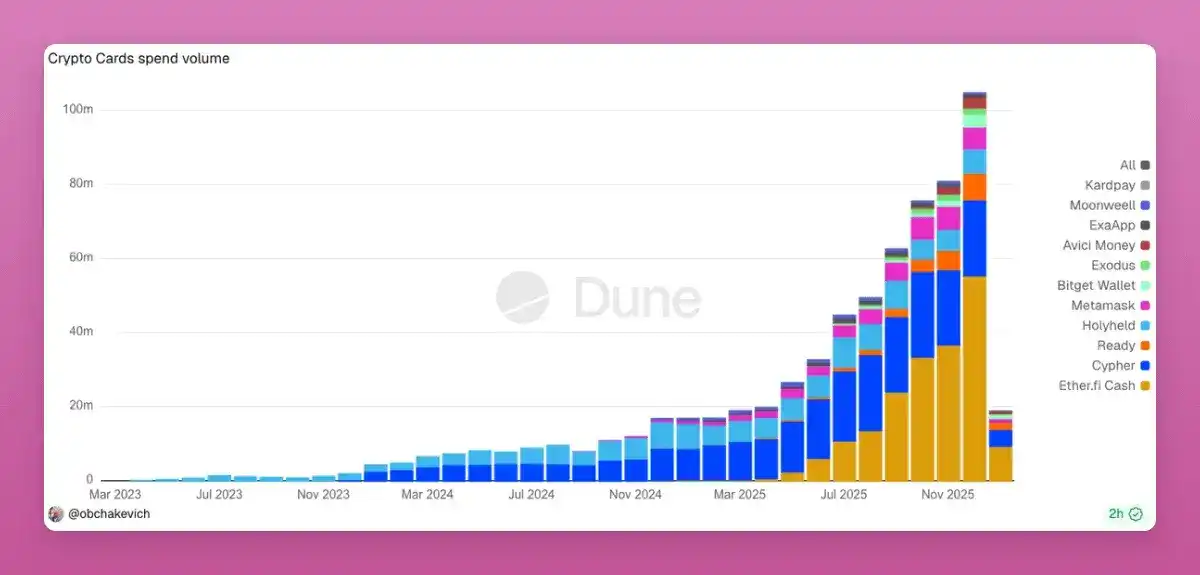
Currently, crypto payment cards have surged due to their convenience in bypassing strict banking AML requirements. Every card swipe is an on-chain transaction. If direct peer-to-peer payments bypassing Visa/Mastercard can emerge by 2026, it will be a thousandfold opportunity.
5. DeFi Is More Centralized than CeFi
Here's a bold statement: DeFi's business and TVL concentration are higher than traditional finance (CeFi).
Aave holds over 60% of the lending market share (for comparison, JPMorgan holds only 12% in the US).
L2 protocols are mostly billion-dollar unregulated multisigs.
Chainlink nearly controls all of DeFi's value oracles.
By 2025, conflicts between "centralized equity holders" and "Token holders/DAOs" become apparent. Who truly owns the protocol, IP rights, and revenue streams? Aave's internal strife reveals that Token holders have less power than we think.
If "Labs" ultimately win, many DAO Tokens will become uninvestible. 2026 will be a crucial year for aligning equity with Token holder interests.
Summary
2025 proved one thing: Everything is for sale. The exit window is tiny. No Token has enduring conviction.
As a result, 2025 marked the death of HODL culture, with DeFi morphing into Onchain Finance, and as regulation improves, DAOs are shedding their "pseudo-decentralized" disguise.
-- Price
This content is provided for general informational purposes only and doesn't constitute financial, investment, legal, or tax advice. Any events, rewards, online promotions, or related information mentioned herein should not be considered a recommendation, solicitation, or invitation to purchase, sell, trade, or otherwise deal in any crypto assets. Crypto assets are highly volatile and may result in loss. The availability of WEEX services, products, and related events may vary by region. You are responsible for ensuring that your participation is in accordance with applicable local laws and regulations.
You may also like

Japan Accelerates Military Rearmament and Aims to Make Defense an Economic Engine

Statistic: In 2025, it became the norm for new coins to experience a "price drop," with only 15% of projects having a Fully Diluted Valuation (FDV) higher than their Token Generation Event (TGE) period.
Web3: Foreign Media Reports that the Altcoin Market in 2026 May Depend on ISM Recovery

CoinFerenceX and the best event join forces to launch “CoinFerenceX The Best Event Singapore,” the decentralized summit

BCCC Introduces JPYC for Annual Membership Fee Payments

Modernizing Financial Infrastructure for Digital Assets by 2026

Web3: Foreign Media Reports Three Changes That May Boost SHIB
"I received an airdrop, but will I have to pay taxes next year?"... How to calculate in advance with a coin calculator

Critical Patch for Decred: Those Who Don't Update Risk a Network Fork
UnitedHealth Discloses Tax Dispute with the IRS

HeyBreez Raises $2.5 Million for Global Expansion in Voice AI

Web3 Wallets in a "Season of Turmoil": Understanding the Evolution of Crypto Security's "Sword and Shield" in the AI Era

Congress Members Raise Concerns Over AI Errors in New Legislation — Politico

Unitree Robotics Stock: How to Buy 688836 After Its 629% IPO Surge
DGrid AI: Reconstructing AI Infrastructure with On-Chain Verification and Open Markets
Ripple Prioritizes Institutional Financial Infrastructure Strategy Over IPO
Treasury Yields Surge to 5.3%, Hitting Tech Stocks WEEX TradFi Daily | Aug 19
Long-end U.S. Treasury yields surged to multi-year highs, pressuring technology, semiconductor, storage, and optical communication stocks and driving a clear cooling in market risk appetite. At the same time, Anthropic’s revenue came in below some bullish expectations, prompting investors to reassess the AI growth narrative; Unitree Robotics officially listed on the STAR Market, extending momentum in robotics and embodied AI; while SpaceX and other commercial space names showed relative resilience. Investors are now focused on tonight’s Federal Reserve minutes for clearer signals on the policy path and broader market sentiment.

ServiceNow Expands Security Portfolio with $7.75 Billion Acquisition

Ethereum’s 12-GPU proving problem just got a 4-GPU answer
How to Join WEEX 牛来 Airdrop: 50,000 USDT Rewards Guide

Fabrinet Earnings Beat Expectations: Why Did FN Stock Fall?
Non-consensus Decisions in the Robotics Sector: Why Sequoia Chose to Double Down on Yushu at Its Most Difficult Time?

牛来 Coin After the Rally: Opportunity or Meme Coin Risk?
AI: Five ECB Economists Consider a Correction of Tech Values Likely
Toyota Tokenized Bonds: Is 1 Billion Yen Finance Coming to Your Smartphone?
Is NEAR's trading volume at zero: can staking on NEAR Protocol revive it?
Crypto-Backed Loans in Australia: Rates Ranging from 0.9% to 21.9% with Nexo
Three Conditions That Will Determine the Success of NVIDIA's Secured Bonds – Bitplanet
Digital Garage Partners with JCB and Lawson for Stablecoin Payment Pilot

Doing the Hardest Work for the Least Money! Stripe's $7 Billion Acquisition Reveals the Truth About AI Profit Distribution
Japan Accelerates Military Rearmament and Aims to Make Defense an Economic Engine
Statistic: In 2025, it became the norm for new coins to experience a "price drop," with only 15% of projects having a Fully Diluted Valuation (FDV) higher than their Token Generation Event (TGE) period.
Web3: Foreign Media Reports that the Altcoin Market in 2026 May Depend on ISM Recovery
CoinFerenceX and the best event join forces to launch “CoinFerenceX The Best Event Singapore,” the decentralized summit
BCCC Introduces JPYC for Annual Membership Fee Payments
Modernizing Financial Infrastructure for Digital Assets by 2026

Contents
Latest articles


Latest coin listings on WEEX


